doc w/ Pen

journalist + medical student + artist

Category: Pre-Med

Top 10 of 2011: Looking forward

I know, I know — 2011 has just started. So unless I count things like sleeping and eating, I couldn’t come up with a true, best-of, top 10 list for this year yet. That said, I do have a different kind of top 10 list to write about for 2011 — a list of things I’m looking forward to, as well as some goals. (And I promise, this is my last top 10 list.)

A third drum roll, please …

Top 10 of 2011: Looking Forward

10. Exploring new music.
Ever since I was a child, I have loved music. Back then, it was mostly classical, oldies, and church hymns; these days I listen more to electronic and industrial rock. I am a bit stuck in a musical rut, however. But with school, I simply don’t have time to comb through the (daunting) depths of material out there. That’s where my husband, Geoff, comes in. He is a true music aficionado, a lover of jazz, blues, new wave, rock, soul, electronic, dance, you name it. We have dedicated an entire room in our house to his music collection (all in all, a few thousand CDs and LPs) and stereo equipment. So his mission is to help me find some new music. Luckily, he knows very well my tastes, while at the same time knowing how to stretch me and encourage me to listen to things that I might find a bit challenging (but enjoyable in the end). It will be a fun, cultural, enriching, joint project that we will do together, and one that will fill our home with beautiful music.

9. Volunteering with Future Problem Solving.
Talk about a blast from the past. I was involved in Future Problem Solving — better known to me as simply “FPS” — when I was in middle school and early high school and living in Tucson, Ariz. Part of my schools’ gifted program, FPS is a written, team-based problem-solving competition. I absolutely loved it, and my three teammembers (one of whom I’m still in touch with), and my coach. We won our state competition twice, and did very well at the international competition level (Australia, New Zealand, and Canada also have teams). My coach also took us to Beijing, China, to present the basics of the FPS program to educators at a national Chinese education conference. But back to the present. My old coach recently contacted me and asked if I was interested in being put on the FPS alumni e-mail list. “Why not,” I said. A few days ago, I got an e-mail from the FPS program. A wave of nostalgia hit me. And I thought how wonderful it would be to help out in some way. I’ve gotten in touch with the Illinois FPS director, and hope to get involved (I’m not sure how yet) this year. Go FPS!

8. Keeping the house cleaner.
I will admit: I am not the greatest housekeeper. Not that it’s the woman’s job to keep the house, of course … but Geoff does other things, such as taking out the garbage and mowing the lawn. So I take on the laundry and basic housecleaning. And I haven’t been keeping up with it lately. It’s hard, with school, to get those things done. In terms of priorities, I’ll put a physics exam above cleaning the toilet any day. That said, I can’t completely ignore the fact that I have a two-story house (three if you count the basement) that needs taken care of. And I rather let it go to seed last semester. I definitely did an early spring cleaning (in December), so it’s nice and tidy now. I intend to keep it that way.

7. Cooking more.
Again, it’s not the woman’s job (entirely) to cook. Geoff and I have always shared this task, thankfully. But last semester, as with the whole cleaning thing, I rather fell off the chuckwagon and Geoff wound up cooking most of the time. Either that, or we wound up eating out. (One of the reasons for #6; see below.) So this semester, I’m stepping up. Not to do it all — but to do my fair share. Because that’s how a marriage works.

6. Getting into better shape.
As I mentioned above in #7, Geoff and I did a bit of eating out (often at our fav local Mexican joint, King Burrito) this last semester / year. Not so good, healthwise. And with a new (and rather grueling) school schedule, I found it hard to fit exercise into my day. So this semester, it’s time to start breaking a sweat again, on a regular basis. No excuses.

5. Pre-med: year 2.
I know, I know … I haven’t even finished year 1 yet (haven’t even begun the second semester of year 1 yet!). But this fall, I’ll be starting year 2, which will bring with it the opportunity to take more advanced classes. I’m especially looking forward to biochemistry, advanced anatomy (with cadaver dissection!!!), and pathophysiology. I can’t wait to get beyond the basics. But I know I have to be patient, because it will be worth it.

4. Researching medical schools.
This is something that stresses most pre-meds out. But I can’t wait to spend more time (I’ve already spent some) perusing the MSAR, scouring med schools’ Web sites, flipping through brochures, calling admissions offices, visiting campuses … I find it incredibly exciting to imagine the possibilities. And they are endless.
3. Spring 2011 research seminar with Dr. Kreher.
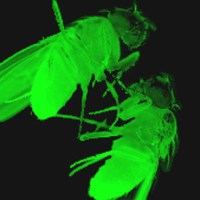
Last semester, I spent a good amount of time in my bio professor’s office. Not because I was struggling in the class — I finished the semester with above 100% — but because I enjoyed the material and wanted to … well … go beyond what we touched on in the course. I had questions. Lots of them. And I found Dr. Kreher to be a good sounding board, as well as a passionate teacher and researcher. Midway through the semester, he sent me an e-mail inviting me to take another course with him this upcoming semester — a research seminar course. I was thrilled (and flattered, because I technically hadn’t met the pre-requisites), and found a way to work it into my schedule. Thankfully. It’s a small class, limited to 10 students, and we will be working with fruit flies, bacteria, genetic sequencing, all kinds of cool stuff. I can’t wait.

2. My summer triad.
Yes, this is a rather cryptic heading. But I wanted to mention all three pre-med-related things I hope to do this summer, so I have wrapped them all up into one item here:

  • volunteering more at the free clinic as a Spanish medical interpreter
  • working at the UIC research lab (and hopefully working on my own project, or at least more independently)
  • interning with a physician at a local hospital (part of my post-bac program requirement)

1. Saving up for an iPad (and an iPad bag). 
Am I a techie? I don’t know. But I do know that I desperately want the new version of the iPad when it comes out, supposedly this spring (according to rumors circulating the Web). For e-mailing and Web surfing, of course. But also for reading: I would very much like a portable way of reading books and articles, and of carrying them around with me without carrying around a brick-laden backpack. And I’ve already got an Amazon.com wish list set up of titles that I’m planning to download (eventually). Here are a few of them:

  • Nature’s Robots: A History of Proteins (it’s obvious why I want this one)
  • Zeitoun (the relatively new Dave Eggers book)
  • Generosity: An Enhancement (by Richard Powers, one of my favorite authors)
  • Several Richard Dawkins titles (famous biologist)

Top 10 of 2010: School’s in

OK, so I know I just did a post about my Top 10 of 2010. But that post was about my “personal” life. I’ve got another top 10 list — this one is related to school, education, that sort of thing. So here we go again.

Another drum roll please …

Top 10 of 2010: School’s In

10. Being chosen for a faculty assistant position.
About a month into my post-bac program, the director of the post-bac program approached me about coming on as a faculty assistant. There are a number of FA’s in the program, and they do things ranging from TA the anatomy course to organize the internship program. Clearly, I’m in no position to TA an anatomy or pathophysiology course. But I do have some skills that the program needed: writing and editing skills.

9. Physics I.
Those of you who keep up with me on Facebook are likely scratching your heads and furrowing your brows at this one. Because throughout the semester, I definitely did my fair share of griping about my physics class. Mostly how difficult the exams were and how impossibly long the lab reports took to write (my record was 18 pages and about 8-10 hours, if I remember correctly). However, that said … I found physics to be an incredibly valuable experience, all told. Unlike biology and chemistry, much of the material I learned in physics was new to me. And the material that I had touched on in high school physics we took to a whole new level. So I had to work my ass off in this class. I had to ask for help. I had to battle confusion. I had to work problems over and over and over. But in the end, I proved to myself that I could learn something new and challenging and outside of my “comfort zone,” so to speak. I gained confidence in my scholastic abilities. FYI, I’m taking physics again next semester. And I say: Bring it on.

8. Caritas et Veritas Symposium.
I like to pretend this symposium was Dominican University’s birthday present to me, because it fell directly on my 29th birthday. (Note: I did write a separate post about this symposium. See “Caritas et Veritas: Love and Truth,” posted on Oct. 3, 2010.) I was especially intrigued by a literature theory called consilience (the union of science and literature, in short), introduced to me by Dr. Ellen McManus at one of the lectures. I got in touch with Dr. McManus and she recommended two books for me to read on the subject. As I was incredibly busy with school during the semester, I have just now started the first one. But I am already enthralled. I’m sure I will be posting about it as I make my way through the book.

7. OldPreMeds.org.
This online community, of which I am a member, has been a warm, welcoming place — as well as a great resource. I have met so many wonderful and fascinating people, and learned so much. I have also had the opportunity to share my own knowledge and expertise. In addition, OPM hosts an annual conference — and last summer it was (fortuitously) held in Chicago. I decided to attend at the last minute, and it was amazing. I met a woman who has turned into a dear friend, I was able to network with all kinds of people (including ADCOMS), and I learned a great deal about the application process and timetable. I can’t wait for the 2011 conference.

6. My blog.
Keeping this blog has been so wonderful for me — a chance to continue writing, a chance to tell my story, a chance to get feedback about what I am doing. Thank you to everyone who is following and reading. I hope you are enjoying yourself.

5. Superb Dominican faculty. 
One of the best things about being at Dominican University is that the class sizes are so small and you can get to know your professors personally. Of course, that would be useless if the professors weren’t any good. But my professors have been stellar. Thank you all: Dr. Scannicchio, Dr. Hughes, Dr. Kreher, Dr. Gulley, Dr. Sagerer, Dr. Andrei, and Prof. Buber. Thank you so much for your time, energy, effort, and help throughout the semester.

4. UIC lab research.
When I decided to embark on the journey toward medical school, I never imagined I would have the opportunity to do research. Thanks to a very generous and helpful fellow UIUC alum (an anesthesiologist), I landed a job (albeit unpaid) as a research assistant at UIC. Those of you who read my posts over the last summer know how much I learned, and how excited I was about this position. It has inspired me to want to do research during my career as a physician (in addition to clinical work). Thanks especially to Olga and Rich Minshall for letting me tag along and soak up so much. And for giving me the chance to come back again in 2011. I can’t wait!

3. Volunteering as a Spanish medical translator.
This has been another amazing opportunity, chronicled (again) by a number of blog posts. It has been a chance to really help people, to empower them in their need for health care. And also a chance for me to learn about ambulatory medicine, Spanish medical terminology, and so much more. I look forward to continuing to work there in 2011.

Computer-generated 3-D protein structure

2. Proteins!
No, I’m not talking about a love of steak (although I do love a good filet mignon). I’m talking about the macromolecule. The intricate structure, the precise formation, the functional group interactions, the diverse processes … I find it all fascinating and amazing. Honestly, I can’t wait to take biochemistry and learn more about these little guys. (I know, I’m crazy. I have accepted this fact.)

1. Physician shadowing.
It’s one thing to watch “House” or “ER.” It’s another thing entirely to stand in the hall of the ICU as someone in the room in front of you is about to die. It’s another thing entirely to stand in the OR as a surgeon puts a metal pin in someone’s broken hand. I have witnessed these things. And I still want to become a physician. In fact, the shadowing I have done — in anesthesiology and critical care medicine (thus far) — has only intensified my interest in this career. I plan to spend more time in the hospital in the coming semester, thanks to the generosity of a local ICU director. And when I am a physician, I will return the favor to some budding pre-med student.

Top 10 of 2010: Life as I know it

The year 2010 was quite a ride. I don’t know quite how else to put it. There were ups and downs, there were all-arounds. But I came out on top. With a little help from my friends, as the Beatles would say.

I’ve also got lots of pictures to share, so hopefully this will be a fun post (visually speaking).

Drum roll please …

Top 10 of 2010: Life As I Know It

10. A good year for art.
My art, that is. I sold more than usual, especially during the holiday season, including several whopping orders from one woman who bought more than 25 beaded spoons throughout fall and winter! She told me one even made it to Okinawa, Japan, to a military family. So apparently I’ve gone international. Pretty cool. Here are some pics of newer pieces:

9. Painting our front porch. Finally.
When we moved into our house, our hideously-painted front porch (bright yellow and blue — think IKEA colors) was the first thing I planned to change. Six years later, I had managed to completely redo the inside of the house, but the front porch stood only half-primed. But we found a good handy-man who finished the job, and it looks beautiful now. What a relief!

8. Nine Inch Nails.
It might seem funny to list a now-defunct band as a top-10 item. But there are two reasons for NIN (my favorite group of all time) to make it on this list, specifically this year. First, they had a fantastic farewell tour, which Geoff and I saw. The last Chicago show (held on Northerly Island) included performances of rare Downward Spiral material we had never heard live before. I was especially excited to hear “Ruiner.” Second, founder Trent Reznor continues to be active in the music scene, having formed a new band called How To Destroy Angels with his wife. And it totally rocks. So while we wave goodbye to NIN, we welcome a new incarnation of Reznor’s music. And so all is well.

7. Blackhawks Winning the Stanley Cup.
OK, I’ll admit. I’m not a huge sports fan. But I’m a sucker for hockey. And of course, as a near-lifelong Chi-towner, that means I’m a Chicago Blackhawks fan. And for the first time in 49 years, the Blackhaws won the Stanley Cup — the World Series of hockey. I don’t get cable at my house, but luckily both my parents do, so we had multiple playoff game viewing parties. ONE GOAL!

6. Great friends, old and new.

5. Seeing my “in-loves” (aka in-laws) for Christmas.
It was so wonderful to see Wendy, Geord, Lindsay, Dan, Kyle, and Sarah again — after an entire year. And to meet my little nephew, Jackson, for the first time!

4. Family support & proximity.
I feel lucky that my family lives within a short drive. I am thankful for their support and companionship. Specifically: My near-daily 6 a.m. conversations with Mom (usually in Spanish); “sister sleepovers” with Sarah; sharing vintage clothes and jewelry with Joy; and Blackhawks games and home improvement projects with Dad.

3. Trip to Hawaii With Mom.
How could going to Hawaii not make it on my Top 10 list?! But going with Mom made it all the more special. We had quite an adventurous time, from snorkeling (several times during the day, and once at night to see giant manta rays), to hiking around Kilauea, to visiting a seahorse hatchery, to strolls through a tropical botanical garden. Here are a few photos from our trip.

2. Family generosity.
Let’s face it. As a one-income family with a mortgage that we took on when we were a two-income family, we’re not in the greatest of financial situations. Add to that some accumulated credit card debt (like most of middle-class America). Add to that a year-and-a-half of my being unemployed. Add to that both Geoff’s and my cars going kaput within 48 hours of each other this fall. We were in dire straits. But some very generous (although not so wealthy themselves) family members totally came to our rescue in helping us to pay down that credit card debt and make down payments on not one, but two very nice and longlasting cars. (Geoff got a 2006 Hyundai Elantra; I got a 2008 Honda Civic.) I don’t know what we would have done otherwise. Thank you, thank you, thank you.

1. Geoff (my husband).
I would not, could not, be doing this without him and his support. Financial support (he continues to work full time while I go to school), emotional support (hugs when I get frustrated), you name it. This has not been easy, and will not be easy in the future. But he is behind me. One of the great things that I especially appreciate is his listening ear. I tend to get really excited about things (like proteins), and I want to share that with someone. Geoff has been incredibly patient with me in listening to my (sometimes lengthy) stories and explanations of what I am doing at school, at the clinic, and so on. Thank you, my love.

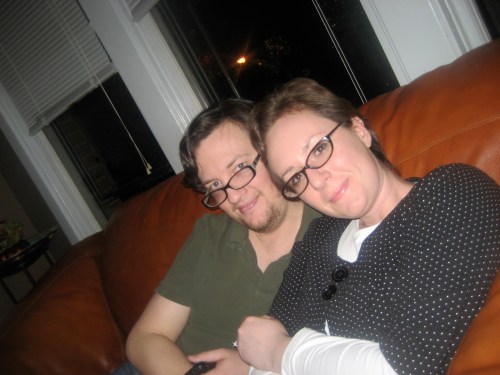
Geoff and Lorien on New Year’s Day, 2011.

Life’s essential ingredients called into question

When you bake bread, there are some essential ingredients. Yeast, for example, as well as flour and water. You can’t make the bread without these. Depending on what type of bread you are making, you might add raisins, eggs, or cheese. But these are non-essentials.

Life is a little like bread. You need six ingredients: carbon, nitrogen, hydrogen, oxygen, sulfur, and phosphorus. Or so scientists thought.

According to a recently published paper, the bacteria pictured here was able to survive when fed arsenic rather than phosphorus.

This week, researchers announced that they had discovered a bacteria at the bottom of a lake in California that was able to grow in arsenic instead of phosphorus. This might not sound like a big deal, but it calls into question basic assumptions about the nature of life, and its requirements. It also opens the door for an understanding of life that could exist in a different way — possibly on a different planet where different elements and nutrients are available.

Phosphorus was thought to be more or less irreplaceable because it forms the backbone of DNA. It is also a key player in a molecule called adenosine triphosphate (commonly abbreviated as ATP), which is the molecule the body uses for energy — and therefore survival. Arsenic, on the other hand, while very similar to phosphorus in its chemical properties, is toxic to many animals.

But according to these researchers, this strain of bacteria — when “fed” arsenic instead of the phosphorus that it normally would use — was able to survive, and actually incorporate the arsenic into the positions that phosphorus would normally occupy.

We’ll see if other investigation bears these results out. But if they do — what a beautiful example of adaptability of an organism, and of science pushing the limits of what we know so that we can gain a better understanding of our world, and of ourselves.

The amazing nature of … nature

A “nerd,” by my definition, is someone who gets really excited about very obscure and detailed things.

I’m a nerd. I know it. And I’m proud of it. (Those of you who know me personally are, by this time, shaking your head in agreement. I’m sure of it. Go ahead, it’s OK. I understand.)

What do I get excited about? These days, it’s often biology lectures and readings. Yes, I find my biology textbook exciting (sometimes). But obviously, it’s not the textbook itself that excites me; it is the content. The amazing nature of … nature.

Here are some things that I’ve learned, things I think just about everyone will find pretty amazing.

1) I was going to save this fact (my favorite) for last, but I can’t help myself. It’s too incredible to leave for the bottom:

The total length of an average adult’s blood vessels (arteries + veins + capillaries) is equal to twice the circumference of the Earth at the equator. 

That just sounds huge … and it is … approximately 50,000 miles! Incredible indeed.

But why is this significant? Because this is how all of the tissues — and all of the body’s cells — get access to nutrients and oxygen, as well as dispose of their waste products (especially carbon dioxide). In creatures with one cell or just a few cells, all of those cells can be exposed to the environment. So oxygen, for example, can diffuse into all of the animal’s cells from the outside. But diffusion — the process of basically “spreading out” to an even concentration — only works over short distances. VERY short distances. It won’t work over many cells. So as multi-cellular animals evolved, they evolved circulatory systems with blood vessels that carry nutrients and oxygen (and remove waste) to and from all of the cells.

The veins and arteries in animals aren’t responsible for much of that transfer of substances; most of that happens in the capillaries — tiny vessels made up of a layer of what are called “simple squamous epithelial” cells, which are thin and ideal for allowing things to spread across them. We need so many miles of these vessels because we have so many cells, and they all need access to oxygen, nutrients, and a waste disposal system. Without this circulatory system, we would cease to exist because our cells would not receive oxygen, and oxygen is required for our cells to turn the food we eat into energy that the body can use to do work. It all goes hand in hand. See, I told you it was amazing!

2) Everyone knows that when we exhale, we get rid of carbon dioxide. But why? Here is the reason:

Maintaining a constant level of carbon dioxide — not too high, not too low — is essential for keeping the body’s pH at the proper level. 

OK, don’t let me lose you here. Quick chemistry lesson: pH is a measure of the concentration of hydrogen ions in a solution. In more familiar terms: a measure of whether something is acidic or basic. A solution’s pH is measured using a mathematical logarithm, so this relationship might seem backwards, but trust me on this … the more hydrogen ions, the lower the pH (this signifies an acidic solution). The fewer hydrogen ions, the higher the pH (this signifies a basic solution). A “neutral” solution has a pH of 7. Human blood has a pH of about 7.4 — just a tad basic. Change the blood’s pH and you’ve got BIG, BIG problems. Because a lot of the substances in the blood (especially a class of proteins called enzymes, which help facilitate all kinds of cellular reactions) only function at a certain pH range.

So back to carbon dioxide. Carbon dioxide can dissolve in the body, reacting with water to form carbonic acid. Carbonic acid is very unstable, and it “deionizes” — breaks down into its component parts of hydrogen ions and bicarbonate ions.

Did I just say hydrogen ions? Yes. So too much carbon dioxide in the body means that the blood will become too acidic — the pH will drop below the normal 7.4 level. On the other hand, if you get rid of TOO much carbon dioxide (for example, if you are hyperventilating) your blood will not have enough hydrogen ions in it, and will become too basic (the pH will go up).

It’s a matter of precise regulation, a biochemical masterpiece.

3) In the last fact about carbon dioxide, I briefly mentioned proteins. Let me say this first: I LOVE PROTEINS. And I’m not talking about steak or pork chops. (Although I love those too.) I find proteins immensely fascinating. Their structure, their functions, what happens when you lose a particular protein function … everything. I have a whole “protein” blog post percolating in my head. But I will save that for later.

Here, I want to talk about high fevers, and why those are so dangerous. I’m not talking about a fever of 99 or 100 degrees. That’s not a big deal. It’s not fun, but it’s not dangerous. I’m not doctor, though, so don’t take my word for it. But according to the world-renowned Cleveland Clinic, a fever above 102 degrees F is “cause for concern,” and a fever above 105 degrees F is a “life-threatening emergency” and should precipitate a call to 9-1-1.

But why? It has to do (in part) with the nature — and denaturing — of proteins. In essence:

A very high fever causes the proteins (especially the enzymes) in the body to denture — lose their structure.

Let me explain. Proteins are a class of “macromolecule” (“giant” molecule) in the body. Each protein is made up of smaller units called amino acids that are chemically bonded together. Those amino acids each have particular chemical behaviors so that when the protein is put together, the amino acids interact to form a special three-dimensional structure. Think about two simple analogies and you will understand these interactions (on a basic level). Consider a magnet: opposite ends (positive and negative) attract, while same ends (positive/positive or negative/negative) repel. Same goes for the amino acids that are “charged” as either positive or negative. Then consider oil and water. Oily things mix together. Water-based things mix together. But oil-based and water-based things do NOT mix together. It is this way for amino acids with hydrophobic (“water-hating”) properties and those with hydrophilic (“water-loving”) properties. Put a string of amino acids together, each acid having one of these properties, and you will get a shape of some sort as there are chemical attractions and repulsions. That three-dimensional shape is very important for a protein’s function. Change a protein’s shape, and it can (often) no longer do its job. Or at the least, no longer do its job as well.

Back to fevers: how do these affect proteins? Well, temperature affects the chemical attractions and repulsions that the amino acids have with each other. If you raise the temperature of a protein’s environment too much, its structure falls apart. Which means it can no longer do its job. Which is why a high fever can be fatal — proteins, and a specific type of protein called an enzyme, are necessary for human life. They basically keep the body’s machinery operating full time. Without them, we just stop working. And being. Not good.

See, I told you proteins are cool …

4) OK, time to switch gears a bit here. I’ve been focusing, so far, on humans and human anatomy / physiology. But the rest of the animal kingdom is pretty nifty too. And there is a helluva great deal of diversity out there in terms of form, function, structure, etc. First on my list are ectotherms. More commonly (and incorrectly) known as “cold-blooded” animals. The proper definition of an ectotherm, in essence, is an animal that gains its heat from external sources. An example would be a lizard or a snake. An endotherm, on the other hand, produces its own body heat. An example of an endotherm is dog, cat, etc. (Humans are also endotherms.)

At first glance, you might think that ectotherms got the short end of the stick while endotherms have the more advantageous system, in all respects. Endotherms don’t need to rely on the sun or other environmental factors for body heat. And this is true. Endotherms stay plenty warm even in Arctic environments, where an ectotherm would freeze to death in an instant. That said, endotherms don’t have it all made. Think about it: How do you produce heat? You have to expend energy. So endotherms have to USE energy to produce their own body heat. Ectotherms, on the other hand, can use their energy for other things. And then they don’t have to eat so much. Meaning they don’t have to spend so much time looking for food. For humans who have access to Jewel, Dominick’s, Albertson’s, or Super Target, that’s not a big deal. But if you’re an animal that has to hunt for every morsel, having to eat less food is huge.

But how much less energy does an ectotherm consume, compared to an endotherm? We shall use an American alligator and a human (of a similar size) as comparisons. Take a wild guess here. What fraction of a human’s energy do you think the alligator consumes, at rest? One-half? One-fourth? One-tenth? Not even close. One-twentieth. Yes, you read right:

An American alligator, at rest, consumes one-twentieth the energy of a comparably-sized human.

That said, relying on the environment for warmth (and cooling) has its drawbacks. If it’s cold but cloudy, staying warm becomes more of a challenge. Endotherms have an easier time with thermoregulation — keeping their bodies at a constant temperature — because they produce their own body heat. And thermoregulation is important because of my favorite macromolecules again … PROTEINS! The specific kinds of proteins called enzymes, the ones the facilitate chemical reactions, are very sensitive to temperature as I mentioned before — both temperatures that are too high and temperatures that are too low. According to my biology textbook, for every 10 degree C (18 degree F) decrease in body temperature, the rate of those reactions that are helped out by enzymes decrease two- to three-fold. That’s the body starting to shut down. So for an animal (including a human) to keep its body within an optimal temperature range is key to survival.

5) Now on to insects. Which, thankfully, tend to be the size of peas, for the most part. But why?

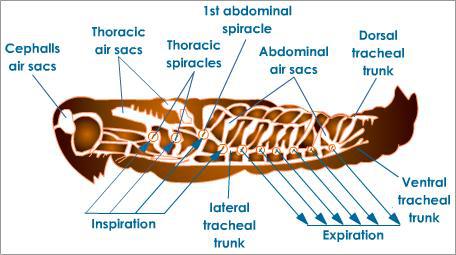
Insects are restricted in size because they have relatively inefficient respiratory systems.

When we think of respiratory systems, we usually think of the lungs or of gills. But insects have a different system called a tracheal system. Here is a picture of what the system looks like, using a grasshopper as an example:

Insects like this grasshopper have tubes that open up to the environment. Air (and oxygen) passively diffuse in from the outside and spread into smaller branched tubes, which bring the air into contact with most of the insect’s body cells. Larger insects increase the efficiency of this system by using rhythmic body movements to compress and expand their air tubes to help spread the air through their bodies. Even so, this is a relatively inefficient system, compared with that of the lungs. The reason is that diffusion — the spreading out of a substance to an even concentration — only really works well across a short distance. In a small insect, this diffusion process works fine. But larger animals, from squirrels to humans, require a more “active” respiratory system. So no worries, you won’t see a cockroach the size of a minivan any time soon. Phew.

OK, enough biology and chemistry for one blog post. Class dismissed.

Diabetic condemnation

I don’t often describe myself as “flabbergasted.” First of all, I think it’s an odd word. Second of all, it takes an awful lot to shock me that much. But I was definitely in a state of flabbergast today.

The stimulus? A rather traumatic translating session at the free clinic where I volunteer.

It all started out rather routinely. The patient was a middle-aged woman with unregulated diabetes. Her blood glucose — which should be around 90 mg per 100 ml of blood — ranged from the mid-100s to 200, according to the self-checks she did at home. This morning at the clinic, it was quite a bit above 200, and her previous visit it had been above 300. Not good. Really not good. Clearly, her current combination of medication and lifestyle wasn’t working. But insulin wasn’t an option, as she had tried it previously and suffered side effects that made her afraid to take it again.

The physician I was working with was obviously frustrated at her lack of improvement. He asked me to ask her what she’d eaten for breakfast, thinking that perhaps a sugary meal was to blame for the high blood sugar that morning. Turns out she had a licuado (shake) made of banana, strawberries, and milk, plus an apple. My guess is that she thought she was being healthy, while what she was really doing was causing her blood sugar to skyrocket with all of that natural sugar. (Yes, it’s natural, and yes, it’s fruit, but it’s still sugar.)

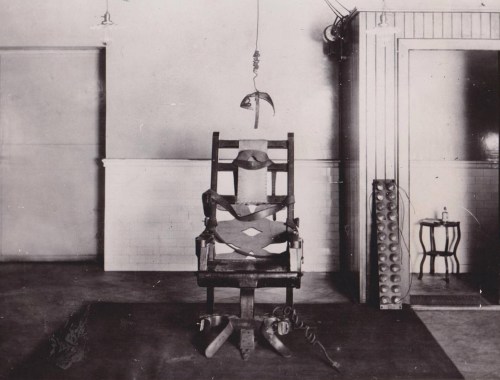
The doctor shook his head. “She’s eating like she’s going to the electric chair,” he said, half to himself, half to me. But clearly not to her. “Don’t translate that,” he hurriedly added.

I just sat there, a plastic smile on my face. What was I supposed to say? As a translator, I’m supposed to repeat everything that is said in the exam room in the other language so that it is as if there were no language barrier. But I couldn’t bring myself to repeat those words. Less for fear of angering the physician than for fear of horribly upsetting the patient. But, I will admit, both fears were active.

I’m not saying the physician had any ill will toward the patient. Quite the reverse — he was vocalizing his frustration at her non-compliance, her lack of improvement, and her potentially grim future. (The complications of diabetes include kidney, heart, vision, and circulation problems, among others.) But he did it in a way that was not inclusive, that didn’t engage the patient, but rather left her out of the loop at her own doctor’s appointment — a place where she deserved to understand everything that was going on.

I don’t know what I should have done. But I know what I won’t be doing when I’m a physician.

The Laws of Motion (and my thoughts)

To paraphrase Newton (and my physics book):

An object at rest remains at rest as long as no net force acts on it. An object in motion (with constant velocity) remains in motion, with the same speed and in the same direction, as long as no net force acts upon it.

My question:

Does Newtonian Dymanics apply to one’s thoughts?

My thoughts, you see, seem to be traveling a million meters per second. Without an opposing force, they show no signs of slowing down. And physics is the culprit, the force that put my thoughts in motion in the first place.

Well, maybe not physics itself. My fear of physics. Even more precisely, my fear of not doing well in physics.

I realize that this is a rather irrational fear, one not based on any evidence. So far, I am doing quite well in physics — I believe I am near the top of my class, in fact. A’s on my homework, labs, quizzes, even my first exam.

I have an A in the class. So why am I afraid of it?

I’m not sure. Perhaps because physics doesn’t come to me quite as naturally as chemistry or biology do. I really have to wrestle with the material in physics, sometimes on a problem-by-problem basis. It’s tough and taxing. Or maybe I’m scared because I have seen people work really hard in other subjects and NOT get the result (i.e., the grade) they wanted, and I see the possibility of that happening to me in physics. They don’t give out A’s for effort, after all. Or maybe I’m letting the pressure get to me a bit, all the talk about needing to keep your grades up, to do well in your post-bac courses … and I’m afraid that if I don’t ace physics this semester and next, I won’t achieve my end goal: getting into medical school.

Regardless of the reason for why physics produces a sinking feeling in my stomach, I need to deal with it as best I can. I don’t think I’m going to transform my viewpoint and suddenly *poof* love physics (although I do find it interesting). No, I don’t expect magic.

But I do need to exert a force on my thoughts to slow them down. Because according to Newton’s laws, they’ll just keep going unless I do something.

So here’s my plan: surround my physics experience with positivity. That doesn’t mean light scented candles or sing happy songs while I do my physics homework problems (too distracting, not to mention just plain weird). No, what this strategy means to me is that when I wrestle with a problem (or maybe more like five or ten of them), I reward myself in some way. I call or e-mail a friend, write a short blog post, or read (a non-school book) for 15 minutes. Do something positive after physics problems so that I associate the two. Ergo, physics doesn’t seem so scary.

Will it work? Will the force I exert through my “positive associations” be enough to slow my racing thoughts? I don’t know. There’s only one way to find out. So here goes.

(Note: Giving myself the time to write this blog post was a “reward” for doing more than a dozen physics problems today in preparation for an upcoming test. And let me tell you, I feel pretty good about things at the moment …)

Medicine: East and West

In mid-September, I attended a lecture on traditional Chinese medicine at Dominican University. I wrote this essay as an extra credit assignment for my biology class, but thought I would share it here as well.

When I think of the field of medicine, I think of procedures, treatments, and methods based on years (sometimes decades, or more) of rigorous research and scientific inquiry. With a father in medicine and a mother in nursing, that’s simply how I grew up. But my parents – and my liberal arts education – also taught me to approach new information with an open mind.

At Tuesday night’s lecture on Traditional Chinese Medicine by visiting Fullbright scholar Chia-Feng Chang, that was sometimes a challenge for me. Not because I went in with a closed mind, but because the core beliefs and philosophies of Chinese medicine are, in some respects, simply so very different from those of Western medicine. That said, I did take away from the lecture that there is more than one way to conceive of “medicine.” And I believe that each tradition deserves respect, regardless of one’s personal beliefs.

As a pre-medicine student, my plan is to focus the next several years of my life on studying the “hard” sciences – introductory classes such as biology and chemistry, and upper-level courses such as anatomy and immunology. So I had to keep my jaw from dropping when Dr. Chang said, “Anatomy is not essential to Chinese medicine.” Rather, she went on to say, practitioners of Chinese medicine see the body as an integrated whole rather than an assortment of parts. My immediate reaction to that was that, “Well, don’t you need to understand the parts to understand how the whole works?” I had a hard time wrapping my brain around Dr. Chang’s perspective, at a very basic level.

Another component of Traditional Chinese Medicine that was difficult for me to understand is in the field of pediatrics. According to Dr. Chang, Traditional Chinese Medicine physicians would examine the three middle fingers of a baby or young child and make diagnoses based on characteristics observed only from those fingers.

I think I found these aspects of Traditional Chinese Medicine difficult to comprehend because at its roots, Chinese Medicine is based not on scientific experimentation, but on the structural similarity of the human body to water, nature, and the heavens. In seeing these similarities, Chinese Medicine practitioners developed a theory that blood and Qi (energy) flow through a series of of  “circulation channels.” They then believe that all illness is due to congestion or blockage of Qi and blood. To cure an illness, the blockage must be relieved and flow and harmony restored to the body.

While the mystical aspects of Traditional Chinese Medicine do not appeal to me, they do to many people. And I personally know people who have benefitted from Chinese medical practices such as acupuncture and herbal remedies. So while I lean more toward Western medicine myself, I know it is not the only path. I respect the other paths; they are just not my own.

Caritas et Veritas: Love and Truth

On September 28, I attended a symposium at Dominican University about our school’s motto: Caritas et Veritas, “Love and Truth.” I wrote this essay as an extra credit assignment for my biology class. I thought it important enough to share here, too.

I couldn’t have asked for a better birthday present. Exactly 29 years after I entered this world, I was sitting in the Old Pool room at Dominican University listening to a discussion about how our school motto (“Caritas et Veritas” — “Love and Truth”) plays out in science and math courses.

While not everyone’s birthday wish, perhaps, nor cause for celebration in everyone’s estimation, it was exactly what I wanted to be doing that day. Of course, the Caritas et Veritas symposium wasn’t held just for me – I’m not quite that egocentric – but I certainly took away plenty from it, on a personal level. And not necessarily what I’d expected …

I’m a post-bac pre-med student. So clearly, I’m interested in science. What not everyone knows is that I’m also interested in literature. In fact, I was a high school literature textbook editor for nearly two years, specializing in American and English lit. So when I saw the lecture title, “A Gradual Dazzling: The Nature of Truth in Literary Studies,” my heart skipped a beat.

But honestly, the first three speakers (on ancient Greek drama, Romance literature, and contemporary Irish poetry, respectively) bored me. Not because the subjects were boring, but because the speakers were boring: they simply read from their (very technical, very specific) papers. I found myself struggling to follow along.

Then Ellen McManus got up to talk about the field of Literary Studies, and trends in the field. I found myself wishing she had spoken for the entire hour. Each progression of the field, starting with the T.S. Eliot-inspired “New Criticism” (which saw literature as telling a special “slant” truth different from psychology, science, religion, etc.), to Postmodernism (truth is an artifice in ALL texts), to the influence of cultural / queer studies on literary studies (you must uncover the historical truths embedded within the context of the text) fascinated me. But the most recent development – called “Consilience” – has me rapt. Believers in this philosophy of literary study are also called “Literary Darwinists.” They draw on evolutionary science to understand literature, and believe that different kinds of knowledge (i.e., science, psychology, literature, etc.) should be linked together in a nested way. I find this philosophy, also called “vertical integration,” very interesting. I desperately want to find out more about it.

I have already contacted Dr. McManus via e-mail and gotten her recommendation on two books about Consilience that she thinks are good places to start. My Amazon.com order is supposed to arrive this coming Wednesday … and I can’t wait.

After the literature seminar, I attended “What does Caritas et Veritas Mean in Science & Math Courses?” I was interested in this lecture both because I am taking three science courses (physics, chemistry, and biology), and also because my chemistry professor, Dr. Daniela Andrei, was one of the panelists. The panelists talked about how veritas – truth – is evident in that there is usually a “correct” answer in science and math courses. Caritas – love – they said, is evident in their interactions with students. One example they gave is that they work very hard to teach critical thinking skills to their students through encouraging participating, making connections between old and new material, figuring out what type of question they are being asked, etc.

After that section of the presentation, I asked a question: whether the presenters thought they could really teach critical thinking skills to students at the age of 18 or 20, or whether students needed to enter college with those skills already learned (and primed to be perfected). It wasn’t a rhetorical question; I was really interested in the answer. But I felt the question was dodged, or perhaps misunderstood. Professor Aliza Steurer responded that she believed you could learn at any age. Which I agree with, on a certain level. However, there is plenty of research out there that shows that students who don’t learn certain basic skills by early elementary grades (i.e., reading and certain math skills) are essentially screwed for the rest of their education. Now, whether this is a product of the quality of those students’ education or the plasticity of the brain is another matter. But I really do wonder whether students need to have acquired some skill set by a particular age, and past that age (which may be somewhat dependent on the person), they just can’t. Or at least, not as well or as flexibly or with as much dexterity. Motivation figures in as well, in addition to whatever base level of intelligence a person has. And when you start talking about that base level of intelligence, you get into the nature vs. nurture debate, going back to infancy (and perhaps even the womb) … it becomes a very complex issue with perhaps too many branches to keep track of at once.

I think I’m fascinated by the whole issue because I had a very non-traditional educational upbringing, and I often wonder how that has affected me. My parents are both very well-educated (a family physician and a nurse with her master’s degree), and they worked from the beginning to create educational opportunities for my two younger sisters and me. Reading was a constant activity in our house, from day 1, for example. But the really atypical thing was that we were all homeschooled for several years (my first year of public school was sixth grade). Of course, we had textbooks. But that was only the beginning of our education. Area museums provided hands-on science, history, and art exhibits to engage us on those subjects. The local butcher had what we needed for every dissection possible. Chicago’s ethnic neighborhoods offered the chance to study microcosms of the world’s countries, up close (including a taste of each country’s cuisine). On vacations, we studied ecosystems and plant and animal life. Life meant – means – learning. How did all of that affect the way I absorb, process, and maintain information? I don’t know exactly, but I believe the effect was a positive one.

But I digress. The last session I attended was “Seeking, Detecting, and Even Deleting the Truth: How Neuroscience is Changing Our Understanding and Powers Over Truth.” I will address the last two speakers first. While I found the subjects – using brain imaging as lie detection and drugs to delete memories – to be interesting ones, I find them extremely problematic. From the evidence presented, it seems that there are serious functionality issues with the lie detection / brain imaging idea. I certainly would not want it used to test my guilt / innocence at this point in time. In terms of the memory erasure idea, while it does seem to work in rats (which is fascinating), I see some ethical considerations in using this on humans. Also, I would be concerned as to how this would affect the rest of the memory system. I found these two topics very thought-provoking, but not particularly practical.

I connected more with the first presentation, which more about the philosophy of science as related to Veritas (truth). First of all, I found Dr. Scott Kreher’s* definition of truth – “Truth is how the world really is” – to be very interesting. Not that I disagree with it, at this point in my life. In fact, I find it very appealing. However, had you asked me 15 years ago, I would have responded with a much different definition of truth – “I am the Way, the Truth and the Life. No one comes to the Father but by me.” That Biblical passage still rings in my ears more than a decade after I (very decidedly) left my conservative religious upbringing behind in favor of a more empirical approach to the world.

Dr. Kreher’s definition (or perhaps explanation) of science also intrigued me: Science is a set of processes that allows us to approach the truth. (emphasis added) If you think about it, that’s so obvious. Scientists so often replace old facts, hypotheses, even established theories with new ones, based on newly discovered evidence. Practicing science requires a certain level of humility. Yet so many people look at scientific discoveries as unalterable FACTS. They don’t question them, or think critically about them. I think part of the fault there lies with the media (of which I used to be a member). A scientific paper or study will come out, and the evening news will report it in a skewed way, for maximum shock value, as a truth (or nearly so). When really, as Dr. Kreher said, “We’re always just approaching the truth.”

As I said, the Caritas et Veritas Symposium was like a gift. At each lecture, I received something to ponder, to take with me. Not merely because I went to the lectures. That’s not enough. But because I brought myself, open and vulnerable, and willing to refine my own definition and understanding of Caritas et Veritas, both in relation to my education and to my life in general.

*My biology professor

Lost & found in translation

It’s allergy season — especially for those sensitive to ragweed, like Maria Juarez.* She came in to see the nurse practitioner at a local free clinic reporting a runny nose, itchy throat, sneezing, and wheezing — all of which had lasted for weeks. She used to take an inhaler, but had run out. Over-the-counter allergy medications made her sleepy. Maria wanted to know if there were any better ways of controlling her symptoms.

Sounds like an easy enough clinical encounter, right? Except that Maria spoke only Spanish, while the nurse spoke only English. That’s where Mark* and I, Spanish medical translators at that free clinic, came in. Our job was to translate everything that was said from one person to the other to make sure the appointment went smoothly.

For people who live outside their native countries and who aren’t fluent in the second language, this happens all the time. But for those of us born and raised within the same borders, it’s something we rarely, if ever, have to think about. But while you read this blog post, it’s something I want you to actively consider.

It’s so easy to take verbal communication for granted: understanding, being understood. That is, until you can’t understand, or be understood. I know from experience that this position — especially in the medical context — feels like one of powerlessness, of vulerability. And it is. You feel at the mercy of those around you because you can no longer fend for yourself. Nor defend yourself, for that matter. You must take others at their word. What other choice do you have?

I had no other choice. I was 15, in a foreign country. And we’re not talking on the other side of the border here. We’re talking across the ocean, across continents. In China. Beijing, to be more precise. I had a fever, sore throat, reduced appetite, and was generally miserable. Was it an infection? Some rare disease? My high school chaperone thought not, but took me to a doctor to be on the safe side.

While many of the young students we encountered in Beijing spoke English, this doctor evidently did not. Gestures and body language will only get you so far. Fortunately, there was someone to translate the Mandarin to English. This was more than a dozen years ago, so I don’t remember whether the translator was a member of the doctor’s staff or had come with my chaperone and me, but no matter. She was able to make the situation clear: I had a throat infection, and should take antibiotics for a week or so. I remember the doctor handing me a bottle with lots of Chinese characters printed on it, which was a little frightening (not being able to read for myself what was in the bottle). But again, the translator came to the rescue and explained the dosing instructions and contents. We thanked the doctor and made our way back to our hotel, much relieved.

Looking back on the situation, I completely took that translator for granted. Very Eurocentric of me, expecting there to be someone who could speak English (although I can hardly hold that against myself at 15). But what if there had been no translator? I doubt very much that the Chinese doctor’s message would have gotten through, and I certainly would not have taken any of that medication without knowing exactly what it was and when (and how often) I was supposed to take it.

And now I find myself in the translator’s role. A human cultural-linguistic bridge. I am helping to transform that feeling of powerlessness into one of power, into ownership of one’s health care. And that feels like a job very much worth doing.

*Names have been changed to protect people’s privacy.