doc w/ Pen

journalist + medical student + artist

Category: Uncategorized

I amplify DNA. Yes, I really do.

“I trust you.”

That was about the greatest thing my research supervisor, Olga, could have said to me. She was referencing my skills at setting up PCR (polymerase chain reactions). And it’s quite helpful that she trusts me with these reactions, because the work in our lab involves doing quite a bit of PCR.

Not only am I precise and accurate with these reactions, I am also building up my speed. I was setting up 24 tubes of PCR last Thursday, for example. Olga came in to check on me and asked how I was doing. “I’m done,” I told her. “You’re done?” she asked, brows raised in surprise. “Pretty soon you’re going to be a machine!” Another high compliment from a highly intelligent woman with a PhD who can pipette with lightning speed. Compared with my snail’s pace from last summer – when I came in not knowing what a pipette was, and certainly not knowing how to use one – I’ve come a long way.

While those of you familiar with lab protocol likely know what PCR is, most people don’t. I certainly didn’t until last summer, when Olga expertly and succintly explained it to me. It’s quite marvelous, really, how it works. I thought I would take a blog post to explain it, since it’s been such a big part of my lab work lately.

The goal of PCR is to amplify a specific region of DNA. There are three steps in PCR: denaturing, annealing, and elongation. These are fancy, scientific words for breaking apart the entire strand of DNA, using what is called “primers” to bind to the broken-apart DNA, and then employing a special enzyme called taq polymerase to synthesize a copy of the specific DNA region you want. You do this through cycles of heating and cooling to promote these different steps. This yields an exponential amount of the region of DNA you want. Pretty cool, eh?

Here is a visual representation of the process*

The technique was developed in the 1980s, and in the 1990s, its inventors were awarded a Nobel Prize. It’s amazing to me that less than 30 years ago, we did not even have this technology. Science has come such a long way, and I am thrilled to be a part of it.

*This image was downloaded from the online edition of: Molecular Cell Biology. 4th edition. Lodish H, Berk A, Zipursky SL, et al. New York: W. H. Freeman; 2000.
Available on the NCBI bookshelf: Molecular Cell Biology

Musical Mixing: My Personal Anthem

I love music. Always have. One of the things Geoff* taught me was to create music “mixes” on iTunes. Great fun! I especially like creating themed mixes – for example, I made one using songs that are about animals, one about war, one about colors. I am in the process of creating one I call my “Personal Anthem.” It includes songs that I find encouraging, inspiring, and of personal meaning. One song I recently came across is The Roots “The Fire,” which I will definitely work into that mix. I want to share the lyrics from that song. It is about ambition, and not giving up – a poignant message for any student, or anyone at all.

“The Fire,” by The Roots

[Chorus]
There’s something in your heart,
and its in your eyes
It’s the fire, inside you
Let it burn


You don’t say good luck
You say don’t give up
It’s the fire, inside you
Let it burn


Yeah, and if I’m ever at the crossroads
And start feeling mixed signals like morse code
My soul start to grow colder than the North Pole
I try to focus on the hole on where the torch goes
In the tradition of these legendary sports pros
As far as I can see I made it to the threshold
Lord knows I waited for this a lifetime
And I’m an icon when I let my light shine
Shine bright as an example of a champion
Takin the advantage never coppin out or cancelin
Burn like a chariot, learn how to carry it
Maverick, always above and beyond average
Fuel to the flame that I train with and travel with
Something in my eyes say I’m so close
To having a prize
I realize I’m supposed to reach for the sky
Never let somebody try to tell you otherwise


[Chorus – John Legend]
There’s something in your heart,
and its in your eyes
It’s the fire, inside you
Let it burn


You don’t say good luck
You say don’t give up
It’s the fire, inside you
Let it burn


One love, one game, one desire
One flame, one rhyme, fire
Let it burn higher
I never showed signs of fatigue
Or turned tired
cause I’m the definition of tragedy turned triumph
It’s David and Goliath
I made it to the eye of the storm
Feeling tore like they fed me to lions
Before time start to wind down like the Mayans
I show ‘em how I got the grind down like a science
It sounds like a riot on hush
It’s so quiet, the only thing I hear is my heart
I’m inspired by the challenge that I find myself standin eye-to-eye with
To move like a wise warrior and not a coward
You can’t escape
The history you was meant to make
That’s why the highest victory is what I’m meant to take
You came to celebrate
I came to cerebrate
I hate losing I refuse to make the same mistakes


The fire, the fire…


[Chorus – John Legend]
You say don’t give up
It’s the fire, inside you
Let it burn


The fire, inside you (x3)
[End]

I find myself listening to this song over and over, in part because I love the music, in part because I love the lyrics (I’m a big lyrics person, clearly). I don’t know the rest of the album, but you can get this one song for $1.29 on iTunes. That’s less than a 20-ounce bottle of soda. If you’re looking for a positive song with a good beat and you like spoken word, this is it.

*Geoff is my soon-to-be ex-husband, for those of you who haven’t read some of my recent posts.

These Are A Few Of My Favorite (Science-y Artsy) Things

As an artistic person, I love looking at other people’s work. Etsy.com is one of my favorite sites – there are literally thousands of other artists and crafters on there, selling their wares. A couple of days ago, I decided to see whether there were any science nerds creating arts and crafts. And by jove, there are. Here is a collection of hand-picked favorites (in no particular order). I have included a link to each one in case you are inclined to visit the person’s store and purchase something, which I wholeheartedly recommend!

AUG start codon “new beginnings” necklace ($100)

Those of you who know me well know how much I love proteins. And every protein starts with the amino acid sequence “AUG” – the so-called “start codon.” So how could I not love molecularmuse’s necklace?

Liver In A Jar Anatomical Curio ($19)

If you’re starting gross anatomy – or know someone who is – what could be better than a felted liver in a glass jar? Shop owner yourorgangrinder also makes a brain, uterus, kidneys, heart, pituitary gland, lungs, and much more. So if you’ve got a favorite, she (or he?) is sure to have it. Happy dissecting!

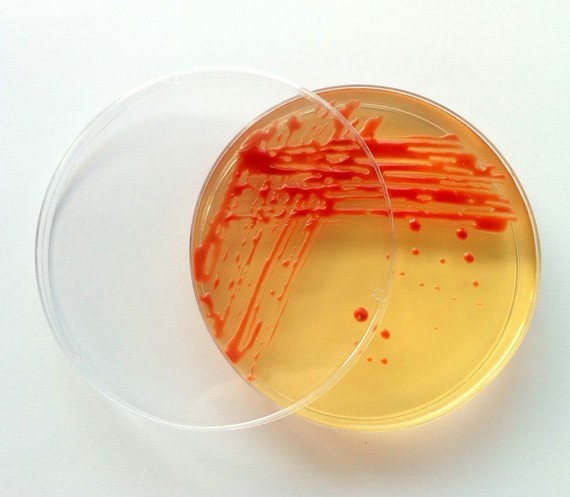
Soap – Red Escherichia coli in a Petri Dish – Natural Honey Scent ($7)

Last semester in my research seminar class, we did a series of antibiotic resistance experiments. Good times, let me tell you. And let me also tell you that CleanerScience’s bacterial colonies look real, in terms of the streaking pattern. (Our colonies were off white, not red, but I’ll allow for artistic license in terms of color choice in the soap.) Super cool. And pretty ironic, to be using a bacterial plate as soap. I love it. What a scientific sense of humor.

Plush Mossy Chiton ($16)

Chitons are present-day creatures that look totally historic. We learned about them in Bio II, and looked at a preserved specimen in lab. This guy – made by LaBaleine – is pretty cute, if you ask me. And what a piece of history! All done in felt. Awww …

Neuron Necklace ($19)

I was trying to go for diversity in my listings, but I had to include two necklaces. This neuron necklace by Anatomology is so cool, and a great price. Just check out that axon and those dendrites. Just don’t wear it to your neuro exam … the professor might think you’re cheating.

Baby’s First Microbiology Book ($41)

When you first see the price of this book, you might think to yourself, “Well, I should just buy Baby a real micro textbook, for that price!” But don’t be fooled. This cushy, yet crunchy book has several felted pages of actual microbiology-related concepts. Hooray for science! Next time a friend – maybe even a stranger – has a baby, I’m totally buying them one of these. It’s that awesome. VerdantViolet also makes baby “textbooks” on nuclear physics, neuroscience, and other such topics.

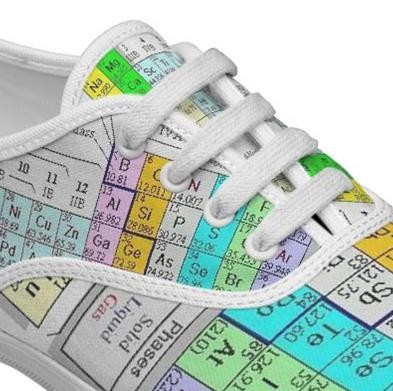
Periodic Table of the Elements Women’s Sneakers ($83)

The last thing I need is another pair of shoes. I’ve got dozens, literally. But these nifty printed Keds, by juicygems, are rad. In the Radon sense. (If you didn’t get that chemistry pun, Google search an image of the periodic table and scan it until you find the symbol “Rn.”) I’m drooling over them. In the frothy H2O sense.

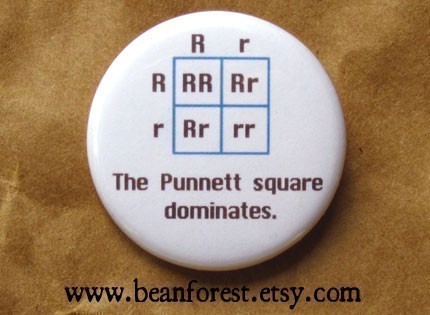
the Punnett square dominates ($1.50)

What can you buy for a buck-fifty these days? Not much. But beanforest sells these nifty buttons that allow you to show your support for the Mendelian genetic ratio at a great price. Turn it into a frig magnet for just fifty cents more. Cool beans.

Chemistry Crayon CLEAR labels – set of 120 ($15)

Here’s another way to expose the kiddies to science. Specifically, chemistry. They’re going to color, right? With QueInteresante’s stick-on crayon labels, they’ll inadvertantly be exposed to chemical compound names and formulas too. He-he-he. So tricksy.

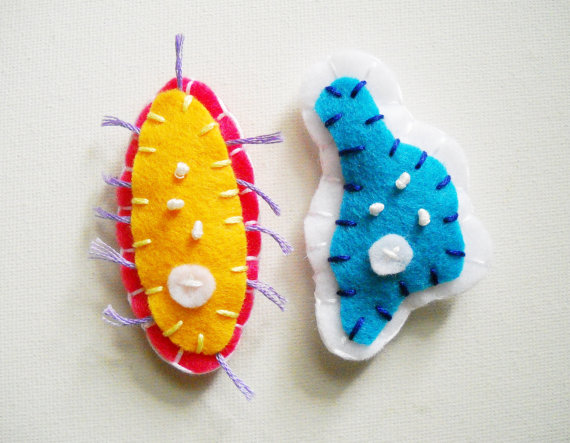
Amoeba and Paramecium Felt Magnet Pair ($16)

These guys are fast swimmers when you view them under the microscope! I have quite fond memories of watching them squiggle, squirm, and pseudopod their way through their environments. These frig magnets by whatnomints are a fun, abstract reminder of those times.

Knitting in Biology 101 dark cork background ($95)

If I’d had the money, I totally would have bought aKNITomy’s frog dissection piece for my biology lab instructor from last year. I think she would have gotten a huge kick out of it. It looks so real! Even has those flat-head stick pins.

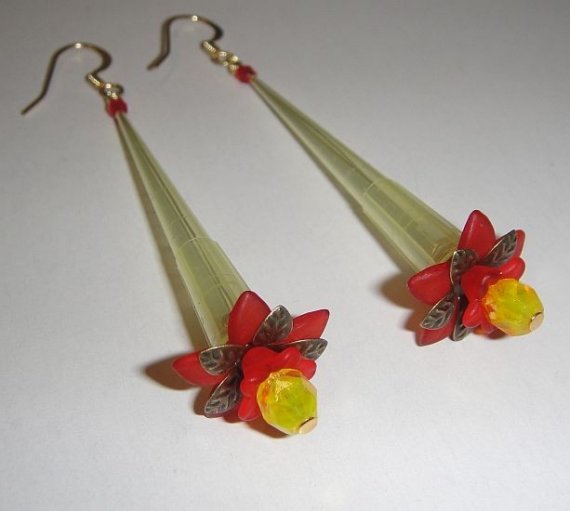
Pipette Tip Earrings with Red and Yellow Flowers ($10.50)

As my lab supervisor, Olga’s, PCR expert, I spend a good part of my day pipetting. So when I found these pipette tip earrings, I did a double-take. I gasped. Then I laughed. This is such a creative, fun gift idea for the lab worker. Heck, for anyone who likes research science. I’m going to buy a pair. Unless someone buys me a pair first. *Hint hint!*

Look At The Lab!

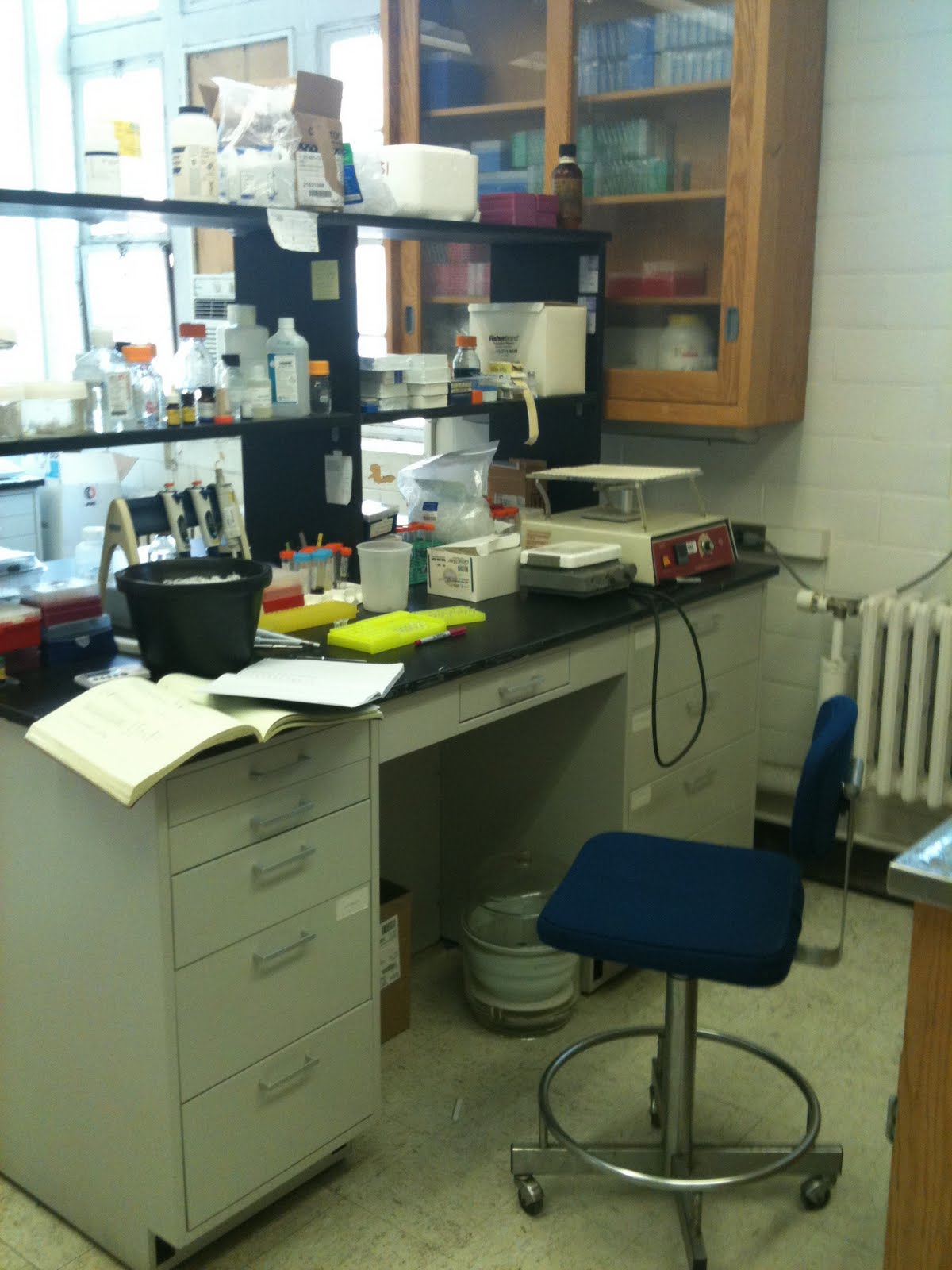
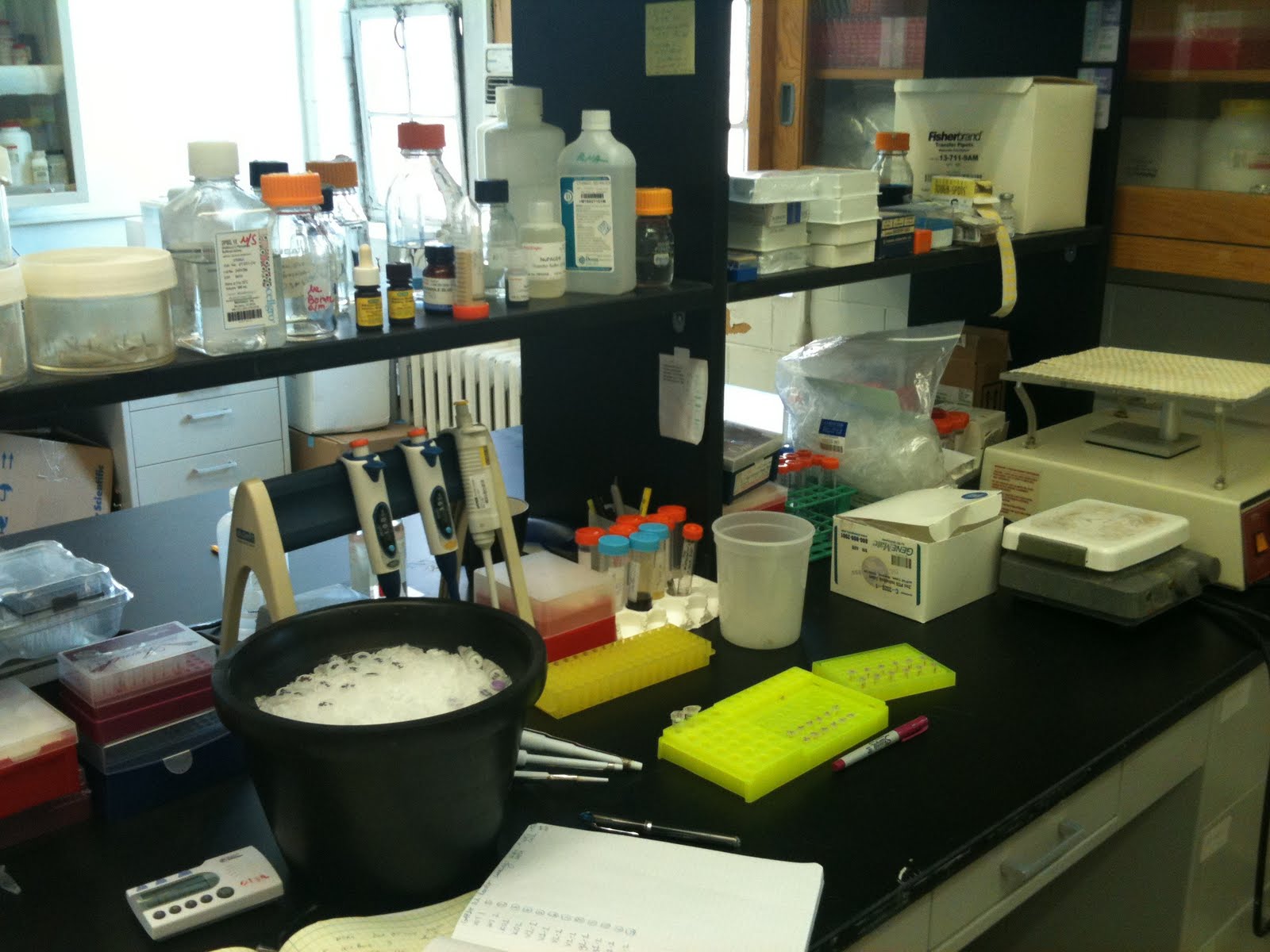
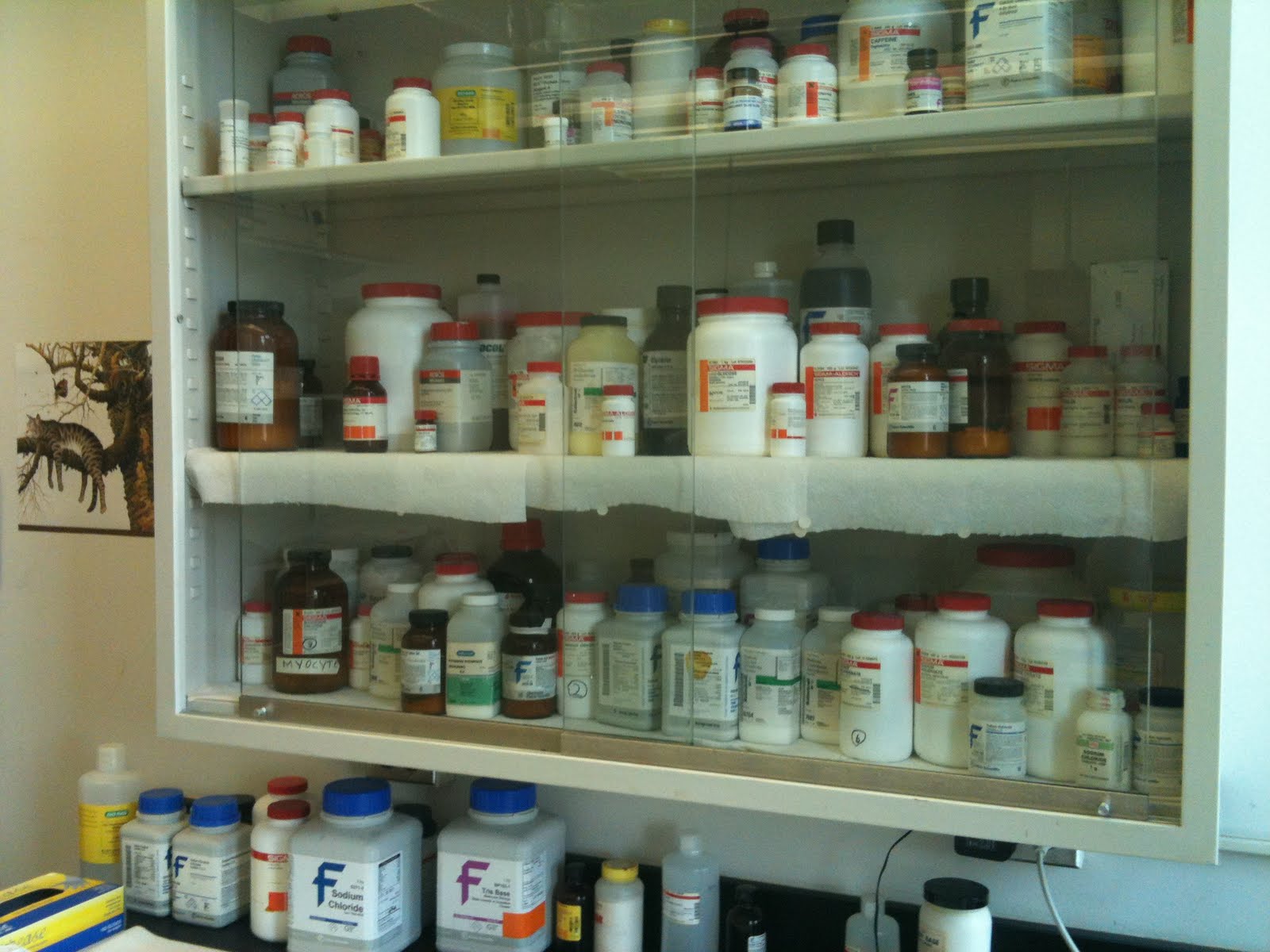
I took a few photos this morning of the lab where I work, just for the heck of it. I thought people might like to see the environment. Enjoy!

My workstation
Tools of the trade: ice, pipettes, tubes, my notebook. 

The chemical stock cabinet … look at all the goodies in there!

Pack Your Bag …

When I walk into an office supply store, I feel like a kid in a candy store. I really do. Only better. Aisles, aisles, and aisles of all colors, shapes, and sizes of things that will *supposedly* make my life better and easier; more productive and more organized. And to a student, one who plans on going to medical school, that’s way better than a chocolate bar that’s gone in a matter of minutes.

OK, so maybe writing my anatomy notes in metallic cyan gel pen won’t make my life better. But I have found some office supplies that do help me stay better organized, productive, and efficient. (And yes, I find them fun, too.)

Note: I don’t normally endorse specific products or brands. It goes against my grain. But in this case, I am making an exception, because I have truly found that there is a difference between brands of highlighters, erasers, pens, etc. Take this all with a grain of salt, of course; I haven’t tried every brand out there. But this is what works for me. Happy studying!

Highlighters

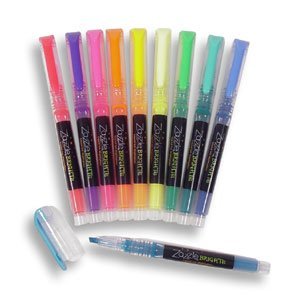
I am a highlighting maniac. I highlight my books, research articles, sometimes even my class notes. But I found that the typical, average, everyday highlighters – the ones you buy in packs of 10 for $5 – just weren’t cuttng it. Plus, I’m a color freak. I use different-colored highlighters to signify differing levels of importance, for example, or to connect themes. So buying a big box of yellow markers wasn’t helpful to me. Somehow I stumbled across liquid highlighters, which seemed like a great idea because the regular ones were just too dry. I read a bunch of customer reviews on Amazon.com and decided on Zazzle Brights. I absolutely LOVE them. They’re not perfect – a couple of the darker colors are really dark – but they’re totally worth the money.

Flags
No, I’m not talking about the good old Stars and Stripes. I’m talking about another way to mark your place in a book or article – sticky plastic (or paper) flags. Post-it makes great ones, although they’re quite pricey. I happened to find a giant pack of flags at the dollar store once (albeit a generic brand), which was a great deal. If you find these on sale, I recommend stocking up.
Storage Clipboard
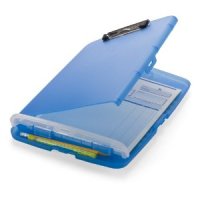
I am going to shift gears a bit here and talk about how to organize note-taking. First of all, I hate spiral notebooks. I just do. You can’t add anything to them. So when the professor gives you any handouts, you have to stuff them inside your spiral notebook and hope you don’t lose the papers. So what I do is take notes on college-rule paper. But to do so, you need a hard surface to write on. And those little desks that fold up from lecture hall chairs are often about the size of a coffee cup. I’ve found that using a clipboard, and setting it on my lap, works well. I found the coolest clipboard last year – one that pops open to reveal a storage compartment (for those handouts) and also has a smaller storage compartment for a pen or pencil. Highly recommended.

Three-Ring View Binder 
(with momi paper)
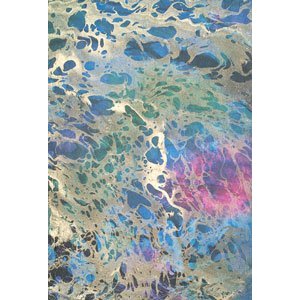
If you take notes on college rule paper, you obviously have to put those notes into a binder. I like the view binders, which have a plastic cover across the front and so allow you to slip something inside. Photo collages are one option, but I’ve elected to go the artistic route, using a special art paper called “momi paper” (from Amazon.com also), cut to fit inside the plastic sleeve. The paper comes in all colors, and it turns each binder into a work of art.
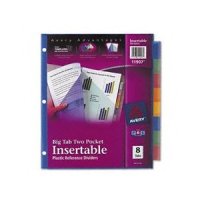
Plastic Dividers With Pockets
Another necessity for binder-style note-taking is using dividers to separate each section. Personally, I use one binder per class, and then create separate sections in each binder for different types of notes and/or handouts. Example sections include class notes, exams, quizzes, equation sheets, and so on. It totally depends on the class. I like the dividers with pockets so that you can slip something inside in case you don’t have time to hole punch it right then.
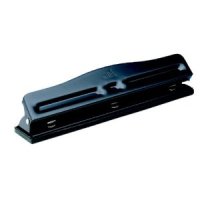
Hole Punch
Which brings me to my next necessity: a hole puncher. And not one of those cheapy ones that you can slip into your backpack. A nice, heavy duty one (which means it will be heavy). My strategy is to hole punch and organize my notes and handouts (which are stashed in my clipboard) every few days. Every day is a great goal, but I just don’t seem to get around to it. I don’t have a particular brand recommendation here – just make sure this is hefty, and punches nice holes. If you buy one online, read the customer reviews first.

Graph Composition Notebook
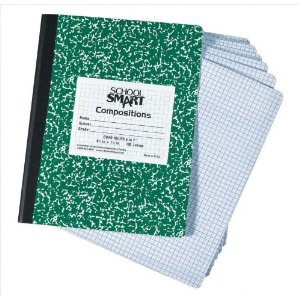
When it comes to scientific research, though, a 3-ring binder is not the way to go. You need a composition notebook – the kind that you can’t tear sheets out of, or add to. I prefer the graph sheet type, because it makes creating charts and tables easier. Again, the brand here doesn’t matter, as long as the paper is of decent quality.

Bleed-Resistant Pens
When you keep a lab notebook, there’s always the risk that something might spill on it. That’s just the reality of things. It might be water, it might be hydrochloric acid. Regardless, if liquid spills on your paper, you don’t want your ink to bleed all over the place (that makes reading your writing a tad difficult). So it’s best to use pens that resist bleeding. This was the recommendation of my chemistry professor from last semester, and it totally makes sense. I tried uni-ball’s Vision Elite pens (which come in a lovely array of colors), and I love them. No bleeding, no starting and stopping. Fluid, flowing ink. And not super expensive, either.

Dr. Grip pens and pencils
If you’re just taking notes for class, however, I recommend something else: Dr. Grip pens. Specifically, the Center of Gravity model. Very cushy and comfortable to hold, totally worth the price. For math and physics (or other practice problem-oriented courses), the Dr. Grip pencils are also great.
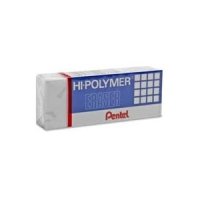
Hi-Polymer Eraser
For those practice problem-oriented classes, you’re also going to need an eraser. My favorite, by far, is Pentel’s Hi-Polymer Eraser. No black marks – seriously. Awesome.

I could to on, but these are the highlights. (Pun intended.) If you have any of your own favorite office or school supplies, feel free to leave a comment on my blog. I’m always looking to add to my backpack arsenal.

ADCOM Q&A (being friendly)

Being a physician means, obviously, working with people. A lot. So this is a natural question for ADCOMS to ask: “Are you a friendly person?”

And “yes” better be an honest part of your answer, if you want to get into medical school.
It’s easy to be friendly with your friends, though. What really makes a person “friendly” in the way this question is referring to is engaging with people you don’t know. (In a positive way, obviously.) I was reminded of this last Thursday at the airport. A severe thunderstorm (that’s summer weather in Chicago for you) delayed my flight by more than two hours, which I didn’t discover until I arrived at Chicago’s O’Hare International Airport. I plunked my bags down in the Delta Airlines check-in line and waited. When it was my turn, a very pleasant woman helped me figure out how I was to make it to my final destination – Las Vegas, Nevada, for a non-traditional pre-medical student conference – via Minneapolis even though I was going to miss my initial connecting flight in Minnesota. I thanked her, and then before I stepped away I said: “You know, you have been very helpful. When people’s flights get delayed, they get pissy, and I know that’s not your fault.” She looked surprised. “Thank you for saying that,” she replied, and smiled.

Being friendly means going out of your way to make contact with the people around you. Sometimes you wind up actually making a friend – one of my most wonderful friendships resulted from a conversation a woman and I happened to strike up the first day of Gen Chem I last year – while other times you connect briefly and never encounter one another again. But it’s all about your attitude toward people, about valuing them, about valuing those connections and that contact. Because you never know what difference you might make in someone else’s life, or what difference they might make in yours.

Rolling Up My Sleeves

It’s my second summer here at the research lab. Which means I know my way around: which elevators run the fastest, which coffee shop makes the strongest coffee, which room has the best air conditioning. It also means I feel more a part of the lab culture, and that I get to do really important tasks. Like cleaning.

Yes, I’m being serious. Cleaning is a major part of running a lab. Otherwise, samples and supplies get contaminated. And that does not bode well for the success of very expensive experiments.

This is not the sink that I actually cleaned out – it’s an image
I found on the Internet – but it looks JUST like it.

Last week, I helped another researcher, Tim, wipe down an incubator (a warming unit used to store cells) with bleach and alcohol, and also cleaned some cabinets, shelves, and a sink so we could better organize our lab space.

Of course, if I spent all my time here cleaning, I wouldn’t be all that happy. But I know it’s part of the job. It has a purpose. And I treat it like I would any other task here.

So when people tell me that I have no idea what research is really like, when they question my desire to further pursue it (along with clinical medicine), I don’t listen to them.

Do I know what it’s like to spend years on a single research project? No. I can’t know that without actually doing it. There’s a bit of a catch-22 there. But I do know the frustration of experiments not yielding results. I know what it’s like to spend hours in a hot room pipetting samples into tiny tubes for PCR. I know what it’s like to “hurry up and wait,” as my Grandma would say. I know what it’s like to glove up and scrub years of black grime off an ancient sink so it can be used again. And yet, I still want to do this. Because I also know the excitement of discovery, and even more basic than that, of asking questions and seeking out answers. Research gives you a place to do that. Am I crazy? Probably so. But I figure I’m in good company. Oh, and if you decide to put me in a padded room, would you at least let me bring an Eppendorf pipette set? It would mean the world to me.

Come on in …

I’m having a housewarming party at my new place in a month or so, and I’d love to extend an open invitation to all of you. But since I know I have readers from across the country (and across the world), I’ll take you on a virtual tour. So welcome, and come on in.

I live on the third floor of a huge, old red brick apartment building just outside Chicago. I’m guessing there are somewhere around 25 units in my building, give or take. (Don’t quote me on that.) Coming up the front entrance, and entering my door, you peer down a long, narrow hallway. But that’s not very interesting, so I don’t have a picture of that. If you turn around to the right, though, this is the view you get:

This is *supposed* to be my living room, and those big windows look out onto the street. However, the lovely, overstuffed maroon couch I bought on Craigslist (couch + loveseat = $170 = major steal!) wouldn’t fit through the narrow doorway leading into this enormous room. So I turned it into my music studio – I’ve played the piano since I was 9 years old – and my study. My keyboard (a book of Scott Joplin rags – my newest music endeavor – is on the stand) and amplifier are at the east half of the room. Looking south, you see the faux fireplace and mantle, and toward the west is my desk:

Heading out of the “living room,” you pass a small coat closed and then enter my bedroom. It’s not a bad size for being an old apartment bedroom. Here are a couple of views. Notice the vintage side tables and multiple jewelry boxes. They’re for storing vintage jewelry, of course.

Go out the bedroom and down that long narrow hallway, and you will find yourself in the formal dining room. Well, that’s what it is supposed to be. But because my couch wouldn’t fit in the living room, the dining room became my living room by default. That’s OK … I don’t have a huge dining set anyway (not anymore, at least).

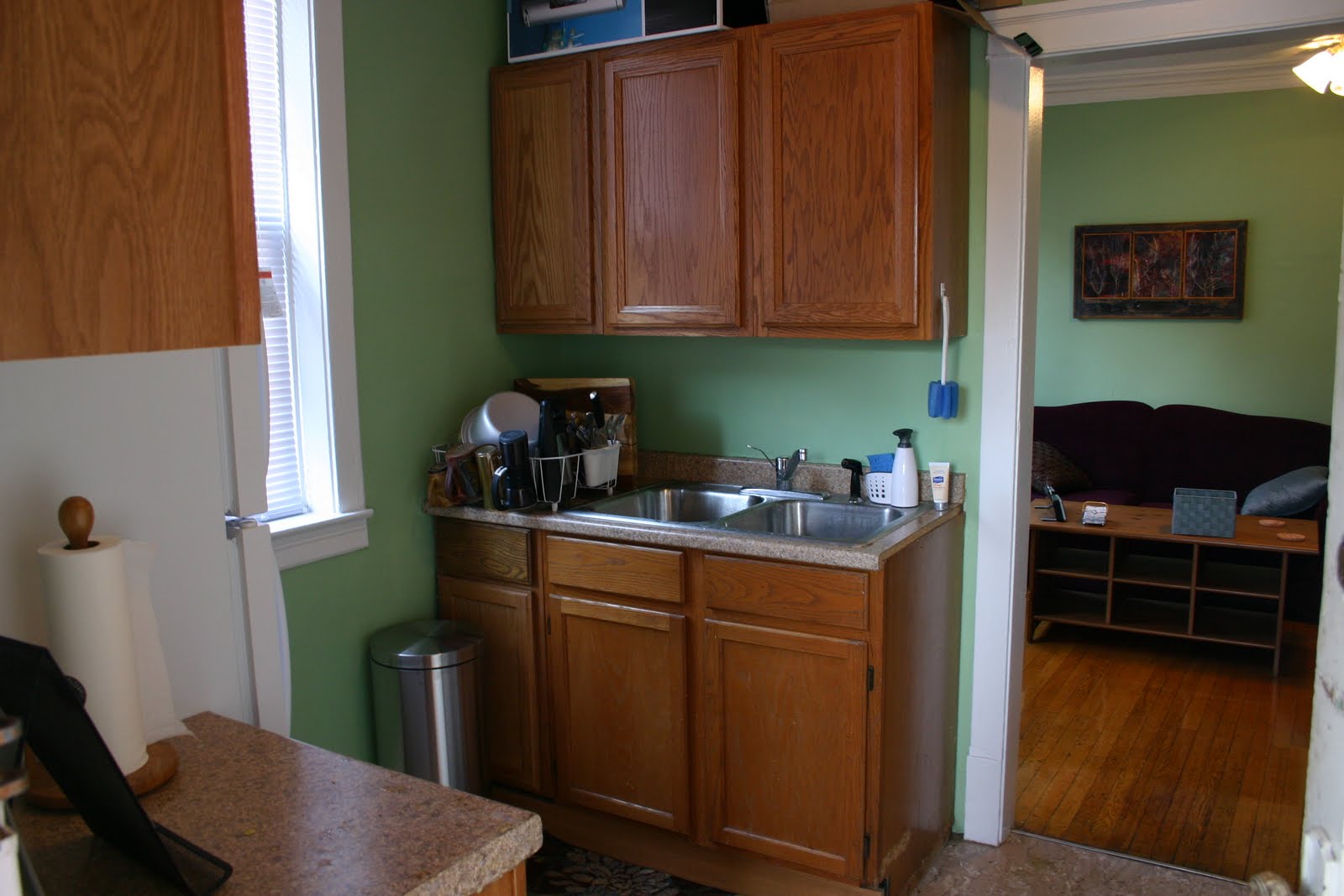
Off the “living room” is the kitchen. While it’s not huge, it’s plenty big for one person. And it has more cabinet space than the kitchen in my old house (if you can believe that). Plus, it has an awesome pantry which, even with all I’ve put in it thus far, still has plenty of space for more.

My walls are still pretty bare – most of my art is still at my old house, which we’re trying to get on the market by July 4 – but I think the place is shaping up nicely. This apartment has its quirks, for sure, such as a serious lack of outlets. But I also find the lovely wood floors and original moulding incredibly charming. It’s slowly – ever so slowly – starting to feel like “home.”

Reporting For Domestic Duty

On Thursday morning, I woke up early with a mission in mind: to put together my mission-style desk that had arrived a few days earlier in the mail (in a flat box, filled with lots of sticks and slabs). I drank my coffee and then used a razor blade to slice open the straps holding the box together. I fished out the instructions and the bags of hardware. I read the first page of the instruction booklet: “You will need a phillips screwdriver to complete this assembly,” it read. I groaned. The only tool I had in that apartment was a hammer, for putting up pictures. Nothing else. But instead of getting bent out of shape – or calling someone and asking for help – I decided I needed to take care of this on my own. I remembered that Home Depot opens at 6 a.m. It was already 7:30. So I slipped on a pair of sandals, patted down my hair, and hopped in my Honda Civic. Later that evening, after a long day of errands, I finally put together the desk, without too much incident. I also installed not one, not two, but three window AC units in my apartment. 

Not that there is anything wrong with asking for help – I certainly needed it carrying those three AC units up the three flights of stairs to my apartment. But when you live on your own, sometimes you have to take things into your own hands – literally – to get the job done.  

Shower Periodically

One thing I forgot to mention in my post about moving in: I found the most incredible shower curtain for my new bathroom. Yes, I’m excited about my shower curtain. Take one look and you’ll understand why:

Yes, this shower curtain has the periodic table of elements on it, complete with a conversion chart (Fahrenheit to Celsius and all that good stuff) at the bottom. Perfect for a doctor/researcher-to-be, don’t you think?