doc w/ Pen

journalist + medical student + artist

Tag: palliative care

“I will not repeat”

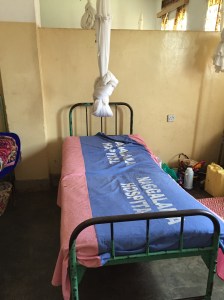
Dr. Jemella Raymore, the ward nurse, and I must have talked with him for a half hour. He was a slight man, wearing black pants too big for his spindly legs. His shirt, camel colored with blue plaid sleeves and collar, was only buttoned halfway up. He was seated on his hospital bed, which was covered with a purple- and gold-flowered fleece blanket. He kept his hands folded and his eyes down, speaking softly, almost inaudibly, as if he weren’t even here. Or didn’t want to be. We were almost the same age, I realized as I looked at his chart. He looked so sad. He’d swallowed poison two days ago and been brought in on a motorcycle. He survived the suicide attempt, and was about to be discharged. But he was clearly still in great distress. So his doctor consulted the palliative care team. 

This man’s case isn’t technically a palliative care case. But it seems that any time feelings are implicated, the palliative care team gets called. (Under normal circumstances, this means calling the local palliative care nurse and her assistants, but it also means calling the American doctors when they’re visiting.) There’s unease around feelings, and what doctors can, or should, do about them. So Jemella and I talked to this man. We listened to his story, one I guarantee no one else at the hospital had heard: his family and his wife have been verbally abusing him. He told us that as a result of this abuse, he’d thought about suicide before, even picking up the poison, but always putting it back down again — until a few days ago. We asked him about his life. About his children, his work, what brings him joy. We encouraged him that his life matters — to his friends, and to us, even though we may be strangers. We encouraged him that finding someone to talk to about his struggles, whether a religious figure or a friend, is not a sign of weakness. It’s a sign of strength. We told him he’s a strong person for enduring so much pain. 

We also asked whether he still felt like hurting himself. At that, he finally made eye contact. The nurse translated his words as this: “I will not repeat.” 

My first birth, and a death

Conditions in this rural Ugandan hospital are very different from those in the urban New York City hospital affiliated with my medical school. Grief, though, is very much the same — as is the importance of listening to patients express their grief.

In palliative care, it’s called a “warning shot.” When you’re about to give someone bad news, you give them a heads up before you drop the actual bomb. One late afternoon, I got a warning shot in the operating theater here in rural Uganda when I witnessed my first Caesarean section. But like so many people, I believed in the best. So the next morning when I returned to see the mother and new baby, I did so with hope.

I didn’t expect that my first birth, nor my first Caesarean section, would be in Uganda. I’m learning that here, the unexpected is the expected. We had simply gone to the hospital for a quick tour. We ran into one of the doctors just as he was headed to do a C-section. He was happy to let me and Jemella, who is a palliative care physician from New York, watch. As Jemella and I watched the surgery, she talked me through what was happening — she described the layers of flesh the surgeon was cutting through. She prepared me for the gush of amniotic fluid (cause for the surgeon to wear a plastic apron and white rubber galoshes). What neither of us was prepared for though was the actual birth — a premature baby, umbilical cord wrapped around his neck, skin blue blue blue. That’s all I could think when the doctor pulled the baby out through the incision in the woman’s abdomen — “I can’t believe how blue that little baby is.” I wondered to myself: “Is he even alive?”

Not how I expected this birth to be. I expected the baby to come out pink and healthy, to wail, to be placed in his mother’s chest as she roused from her anesthesia. I expected to see that maternal glow as she saw her child for the first time and stroked his head. None of that happened.

I was standing near the foot of the operating table with a good view of the surgery, which was still in progress. The doctor was closing the uterus with sutures and sutures and more sutures. As he did so, the woman started to wake up and moan — clearly not enough anesthetic was used. At the same time, I watched with horror as across the room, the nursing assistant (I think that’s what she was) massaged the baby’s chest, suctioned out his nose and mouth, put a tube in his nose for oxygen, tried to help him breathe with a mask. It felt like forever before he made a sound, before I saw his fingers wriggling in the air.

There were just so many things wrong with the picture, to me as a medical student coming from the United States. When that baby was delivered blue, he should have been rushed to a NICU, surrounded by a team of neonatologists. His mother shouldn’t have nearly awakened from her anesthesia. But other things too, smaller ones — we were all wearing green cloth masks and cloth headscarves. Rather than gauze for soaking up blood from the surgery, they used sterilized cloth. One of the surgical assistants was actually wearing a scrub dress, her legs exposed, and open-toed plastic sandals on her feet.

Those differences, and their potential impact on patient care and safety, burned in my mind when we returned that next morning to check on the mother and her new baby. He had died in the night. His mother never even got to see him, much less hold him. She was distraught and traumatized, and for good reason. Babies aren’t supposed to die. Not ever, and especially not like that — in a way that might have been prevented had he been born somewhere else.

As I stood there with the grieving mother and her family, I had no words. I had gone into her surgery so excited for the outcome — my first baby! I imagine maybe she went into her surgery excited too, excited to meet her new child. If I felt like this, like someone had cut out my heart and wrung it dry, how must she feel? How humbling that she would allow Jemella and me in her life at this dark moment.

And yet, as Jemella and I turned to leave, she and every family member there shook our hands and thanked us for having come to see her. For what? What had we done for her? In practical terms, nothing. Her baby boy was still dead. She was still in the postpartum ward at the hospital, recovering from her surgery and listening to the echoes of other women’s babies crying when that’s something her own baby would never get to do.

We had listened, had held her hand, had tried to reassure her that this wasn’t her fault. Whether it helped I don’t know. But I hope so.

Summer plans: Research and palliative care in Uganda

My visa to Uganda.

My visa to visit Uganda.

One of the reasons I was so interested in Weill Cornell is its emphasis on global health. This isn’t a passing fancy. I studied abroad in Valparaíso, Chile for a semester in college, and learned more about the world—and myself—than I imagined possible. My career goal during college was to become a foreign correspondent based in Latin America. And upon graduation, I earned a minor in international studies. All that is to say: global issues matter to me.

Things are a little different now. I’m no longer a journalist. I’m in medical school. But my interest in the world outside our borders hasn’t changed. So this summer, I’m spending three weeks in rural Uganda. I’m going with a physician from Weill Cornell who travels there every summer to help provide palliative medical care in a small hospital, as well as rural home settings. The organization that funds the work is called Palliative Care for Uganda. I’ve linked to the group’s website, which has pictures of the hospital and village where I’ll be going. I’ve seen the photos and heard the stories too, but I know I’m completely unprepared for what I will find there. I don’t know how I’ll respond or feel about what I see. My only expectation for the trip is that it will change me, and how I think about things.

The main purpose of the trip is to provide medical care. We will be rounding in the local hospital. Along with the hospital’s palliative care outreach team, we will also be traveling to people’s homes to provide care there.

While on a medical mission, we’re also on an educational mission. Many people in Uganda, when they become sick, don’t seek medical attention. So their conditions worsen and may become terminal. We want to understand why they don’t seek medical care early on when illnesses are potentially treatable. There are some theories, but none have truly been investigated in Uganda. We hope the information will be useful from a public health perspective down the road, but that’s not part of what we’re doing this summer. Specifically, I’ll be interviewing patients and caregivers in their homes. I’ll ask about people’s understanding of illness, for example, and what type of medical care they sought early on, if any. Separately, I’ll also interview the health care workers. We’ll see what we find.

While in Uganda, I also plan to take in some of the sights—hopefully a weekend safari.

It’s a short trip, only three weeks. But I know it will be a life-changing experience. I will have Internet access while there (at least periodically) so plan to write about those experiences as they occur. So stay tuned.