doc w/ Pen

journalist + medical student + artist

Tag: medical school

On this day …

I don’t normally look at the “On this day” posts on Facebook. I don’t normally spend much time on Facebook at all. But today, on a whim, I did. This came up, a 5-year-old memory:

As did another post from a dear friend exactly a year later, which I’ve copied below. If I remember correctly, the first sentence, in quotation marks, is her quoting me; the second sentence is her reaction to my words:

“Holy shit. That is an acceptance letter.”
I LOVE YOU

Discussing the MCAT on this day in 2013, and a medical school acceptance letter on this day in 2014 …

I’ve come a long way since then. I’m now discussing medical school graduation (in 13 months!) and where I will apply for my psychiatry residency (in 5 months!).

Thanks to all of you who have helped make this possible, and to all of you who have followed me on the journey. I couldn’t have done it without you.

My first palliative care presentations in Uganda: Naggalama and Nakaseke

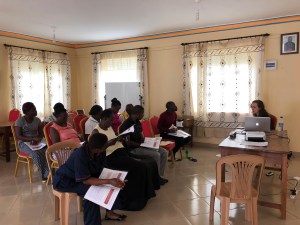
A group photo from an educational session I led in Nakaseke, Uganda.

Last week, I started pilot testing our curriculum, “Digital Modules for Palliative Care Education in Rural Uganda.” Through these three sessions, the participants have learned from me. And I have certainly learned from them.

Leading a palliative care educational session in Naggalama, Uganda.

I began by presenting the first module, “Basic Communication Skills in Palliative Care,” at my home base, St. Francis Naggalama Hospital. Naggalama is where I came to experience palliative care in Uganda in 2016, and where I am staying in between my forays to other rural locales.

Then I traveled to Nakaseke, a rural hospital about 2.5 hours from Naggalama. I presented the first module again, as well as the second, “Delivering Bad News.” We got lost on the way (PSA: don’t rely on Google maps in rural Uganda). And then the electricity went out during a rainstorm midway through my first presentation (but we adapted; Howard held up my laptop so people could see the videos, since we could no longer project them onto the wall). So in the end everything worked out there, too.

I’m now entering my data from our pre- and post-presentation surveys. And I’m processing the lessons learned from these three sessions. What is clear, though, is that people want this kind of teaching. They struggle with communication skills and delivering bad news just like we do in the United States, but don’t have access to the kind of educational resources we do. And they’re hungry for it.

-reading guide

The participants all wanted to keep the teaching guides that I brought for the sessions. I took this as high praise.

I got a variety of feedback from the three sessions, but one comment was constant. When asked what we could change about our printed teaching guides to make them better, I was told, “Let us keep them!” Suitcase weight limits (2 suitcases per person; 23 kg each) prevented us from bringing enough printed guides for everyone. But the message was clear, and I took it as high praise.

At Nakaseke, at the end of each session, the participants also did this amazing thing to show their appreciation where they clapped several times in unison and then threw out their hands toward me like they were showering me with thanks. It seemed like their version of a standing ovation. Below are still photos from this beautiful gesture.

Apparently, I’m pretty into the material too. I didn’t realize until I saw photos of myself (below) from the sessions how animated I can get.

This week, I travel to Masaka and Kitovu, two other rural sites. I will be presenting four times in two days – a much more grueling schedule. These sessions last 2-3 hours each, and at the end of each I’m exhausted. But after last week’s successes, I know I’m up to the challenge. I know there will be bumps in the road, too (both figurative and literal, given the quality of rural dirt roads here). But I also know it will be worth it – for them, and for me.

The white coat

Me in my white coat: a piece of clothing that started as a costume, but over time has become a uniform — just like we were told it would at our white coat ceremony almost three years ago.

At my white coat ceremony almost three years ago, a physician gave a brief speech about this new attire we were about to don. I don’t remember his name, but I do remember, with stunning clarity, his simple premise:

When you start medical school and put on your white coat, he told us, it will seem like a costume. But eventually, as you embrace your new profession, you will come to see it as a uniform.

I’ve thought about this concept throughout medical school, tested its truth as year 1 became year 2, and then year 3. As I approach the start of year 4, I conclude the speaker was right. The first time I put on my white coat, it felt completely foreign. The first time I wore it in the hospital, to spend an afternoon observing in the burn unit, I was shocked at how my white coat and hospital ID acted as an all-access pass. With them, no one questioned my presence, even in “restricted” areas. No one, that is, except for me.

I don’t recall the precise turning point when the white coat finally felt comfortable. What I do recall is that at the start of my psychiatry clerkship, a rotation in which you don’t generally wear your white coat, I initially felt confused, almost naked, as I went about my medical student duties in the hospital. Then I knew with certainty that I had accepted the white coat as a uniform, and not a costume. It had become a part of my identity.

It was with all this in mind that I selected a date for my Step 2 Clinical Skills (CS) board exam recently.

I took my first board exam, Step 1, the February of my second year of medical school. We have to take two more board exams during our fourth year, prior to graduating. Step 2 Clinical Knowledge (CK) is a daylong multiple-choice test. Step 2 CS is a daylong series of 12 encounters with standardized patients (actors). Each encounter lasts 25 minutes. You have 15 minutes to conduct a focused history and physical exam based on the patient’s chief complaint (known as the presenting problem). You then have 10 minutes to write up your findings, top potential diagnoses, and the diagnostic tests you would order next. You are graded on a number of things, including your interviewing skills, physical exam skills, and diagnostic reasoning. The exam is pass-fail. I have to pass to get into residency — but no pressure, right?

Step 2 CS is only offered at a handful of sites throughout the country, the closest to New York City, where I live, being in Philadelphia. So it’s a bit of an ordeal. You have to take the train or bus the night before and stay in a hotel. And you need to plan for a week or two of studying first — this is not a test to go into blind or unprepared. It’s an expensive ordeal, too — $1,285 to be precise. Aside from the terrible effects a “fail” would have on your residency application, you don’t want to shell out that application fee a second time. So, you choose your date carefully.

Based on my fourth-year schedule, I had planned to take the exam in late October or early November. Sitting at my laptop, looking at the dates available, I had to make a choice. But how do you decide between a day earlier and a day later? Was there a strategy to this? There must be. I groaned (audibly, I imagine), with the weight of this decision, and the frustration of indecision.

I looked at the available dates again, more closely this time. As I did so, that speech from my white coat ceremony came back to me.

Halloween.

It was perfect. Poetic.

I would slip into my white coat to take Step 2 CS, an exam that heralds a further transition from costume to uniform, the transition from medical school to medical residency, and from medical student to medical doctor, on the holiday when millions of other people wear costumes too.

I smiled as I clicked on “October 31” as the date to take my exam, and completed my registration. I had no doubt that this was the right day. Suddenly, I had transformed a day that had so far filled me with dread into one filled with meaning.

Changing my attitude in this way won’t erase the anxiety surrounding this exam. But it will ease that anxiety. And I believe approaching the exam with this positive perspective will lift not only my spirits, but my confidence too, because what started as a costume has in fact become a uniform. And I have both been given the privilege, and earned the right, to wear it.


Note: This essay was first published in the online magazine The American. You can read the original version here.

Boxes, boxes, everywhere

My pile of “savory” snacks to bring to Uganda.

In a peaceful coup, Uganda has assumed control of my tiny, 1-bedroom apartment.

There are boxes everywhere

A box of food. LOTS of food. I don’t consider myself a picky eater. But on my first trip to Uganda, which lasted 3 weeks (this one is a month), I discovered quickly that I wasn’t getting as much protein as I was used to. We had fruit, wonderful fresh fruit, but almost no vegetables — we can’t eat them unless they’ve been peeled because we can’t drink the water. In general, the diet there is very starch-heavy, which is not what I eat at home. As a result, I was also just eating less than usual. I’ve tried to remedy all that with an assortment of goodies that I’ve pictured here, separated out into “sweet” and “savory” piles on my kitchen table so you can see the variety. Some things are from Trader Joe’s, some from Amazon Pantry, some from my grocery delivery service. When I put everything into those piles, and realized how much I’d bought, I thought I’d gone overboard. I said as much to my research mentor, Dr. Randi Diamond. She didn’t think so. “Bring as much of it as you can,” she told me earlier this week. Luggage weight permitting, I will.

My pile of “sweet” snacks to bring to Uganda.

Not pictured here is the mound of coffee I’ll bring. I survived on tea last time, but it wasn’t pretty. I’m not in any way religious, except perhaps about my morning routine: coarse ground, brewed in a French press for precisely 5 minutes while my ceramic mug heats up too, filled with extra boiling water from my electric kettle. I add a little sugar and half-and-half, take a sip, and then, finally, can really take on the day. After some searching on Amazon, I found a travel French press that I’ve tested and found to pass muster. I’ll have sugar there, but no cream; refrigeration is iffy due to frequent power outages. It may be rough, but I’ll survive.

Boxes of our teaching guides. Twenty-five each of red, black, and blue plastic folders, the kind with metal prongs. One of my trip-preparation tasks has been to put the correct number of sheet protectors into the folders for each of our three modules (11, 10, and 9 sheet protectors, respectively), and then shimmy each printed page into each sheet protector.

One of the 72 little notebooks we’re bringing with us to Uganda, to encourage reflective writing.

A box of notebooks. I mentioned in my last post that in our teaching guides, we include reflection questions to try to get people thinking about how these lessons apply to their own lives and practice. We’re going to encourage discussion of their thoughts, as well as journal writing. So we’re bringing along 72 little notebooks, each with a sticker I’ve designed and stuck on identifying it as part of our program.

A box of surveys. This box holds a 4-inch-high stack of stapled packets, color coded in green and yellow printer paper so we know what’s what.

A box of office supplies. There’s no Amazon Prime in rural Uganda, no Office Depot, no Staples. So we’re bringing along our own stapler, scissors, paper clips, binder clips, pens, tape, a Sharpie, Post-it notes. Some of the items, we know we’ll need. Others we’re not sure of. But we might need them, and there’s no good way to get them in rural Uganda. So into the suitcase they go.

In addition to the boxes, I’ve also got some stacks going, and some piles.

There’s a stack of paperbacks I’m bringing with me, for my downtime. Due to limited suitcase space (and weight), I’m also downloading a bunch of audiobooks onto my phone.

Then there’s the pile of clothes and toiletries that I’ve set out to pack. Bringing everything you need for a month — but not so much that your suitcase goes over the 51-pound weight limit — requires some serious thought. Especially when you need to dress for multiple occasions. I’ll be wearing “professional” clothes (nice pants, a blouse, dress shoes) for the days when we’re out doing our research sessions at the various rural hospitals. I hope to head out with the Palliative Care Outreach Team too, during some of my downtime. On those days, I’ll wear casual clothes and tennis shoes.

I’m constantly stepping over these boxes, stacks, and piles; shifting them from kitchen table to desk to floor and back depending on what I’m doing and where I need space. But it’s a welcome merry-go-round, a constant reminder that exactly five days from the moment I’m typing these words, I’ll be at JFK airport, waiting to board my flight.

I can’t wait.

Celebrate!

Every day, it gets a little more real. The fact that in just over a year, I’ll be a doctor.

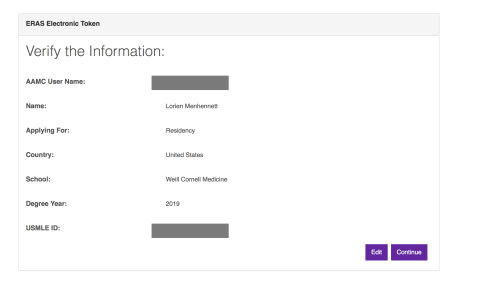
Some moments, that timeline feels more concrete than others. Like today, when I logged in for the first time to my new best friend ERAS, the Electronic Residency Application Service.

I’m sure I will grow to loathe the purple, orange, and green color scheme of my ERAS dashboard, given how much time I will spend on this website. (And really? Purple, orange, and green? That’s a little much, isn’t it?)

But today, the colors seemed festive and celebratory. And so I am celebrating.

That’s right, I’m applying to RESIDENCY. Wow …


Picking among disciplines

“What do you want to be when you grow up?” It’s a common question throughout childhood. It comes from teachers and parents. It’s also a question we ask of ourselves. We dream into adulthood, trying on different career costumes, imagining what could be.

My own sense is that the question is in constant evolution. It can’t be definitively answered after high school, college, or even graduate school. Few people in this era complete a career with the same company. Each new promotion, each new employer, provide further clues into our professional identity.

When I decided to go to medical school after a career in journalism and publishing, I turned over a radically new leaf. I handed in my pen for a penlight, political sleuthing for a stethoscope.

Could I have imagined such a change in course when I first thought about my future? No.

As I approach the start of my fourth and final year of medical school, the original childhood question takes a far more specific turn: What kind of doctor do I want to be?

It’s pondered endlessly, ad nauseam, at times to the point of true nausea. As in childhood, my reply to the medical school version of the question has changed over time.

For as long as I can remember, I’ve made things with my hands, from beaded necklaces to stained glass windows to origami flower bouquets. So I initially pictured myself in a procedural specialty, something surgical, making the most of my manual dexterity. But I quickly realized that I much preferred waking patients to those under anesthesia. I also realized that the reporter in me craved stories, conversation.

In the context of my career history, filled with interviews and human contact, my chosen field — psychiatry — makes obvious sense. Admittedly it wasn’t the choice I’d imagined when I began medical school. In fact, it was among the fields I thought I wouldn’t choose.

But in a way, psychiatry chose me.

Before starting my psychiatry rotation, I’d rotated through obstetrics-gynecology and primary care (outpatient adult medicine). I’d loved aspects of each. In the ob-gyn segment, it was my two weeks on the labor and delivery service. Holding the hand of a mother-to-be, counting with her as she pushed out a new life. Talking, in between pushes, with her and whomever was there to support her (husband, partner, mother, sister, friend) about their hopes, dreams, and fears. During primary care, it was sensing the trust that patients put in their internist, who’d known many of them for years, knew their life stories and struggles as well as their medical diagnoses.

Not long into my psychiatry clerkship, I realized that in this one field, I could experience my favorite parts of my time in ob-gyn and primary care. I could talk about a patient’s hopes, dreams, and fears as well as develop ongoing relationships with them.

I could also use many of the skills I’d honed in my decade-long career before medical school. Psychiatry, like journalism, is about stories. It’s about developing quick rapport, asking the right questions, and being an active, empathetic listener. These skills are certainly not unique to psychiatry, but they are especially important in psychiatry, where a detail from the patient’s medical history, past hospitalizations, relationships, or living situation might be crucial to how you manage the person’s care. This background suddenly takes on immense importance because of the way past experiences shape mental health.

There is also an investigative aspect to psychiatry. One of the tasks frequently given to medical students on the psychiatry clerkship is to track down so-called “collateral” on a patient – to talk to a person’s medical doctor, therapist, psychiatrist, case worker, significant other, sibling, parent, or friend – to get a more complete picture of the person’s immediate situation. In psychiatry, as in journalism, you don’t rely on the story you get from one person. You approach information with healthy skepticism. And so you gather evidence from a number of sources and put the pieces together yourself.

Each field of medicine also has a vibe, a unique personality. Part of finding your place, I realized early on during my clerkship year, is finding your tribe. In psychiatry, I did. I found people whose personalities, interests, goals, sense of humor, wardrobe choices, and even favorite eyeliner color meshed with my own.

After completing my psychiatry clerkship, I was almost sure that I wanted to be a psychiatrist. After finishing other rotations, I’m entirely sure. Because the things I liked best about each of them also have a place in psychiatry. In neurology, my favorite patients were those whose illnesses blurred the lines between neurology and psychiatry. In surgery, I thrived under the tutelage of a particular trauma surgeon, one of the best educators I’ve ever met. He inspired me, on a daily basis, to learn and explore, to be curious. I’ve found mentors in psychiatry who do the same, and I find psychiatry’s subject matter inherently interesting in a way surgery concepts were not. In internal medicine, I liked the challenge of using artful communication skills to broach difficult subjects with patients and family members. I also felt at home in the role of being a comforter to those in distress.

While I’ve answered the next iteration in this serial question – “What do you want to be when you grow up?” – my future is by no means fully defined. First of all, where do I want to do my four-year psychiatry residency? And after that, do I want to do a fellowship for more advanced and focused training? Do I want to work with inpatients, outpatients, or a mix? What city do I want to practice in? I’ll find the answers to these questions and others, in time.

For now, I focus on what’s in front of me: finishing medical school, and finding the right place for me to become the best psychiatrist I can be.


Note: The original version of this essay appeared on the online magazine “The American.” You can read it here.


The rime of the tired medical student

I recently finished the internal medicine rotation at medical school. Exhausting isn’t the word. How many hours of sleep you get hardly matters. Not when you consider all the listening, watching, walking, talking, typing, reading, and learning, all of it intense.

Most of my team’s patients were on the same floor, but a few were scattered elsewhere in the hospital. Our newly admitted patients, waiting to be brought to their rooms, were downstairs in the emergency department. Hospital elevators aren’t exactly known for their speed, leaving me all too much time to ponder life and death (literally) in the elevator banks.

It was then that I started to notice something: beds. Empty hospital beds that is, sometimes with sheets on them, pushed into corners, or against the walls. They seemed to me everywhere. Not in the way, not obstructing anything, but a constant presence, tucked away here and there.

In my weary state, I began looking at them with envy – especially the ones with a set of folded sheets lying on top.

“If only I could hop up and take a quick nap,” I thought to myself, and again, and again.

As the thought cycled through my mind, a line of poetry was born, inspired directly by Samuel Taylor Coleridge’s 19th-century “The Rime of the Ancient Mariner.” Coleridge was writing about deprivation of another sort – thirst. Here the most famous stanza from his poem:

Water, water, every where,
And all the boards did shrink;
Water, water, every where,
Nor any drop to drink.

That’s exactly how I felt: frustrated by the forbidden ubiquity of beds, and sleep. So as I stood waiting next to the latest set of tempting sheets, in a state of desperate fatigue, I took to whispering the following words under my breath, my modernized incarnation of Coleridge’s legendary verse:

Beds, beds, every where,
And not a place to sleep.

As I did this, I both laughed and sighed inside. I’d then hear the “ding” of the arriving elevator, step into the crowded car, and head to my next destination, thoughts of beds and sleep trailing behind me.


Note: The original version of this essay appeared on the online magazine “The American.” You can read it here.

My post-medicine to-do list: An update

Ten days ago, I wrote about “My post-medicine to-do list.” Now that I’ve really had a chance to catch my breath and find a new rhythm on this research rotation, I thought I’d write a follow-up on my progress.

Ironically perhaps, given the title of that post, I’ve decided that to minimize my stress level, I will minimize the items on my daily to-do list. These three essential goals, though, are at the top of my list every single day:

  1. Humanity. Have meaningful contact with someone (not just about work) by text, phone, or in person. This reminds me of what’s really important in life: people.
  2. Creativity. Do something creative every day. It could be anything from doodling on a notepad to drafting a blog post. This feeds my spirit.
  3. Movement. Any intentional, anti-sedentary activity counts: going to the gym, taking a walk around the block, stretching on my yoga mat. Just something to get me out of my desk chair, to get the blood flowing. This keeps me in shape physically and psychologically.

Of course, I have many research goals as well. Some are flexible; others more time-sensitive. To both keep myself on track and to prevent myself from feeling overwhelmed, I group them according to must-do tasks (need done today) and can-do tasks (need done eventually, will try to do today if I have time but ok to shift to another day). This system seems to be working so far.

I have also made headway on the to-do list I proposed in that post from 10 days ago. My apartment is cleaner that it has been in months (I even mopped my kitchen floor). I’ve found some great new (to me) songs and musicians on Spotify, including Kidneythieves, Perfume Genius, and Gary Numan. Yesterday was a beautiful day, and rather than take the subway to do my various errands, I walked all over the city, enjoying hours of delicious sunshine. I’ve discovered that I prefer New England-style IPAs (which my new friend Nick at City Hops described as more “juicy,” with citrus notes), and that three of the varieties I’ve tried and loved are made at a local brewery called SingleCut in Queens. Definitely time for a field trip.

I’ve recently rediscovered my love of reading. I started with some childhood favorites: Madeleine L’Engle’s Time Quintet.

I’ve also rediscovered my love of reading. Last week, my youngest sister mentioned to me that she just reread A Wrinkle in Time, one of her favorite childhood books, in preparation for the upcoming movie. Her remark took me back to my own childhood. I was captivated by Madeleine L’Engle when I was a kid. I read everything of hers I could get my hands on, and even wrote her fan mail. In the flurry of clerkships, I’d forgotten that a movie based her most famous book is coming out next month. Clearly, I needed to be prepared too. So I immediately bought A Wrinkle in Time online, then proceeded to devour 90 percent of it in one sitting. Clearly, I could not wait, not even for 2-day shipping, to get the next book in this quintet. So yesterday I went to a real-live bookstore and bought the next three books in the series (the fifth wasn’t in stock, but I can wait for shipping on this one). I forgot how much I love fantasy novels, being transported to faraway worlds, bringing the vivid descriptions alive with my imagination — a creative endeavor in its own way. L’Engle said it well herself:

A book, too, can be a star, explosive material, capable of stirring up fresh life endlessly, a living fire to lighten the darkness, leading out into the expanding universe.

– Madeleine L’Engle

Tapping into that seems like a pretty good goal too, if you ask me.

My window to the world

I didn’t get much natural light while I was on my medicine rotation, so I made a point to look out the picture windows near the unit where I worked. It’s a lovely view.

This morning at 9 a.m., my class has an orientation meeting to our four-month research block. When I exit the door of my apartment building around 8:45 or so, I hope to see something I’ve had very little of on my medicine clerkship: sunshine. (The forecast today calls for clouds, but that’s ok — there are other sunshine-y days ahead.) For the last several weeks while on medicine, when I’d leave my apartment in the morning, it was dark. When I left the hospital in the evening, it was dark again.

It’s disorienting. Without daylight, you lose track of time. It happens to everyone in the hospital. I remember seeing a patient in the ED late one morning. She asked me what time it was. I told her it was 11:30. She looked surprised, and told me she thought it was later than that. I quickly realized she thought it was 11:30 p.m., not 11:30 a.m. Granted, she was rather confused to begin with, but the lack of windows in the ED (and the lack of a clock) only made matters worse. I honestly told her that being in the hospital, I sometimes lost track of time too.

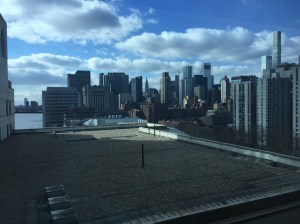
I was fortunate enough, though, to get regular glimpses of the outside world that grounded my circadian rhythm. To get from the elevators to the ward where I worked, I had to pass a series of gigantic picture windows. Look straight out, and you got a lovely view of the East River, and one of the bridges in the distance. Turn slightly to the right, and you got a lovely view of the New York City skyline. Every morning on my way in, and several times throughout the day, I would take a moment to look out those windows. To chronicle the various views — of sunrise, snow, and sparkling city lights — I started taking pictures through the windows with my phone. Here are my favorites, broken up into two groups, the skyline view and the East River view.

Click on any of the images to open a larger, slideshow view. Oh, and pardon the glare — you know, those harsh hospital lights.


Skyline view:


East River view:

My post-medicine to-do list

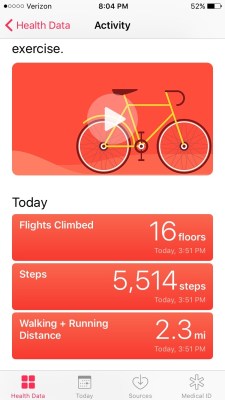
While on my internal medicine rotation, I’ve done lots of steps and stairs, as my iPhone attests. But when the clerkship ends, I need to get back into a regular gym routine.

As I write this, I’m almost done with my internal medicine clerkship. Just 12 hours to go. Wednesday was my last day in the hospital. Thursday I crammed for my exams. Today I plow through a 110-question multiple choice test, and a 2-hour EKG-reading test.

It’s been an exhilarating, and exhausting, eight weeks. I’ve taken more ownership of my patients than in any other clerkship. I’ve gotten to know them better, and been more intimately involved in their care. All of that has been immensely rewarding. I’ve truly felt like part of the team, like I’m contributing in a meaningful way. It has also been devastating, for example when a patient took an unexpected turn for the worse, a turn from which they were not expected to recover.

The work schedule has been intense too. Monday through Friday were generally 12-hour days, counting both in-hospital time and time I spent chart-reviewing my patients at home in the morning. Saturday, we generally were let go a couple of hours early. Sunday was my day off. But not really. It was really my day to catch up on studying. Because when I got home Monday through Saturday, it was hard to bring myself to do more than 10 (maybe 20) practice questions before my mind shut down. Forget trying to read or memorize anything. So Sunday was my day to study. Doing “life stuff” got put on the back burner. “Survival” was my mantra.
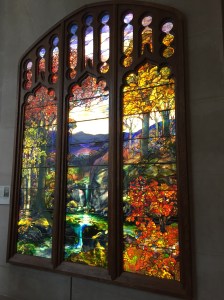
It’s been too long since I’ve visited the Tiffany windows at The Met.

That means that this coming weekend, I have a lot of catching up to do. It won’t all happen in a day. Thankfully, next up is my four-month research block. This will be plenty of work too, but won’t involve the same crazy schedule. So here are some items on my to-do list, in no particular order:

Spend time at places other than the hospital and my apartment. I’m looking forward to seeing the sun (other than through a window), and visiting some of my favorite NYC haunts (like The Met), as well as exploring some new ones (like the 9/11 Memorial).

Spend time with my friends and family. I’ve done very little of that recently, given my lack of time and energy post-work. It’s time to catch up, both in person with those who live in New York, and on the phone with those who live elsewhere. (You know who you are!)
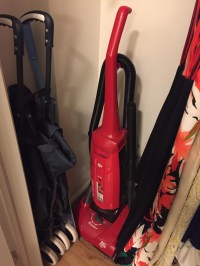
For too long, my vacuum has sat abandoned in my closet.

Clean my apartment. I especially need to vacuum. Now that I have long hair, fallen strands have a tendency to collect in little clumps along my baseboards. Scooping up the biggest ones with my hands is really not cutting it.

Do laundry. I mean ALL of my clothes, and in actual washing machines, not just emergency items in my bathroom sink.

Do my dishes. Regularly. The other morning, I had to use a fork to stir the sugar and half and half into my coffee. Not ideal.

Eat better. I need to get back to cooking regularly, rather than slapping together a ham sandwich for dinner, or picking up unhealthy take-out. (E.g., no more orange chicken from Panda Express, which is directly on my way home from the hospital.)
Exercise. While working in the hospital, I run around a lot, from floor to floor, so get in quite a few steps and stairs. But I need to get back to a regular gym routine, and back to doing my mat Pilates.
Meditate. This is something I’ve wanted to try for years. Medical school is stressful, and I know residency will be too. I think meditation could help with that. Ironically, all the stress lately has prevented me from trying something that might reduce my stress. So as I head into a less stressful block of time, I want to establish the habit so it hopefully sticks when I really need it next. A friend of mine recommended a couple of apps to try, including the Headspace app pictured at left, so that seems like a good place to start.

On a side note about stress, I’ve had multiple residents tell me that they much prefer the stresses of residency to those of third year. In residency your day off is actually a day off; you don’t have to study. You’re also not worried about constantly being evaluated by everyone around you, which is one of the major pressures of these clinical rotations (and something I plan to write a separate post about). A classmate said that one resident told her: “My worst day as an intern was still better than my best day as a third-year medical student.” I’m not sure everyone feels the same, but at least some of the stresses of medical school (studying for exams in the evenings and on your day off; having to always be “on” since you’re always being evaluated) will dissipate. And, I’m sure, be replaced with other ones.

Be creative. Using my hands to make things is such a rewarding outlet for me. I simply haven’t had the time or energy for it lately. I’ve missed it.

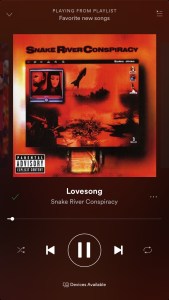
One of my new favorite songs, Snake River Conspiracy’s cover of The Cure’s “Lovesong.”

Write. I have a long list of essay ideas that I simply haven’t had time or energy to tackle. Several of them relate to things that have happened during my medicine clerkship. I look forward to sharing those experiences with all of you in the coming days and weeks, as I process all that’s happened lately.

Find new music. Over winter break, my youngest sister, Joy, convinced me to join Spotify. I’ve managed (barely) to keep up with the “Discover Weekly” playlist that Spotify sends me every Sunday night, saving the songs I like to a new playlist I aptly call “New discoveries to explore!” I’d like to delve into that list (which currently has 119 songs on it) and to investigate some of those artists and their albums more fully.

Watch TV. I don’t normally do much of this to begin with, but I haven’t even turned on my set in weeks. It would be really nice to relax on my couch in front of a good movie or TV show episode without feeling guilty.
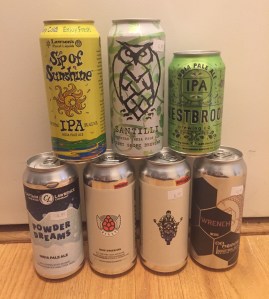
My purchases at City Hops. Several of the beers are local, brewed here in NY state — pretty cool.

Learn about beer. And drink it, of course. For the longest time, I thought beer was simply gross. The closest I got was Mike’s Hard Lemonade. I stuck to wine, or my favorite, gin & tonic. Then I dated someone for a little while who enjoyed beer, so I would try what he bought. Turns out it wasn’t so bad, though still not my choice of adult beverage. Then my sister started bringing craft beers to family gatherings, and not only did I tolerate them, I actually liked them. It was a revelation. I’m particularly partial to IPAs, of all things. But the selection at the grocery store down the street is atrocious, and a six-pack costs about $5 more than it should. There’s a place called City Hops on 2nd Avenue not far from me. I’ve walked by it dozens of times, and often thought about going it. Yesterday I took a study break and did just that, and about $40 later, was the proud owner of seven different craft IPAs. I’m definitely drinking one tonight night to celebrate making it through medicine intact.

Pamper my plants. Many months ago, I bought some lovely houseplants from Home Depot, and some lovely plant stands online. The idea was to infuse a little bit of “green” in my environment as I live amid the concrete jungle. Unfortunately, I dramatically overestimated the amount of natural light that would be cast onto the corners where I put these plant stands. My poor plants became bedraggled over time. Luckily, they quickly perked up when I put them on my kitchen windowsill. But I can’t really enjoy them there. So I want to buy and install some grow lights, so I can put my plants back on their stands, where I can see them better, and enjoy them more.
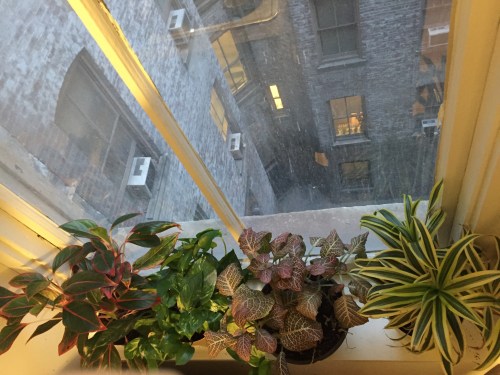
My plants are fine on my windowsill, but once I get some grow lights I can put them on my plant stands (which are in places that don’t get much natural light, but are where I can see my greenery better).
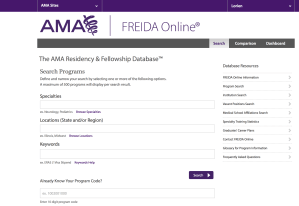
The home page for FREIDA, the American Medical Association’s online gateway to exploring residency programs … *gulp*

Think more about my future. Before I know it, September will roll around, and I’ll be submitting my residency application. That means I need to figure out where I’m applying. And THAT means I need to do some leg work (well, more like “finger work” as I explore residency programs on the Internet). This is a little terrifying, as you might imagine. It’s also thrilling.

Clearly, I have a lot to catch up on. But it’s good stuff, fun stuff, stuff that’s rewarding in a different way than patient care.

Now, in anticipation of this upcoming reprieve, I wonder where my TV remote has gotten to …