doc w/ Pen

journalist + medical student + artist

Stem cell research: In on the ground floor

When it comes to research, stem cells are where it’s at. And I’m in on it.

Already an established treatment for bone marrow transplantation, stem cells are thought to be (possibly) capable of treating spinal cord injuries, traumatic brain injuries, stroke, Alzheimer’s disease, Parkinson’s disease, and even baldness, among many other things.

Basically, stem cells are cells that can differentiate into a range of specialized cell types and therefore regenerate tissue. For example, bone marrow stem cells (also called hematopoietic stem cells, or HSCs), once transplanted into an person without HSCs, will produce new blood cells and immune cells.

What Olga is trying to do – and I will be trying to help her with this summer – is to prove that the mouse lung epithelial cells she has collected are indeed stem cells. So far they have some of the indicators of stem cells, but proving that they are is more complicated. (I will get to that later.)

The implication would be that if those cells were re-injected into another mouse, one with damaged lung tissue, the stem cells would (hopefully) be able to differentiate into the needed types of cells and therefore regenerate the lung tissue.

So how does one go about proving that cells are, indeed, stem cells? Well, there is a complicated answer and then there is a complicated answer. I will try to simplify it as best I can (with my limited but expanding knowledge of biochemistry and genetics).

What you need to do is prove that your cells contain certain “stem cell markers.” These markers are used to (obviously) identify and isolate stem cells.

So what is a stem cell marker? Good question. Here is a good answer, from the NIH’s website:

What are stem cell markers? Coating the surface of every cell in the body are specialized proteins, called receptors, that have the capability of selectively binding or adhering to other “signaling” molecules. There are many different types of receptors that differ in their structure and affinity for the signaling molecules. Normally, cells use these receptors and the molecules that bind to them as a way of communicating with other cells and to carry out their proper functions in the body. These same cell surface receptors are the stem cell markers. Each cell type, for example a liver cell, has a certain combination of receptors on their surface that makes them distinguishable from other kinds of cells. Scientists have taken advantage of the biological uniqueness of stem cell receptors and chemical properties of certain compounds to tag or “mark” cells. Researchers owe much of the past success in finding and characterizing stem cells to the use of markers.

So what Olga and I are going to do is test for these stem cell markers in her batch of cells. But how do we do that? Another good question, and one I don’t completely understand quite yet. But I’m getting there.

_gelWhat I do know is that we will be using a technique called “gel electrophoresis” (see an example at right) to study the gene expression of the RNA that Olga and I isolated earlier this week. (When genes are expressed, they produce proteins – hopefully, the stem cell marker proteins that we are looking for.) The first step is to use “reverse transcription” to turn the RNA into cDNA. Then you load your cDNA into little wells (holes, really) in a sticky gel matrix which sits in a plastic case. After that, you run an electric current through the gel matrix. The current causes the cDNA molecules to move through the matrix at different rates, determined largely by their mass. After completing the electrophoresis, you can stain the molecules to make them visible (and see which ones, if any, were expressed in your reaction).

We will be looking to see whether particular stem cell markers – which will be evidenced in the staining by the bands we see (or don’t see) – are present in our cell sample. The stem cell markers we are looking for include SOX9, SOX2, and GATA6, among a few others (I mostly remembered the SOX ones because I used to be a White Sox fan … go figure).

I’m still a little fuzzy on some of the details – not because Olga didn’t explain them to me, but because my background in biochemistry and genetics is just slightly lacking – but I’m beginning to get the picture. What we’re doing is part of the infant stages of stem cell research, and won’t likely have practical applications for some time to come. But when it does, the potential will be earth-shattering. Pretty exciting stuff for someone who had never worked in a research lab before this Tuesday, eh?

Magic, or science?

Before yesterday, isolating RNA (schematic above) from cells seemed like magic.


Science isn’t magic. It’s, well, science. Hard work. Long hours in a lab. Sometimes tedious procedures done over and over. Often times, frustration. But hopefully, some meaningful results.

From the Latin scientia, meaning “knowledge,” science is the “systematic enterprise of gathering knowledge about the world and organizing and condensing that knowledge into testable laws and theories” (from Wikipedia.org).

OK, that’s pretty obvious. But when you don’t know how science works, it might seem a little like magic. Or at least, it has sometimes seemed that way to me.

But yesterday, Olga showed me how to do something that I never imagined I’d see, or have the chance to do (she wants me to try it for myself soon): isolating RNA from cells.

RNA stands for “ribonucleic acid.” RNA is similar to DNA (I won’t go into the structural differences; it gets pretty technical). RNA is very important for protein synthesis (making proteins in the cells), as well as for regulating which genes are expressed in a cell.

RNA is tiny, tiny, tiny, as you can imagine. Our mission was to separate these tiny nucleotides from the rest of the bits of a group of cells that we collected.

Before yesterday, this procedure seemed like magic to me – I had no idea how it was done, and I imagined it happening in a hugely high-tech environment with all kinds of machines and things. Lots of complicated stuff, way beyond my understanding and capability. But Olga and I (well, I watched) did it rather simply – with some plastic tubes, bottles of buffer solution, pipettes, a syringe and needle, and a few spins in the centrifuge.

Of course, understanding the mechanisms for how the RNA was being separated from the cell, and why we were doing it, is quite advanced. But the procedure itself was rather simple, in terms of technology. No magic here. Science: patience, time, and hard work.

The kit we used was called “RNeasy,” and was designed to make the process just that – easy. First you pipette your sample into a special tube, which contains a silica membrane that will eventually trap the RNA. Then you lyse (break down) the cells using a special solution. Then you homogenize (blend) the particles using a needle and syringe, sucking them up and squirting them out several times. Then you add ethanol to them to help them bind to the silica membrane. Then you use buffer solutions to wash away the contaminants, centrifuging in between the washes. The RNA is then eluted (extracted) using water. (At least, I think that was the order of things …)

Olga glided through the process with the grace of a professional ballet dancer. Of course, just remembering all the steps, properly pipetting (without contaminating anything), using the centrifuge correctly, and so on – much less doing it all quickly – isn’t easy for a beginner, such as myself. But I am slowly grasping these techniques, and building up speed.

Most importantly, I am learning the science behind science. And that is a lesson I will not forget.

The new lab rat on the block

Using a pipette: one of my first lab lessons.

I’ll be the first to admit that I know absolutely nothing about working in a research lab. Pipettes? I vaguely remember them from high school chemistry lab. Bunsen burners? I know they burn things (Captain Obvious), but don’t ask me to light one. Petri dishes? I know you grow cells in them, but anything beyond that is beyond me.

So it was with a humble heart and spirit that I entered the pharmacology lab at the University of Illinois’ College of Medicine building at 1853 W. Polk St. this past Tuesday.

Research lab positions are coveted among pre-medical students, as medical schools look very favorably upon them. But getting a research job – especially if you don’t have any experience – is a difficult matter. It’s a catch 22. Without any experience, you can’t get a research lab job. But you can’t get any experience unless you get a research lab job to begin with.

I, however, networked my way into this position. Several months ago, I decided to try and contact some local physicians and ask to shadow them. But if you ask just anyone – someone who doesn’t know you – they’re more than likely to say “no.” So I turned to my alma mater’s online networking group (kind of like Facebook or LinkedIn, but for UIUC alums) and messaged several Chicago-area MDs. One, a pediatric anesthesiologist named Dr. Richard Berkowitz, got back to me. He agreed to meet with me at his office in Munster, IN. We talked about medical school, residency, all kinds of things. When I asked him what I should be doing to prepare myself for medical school, he mentioned the obvious – community service – but also brought up research work. He put me in touch with a former colleague, Dr. Gina Votta-Velis, an anesthesiologist and researcher at the University of Illinois-Chicago. After meeting with her, and her research partner in pharmacology, Dr. Richard Minshall, they agreed to let me come on for the summer as a volunteer.

Tuesday morning, I timidly poked my head into lab E420, looking for Olga Chernaya, the post-doc researcher who is my supervisor (and mentor). Luckily for me, Olga is friendly, funny, gracious, and patient – and a good teacher.

But rightly, she was also a bit wary of having a completely untrained pre-med student poking around her cell cultures and taking up her precious time.

“Do you have to have your own project?” she asked me. Apparently, some students who come into the lab need to work on their own research project and write a paper about it within eight to 10 weeks – not much time to get much done, especially if you don’t have any prior experience working in a lab.

“No,” I told her. “My goal is to stay out of your way, to be helpful, and to learn as much as I can.”

“Wow, that’s rare,” she said.

The tension lifted.

From the beginning, Olga included me in what she was doing. That first day, Tuesday, we looked at her fibroblast and epithelial cells under the microscope. That might sound simple, but I hadn’t used a microscope in years, so even focusing the microscope was something she had to (re)teach me. I felt a little embarrassed, but her patience eased any of those feelings.

On that first day, She showed me how to use pipettes. She showed me what kinds of cells she grows in petri dishes. (We haven’t gotten to bunsen burners yet, but I’m hoping that will come soon.)

The second day, I got to try things for myself. I used suction to draw out the high-calcium media (the liquidy stuff cells grow in) from flasks of cells, washed the flasks out using pipettes and a sterile solution of DPBS (phosphate buffered saline), and then replaced the high-calcium media with a low-calcium media solution, again using pipettes and suction.

What would have taken Olga 15 minutes probably took me 45, but it was a learning experience. And Olga must have been satisfied with my progress, because she’s leaving for a conference Friday afternoon and she wants me to “babysit” the cells while she’s gone – replacing their cell media twice next week, this time all on my own, no supervision.

It feels like a huge responsibility. And I’m nervous. What if something goes wrong? What if I forget what to do? What if I break something? What if I contaminate the cells? What if I – gasp – KILL them?

Then I remind myself that she wouldn’t ask me to do this if she didn’t think I could handle it. And really, it’s not that hard, once you break it down: Suction, pipette. Suction, pipette. Suction, pipette. Suction, pipette. That’s basically it (and try not to contaminate anything while you’re doing it).

Someone else believes I can do this – this is an opportunity for me to practice believing in myself, too.

You gotta play the game

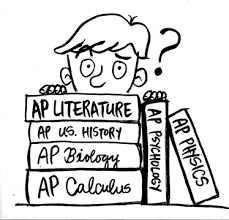
When I was in high school, it was practically a mantra: “Take A.P. Take A.P. Take A.P.”

This referred to Advanced Placement classes, designed to teach the same concepts as a first-year college course. At the end of the school year, a standardized exam was offered to test your proficiency of the material. Based on your score (on a scale of 1 to 5, with 5 being the highest possible), you could receive college credit for the course.

Those of us students on the so-called “honors” track heard this mantra from teachers, guidance counselors, parents, and even other students. And so we bought into it. I bought into it, taking A.P. Biology, Chemistry, Spanish, U.S. History, and Calculus throughout my junior and senior years. I scored well on the exams, and earned enough college credit so that when I entered the University of Illinois in the fall of 1999, I was technically a second-semester sophomore – not a freshman – in terms of credits. I was able to bypass introductory courses and take more advanced (and smaller) classes, which was a major advantage at a huge university such as UIUC.

Pretty sweet. Or so I thought.

It turns out, however, that medical schools do not look favorably on A.P. credits. They want students to have taken the courses at a university. Which means that I will have to retake Calculus. Which, in my mind, makes no sense. It’s not that I’m afraid of Calculus – I got an A in the course the first time, and scored a 5 on the A.P. exam, so I am clearly capable of mastering the material. No, what doesn’t make sense is that I have already mastered the material and have to prove it all over again. And spend several thousand dollars (and dozens of hours of my time, and god only knows how much pencil lead and calculator juice) doing so, just to have that line item on my transcript.

So my A.P. credit is worthless. I busted ass – and when I say I busted ass, I mean BUSTED ASS, because Calculus isn’t easy – for jack. No, I shouldn’t say that; not for jack, because I did learn the material, and it’ll be easier the second time around.

But then is the whole A.P. thing a sham? A waste of time, a way for the College Board (the institution that sponsors the A.P. exams) to make money, a way for Cliff’s Notes to make money on review books, a way for schools to tout their students’ success, a way for students to boost their GPAs (many schools offer an extra GPA point for honors and A.P. classes) and to claim superiority over others who take fewer A.P. courses or who do not score as well on the exams?

Perhaps A.P. courses – and credit – are worthwhile for students who enter less competitive fields, or who do not intend on completing graduate level work. But apparently they are worthless for those of us who intend on entering medical school.

Which is frustrating, since taking A.P. courses was, in high school, the indicator of success and high achievement. And that’s what – I thought – medical schools wanted.

In an ideal world, medical schools would accept A.P. credits. If they have issues with the A.P. curriculum, they should take that up with the College Board. But this is not an ideal world, obviously. So it would be helpful for high school guidance counselors to let students know that taking A.P. credits doesn’t necessarily guarantee that you will get to skip out of that class in the future.

If I had to do it all over again, I would still take A.P. Calculus in high school. I learned a new way of approaching math, and when I take this course again this fall, I will be ahead of the game. But I’ve also learned that to get into medical school, you have to play their game. And it’s a frustrating one.

The immortality of memory

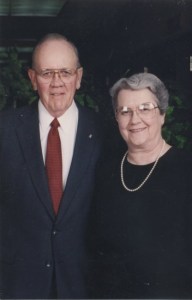
My grandpa, Alan E. Menhennett, who died recently. He is pictured here with my grandma, Harriet.

I started this blog with the intent of writing about my journey into the world of medicine. I want to write not only about my intellectual journey, but also my personal one. That means detailing the lessons I learn both as a student, and also as a ser humano – a human being. And no lesson hits closer to home than one you learn through your own family.

As some of you may know, my Grandpa died recently. Learning about death – so clearly a part of life, and especially part of the life of any doctor – is not pleasant. But we have no choice.

I do not pretend that I have figured out how to deal with the grief of losing someone who meant so much to me. What I do know is this: there is power in sharing our memories. I will paraphrase one of the ministers at my Grandpa’s service: “As long as we remember, [that person’s] life never ends.” Because we keep that person alive through our memories. (To those of you who know me well: YES, I actually agreed with a minister on something. Shocking, I know.)

Turns out I believe in immortality after all. Of a sort.

Along with a handful of relatives, I had the privilege of sharing one of my own memories of Grandpa at his memorial service. I will share that memory here:

Two things that Grandpa really impressed on me were the importance of giving, and the value of education. When each of us grandchildren was born, he and Grandma set up a fund for us. He wanted us to use the money to pay for our education. He was very firm on this. In fact, he basically said that the he would disown the first grandchild who used that money to buy a car. So, as the eldest grandchild, what did I do? I used that money to buy a car. And he must have loved me a lot, because he didn’t disown me.

Now, I did not do this to spite him – I bought the car after I graduated from college, and I had gotten a lot of scholarships and help from my parents to pay my tuition, so I didn’t need Grandpa’s money for school. What I did need was a car. And what his money allowed me to do was pay for my nice little Honda Civic – I named her Zippy, because I probably drive a little faster than I should – in full, in cash. No loan payments, no interest – something very fiscally responsible, which I think Grandpa would’ve approved of.

I still have that car, which I bought almost seven years ago, and it’s taken me a lot of places, from commuting to work to cross-country roadtrips. And starting this fall, I’ll be using my car to take me to and from school, since I’m returning to college pursue another degree. So in a way, I’m using the money to further my education after all. Which I know would make Grandpa proud. And Grandpa, when I get in that car, I will think of you. I love you and will miss you very much.

You can view my Grandpa’s online memorial and obituary by clicking here.

A new season begins

“Lorien, Congratulations in advance on your acceptance to Dominican University’s Post-Baccalaureate Pre-Medical program … ”

So began the e-mail I received Monday afternoon from Michael Morosovillo, Director of Transfer Admission at Dominican University. I skimmed the rest of the e-mail – something about submitting a $100 deposit, then contacting the program director, Dr. Louis Scannicchio, about enrolling for classes – and then reread the first sentence again. And again. And again.

I am really doing this. And with each step forward, each small victory, it becomes more real.

My news couldn’t have come at a more interesting time in the world of health care. Monday was the day in between the Sunday night passage of President Barack Obama’s landmark health care reform bill and his signing of it on Tuesday. His victory means that the medical profession I will enter will be – hopefully – a much changed one.

“Today, after almost a century of trying; today, after over a year of debate; today, after all the votes have been tallied, health insurance reform becomes law in the United States of America,” Obama said at the bill signing Tuesday (as quoted in the New York Times). “You know, it is fitting that Congress passed this historic legislation this week, for as we mark the turning of spring, we also mark a new season in America.”

A new season for me; a new season for the country.

And this year – the year I begin my journey toward a career in medicine – some of the proposed changes will go into effect, according to Obama’s remarks at the White House:

  • 4 million small business people will receive tax credits to help them cover the cost of health insurance for their employees
  • tens of thousands of people with pre-existing conditions will now be able to buy health care coverage
  • insurance companies will no longer be able to drop people’s coverage when they become ill
  • insurance companies will no longer be able to place restrictions or annual/lifetime limits on the amount of care people receive
  • new insurance plans will be required to offer free preventive care
  • young adults will be allowed to stay on their parents’ insurance plans until age 26
  • Medicare recipients will receive preventive care without copayments or deductibles

And in four years – by the time I am (hopefully) in medical school – more health care system changes will have been implemented.

Some people are terrified of these changes. Some believe that these reforms do not bode well for medical practitioners. But I believe that doctors truly have a lot to gain in these reforms, for they will make it possible to adequately care for more patients. Those who really have something to lose are the insurance companies and their executives, who have been milking the American people for decades.

We have yet to see exactly how things will shake out, of course; only time will tell. And there are battles yet to be fought, as many in Congress have vowed to work for the repeal of this bill. Others have talked about lawsuits. Change is always hard, and hard-fought, and this is obviously no exception.

But it is time for change. For me, and for my country. I am looking forward to being a part of it.

Putting a face to some medical jargon

Note: I wrote this post while in Colorado about two weeks ago, but just now finished editing it. So my use of the present tense is a bit outdated. But you get the idea.

Anemia. Neutropenia.Thrombocytopenia. Anemia, I’m familiar with. But those other two? Total medical jargon to me. Until today. Because if you present with these three symptoms – low red blood cell count, low neutrophil (a type of white blood cell) count, and low platelet count – you may get to spend a good amount of time where I was this morning: the local cancer center.
I don’t have cancer; my grandpa does. And I am here in Boulder, Co. for what will likely be my last visit with him. His doctors give him just a few months to live. At most.

The diagnosis? Myelodysplastic syndrome. More medical jargon, right? But this may ring a bell: leukemia. Myelodysplastic syndrome (MDS) is a kind of pre-leukemia, and can develop into acute myelogenous leukemia (AML). But just because it has the affix “pre” in front of the “leukemia” part doesn’t mean it isn’t deadly. The bone marrow in people who have MDS doesn’t produce blood cells correctly, leaving the patients susceptible to infections and severe bleeding, as well as to leukemia itself.

My grandpa’s treatment? Vidaza. More commonly know as (one type of) chemotherapy. One treatment cycle of three injections per day, five days a week, one week per month. Vidaza, according to drug manufacturer Celgene Corporation’s Web site, “may be able to help your bone marrow make healthy blood cells again” (www.vidaza.com). But Vidaza can also cause the things it is supposed to help your body avoid – a reduction in red, white, and platelet blood cells. It can also make you miserable, causing nausea, vomiting, diarrhea, and other adverse reactions in some patients. This treatment conundrum not unique to Vidaza, of course; other chemotherapies have similar pro/con effects.

Luckily, Grandpa doesn’t seem to have any side effects from the medication, other than tenderness at the injection site. But the effects of the MDS are quite visible. His skin is pale, almost gray, from the lack of red blood cells. He tires easily and moves more slowly.

It’s difficult to watch a man who was once so active, who would take me fishing and target shooting up at my grandparents’ mountain cabin, who would play whiffle ball with me at the park, who drove out to Chicago in all kinds of weather to see his three out-of-town granddaughters, like this. He can’t drive at all now, and the mere thought of those activities would exhaust him these days.

Seeing him reminded me of all those times, and more. Of ice cream cones at Baskin Robbins, of barbecues at my grandparents’ house with all of the aunts, uncles, and cousins present, of games of Old Maid and Monopoly, of fish-fry breakfasts, of mountain trail rides in the Land Rover. As we made another happy memory – an extended family dinner at our favorite local spaghetti restaurant, The Blue Parrot (in Louisville, Co.) – I was reminded of all those times we spend together, and reminded that the dinner I was then eating, sitting just to the left of my grandpa, would likely be our last meal together. I listened to him tell and retell the stories of his and my grandma’s lives. I looked past the fact that I had heard most of those stories twice, three, ten times, and soaked in every word. I asked questions I already knew the answer to, because I wanted him to keep talking forever, to keep that moment alive forever, as if it would keep him alive forever.

From parabolic purgatory to elliptical elation

It feels good when things make sense. When even just a tiny piece of the world is ordered, and you get that order.

I wasn’t getting it.

By “it” I mean parabolas. You know, those U-shaped graphs. They look so innocent, don’t they? Until you learn that you’re to locate not only the graph’s vertex (a simple task, really), but also its axis, focus, and directrix. My precalculus review book spelled it all out – all 10 formulas that I had to remember, depending on whether the parabola opened vertically or horizontally. But there was no explanation as to why these formulas existed. How were they derived? What did all those variables mean?

Nothing. I was just expected to remember them. And to use them upon command.

Uh, yeah, right. Just call me a math monkey.

No. I need to understand why. To have things make sense in a larger way. But apparently my book’s author wasn’t interested in that. Or perhaps there was a budget cut and the book had to be shortened and that piece of instructional text cut out. Maybe.

Not that it matters. Either way, I was on my own in my parabolic purgatory. I avoided math for a day or two. Then today I picked it up again. I looked at the graphs. I looked at the equations. I looked at the graphs again. And a light went on.

“Ohhhhh ………. ” The sound of relief. “So that’s what “p” represents. I GET it now!”

With that one bit of knowledge – the meaning of “p” – I completely understood all 10 formulas, and rather than blindly memorizing them, was able to reason through them while completing (successfully) the practice set.

Nearly dizzy with glee, I turned the page. Next topic: ellipses. And thought to myself, OK, they’re just flattened circles, no big deal. But wait. There are two kinds of ellipses – horizontally squashed ones and vertically stretched ones. And for each, there are seven (for a total of 14) important points to remember. Plus two formulas. Plus the equation for finding “c.” (Whatever “c” is …) That’s 17 things to remember, minimum!  And again, no explanation of how or why, no way to help me remember. Ack.

I could feel the pressure building up in my brain. A serious case of mathocephalus.

I took a long draw on my espresso. I prayed for an ephiphany. But just as with parabolas, there would be no epiphany. There would only be hard work, there would be me reasoning things through and helping me help myself.

I sighed and focused on the graphs. OK, this length represents “a,” that’s “b,” the other one is “c,” hold on, THIS MAKES SENSE! (It is math, after all.)

Elation. But also a realization: I would probably have to do the same thing with the next page, and the page after that … I would have to keep working through things. I was past the easy stuff. This required work. And sometimes work is frustrating. It is also rewarding, when you put the necessary time and effort into it.

$$ Taking control $$

I can’t afford to pay for school. A glance at my checking account makes that painfully obvious. Then again, most people can’t afford to pay for school on their own. That’s what grants and loans are for. But to get access to that money, you have to fill out the dreaded FAFSA.

FAFSA stands for “Free Application for Federal Student Aid.” And it is free to fill out – except that time is money, and the FAFSA can take a good while to complete. Plus, you have to have already filed your taxes. Which take even longer.

At least, that’s what I thought. But thanks to the electronic age and the ability to do everything online, I e-filed my taxes in about an hour (three thumbs up, TurboTax!), and filled out the FAFSA in half that time.

Whew.

Now I just need to get accepted to Dominican so I can use the loan money I’ll (hopefully) be approved for …

Random things about me

I realized today that I never formally introduced myself here on my blog (just in case someone who doesn’t really know me discovers this one day). Oops. I’m awful with introductions. Better late than never, though, I suppose.

Name: Lorien Elisa Menhennett

Age: 28 (DOB: 9/28/1981)

And then some other random things about me:


50 Questions To Really Get To Know Someone
1) Are you a morning or night person? Morning – I get so much more done then.
2) Which do you prefer, sweet or salty foods? Can’t I have both?
3) Ninjas or pirates? Ninjas, for sure.
4) Ninjas vs pirates, discuss. It’s all about the martial arts.
5) Autobots or Decepticons? Um, I’m not a Transformers person, sorry.
6) What was your favorite childhood television program? 3-2-1 Contact. (Go PBS!)
7) Are you a collector of anything? All things vintage – hats, clothes, purses, jewelry, you name it.
8) If you could be any animal, what would you be? Dolphin
9) If you could have any superpower, what would it be? Invisibility
10) What is usually your first thought when you wake up? NEED COFFEE NOW
11) What do you usually think about right before falling asleep? I can’t wait until I have coffee with my husband Geoff tomorrow morning.
12) What’s your favorite color? Orange
13) What’s your favorite animal? Penguin
14) Do you believe in extraterrestrials or life on other planets? Sure, why not? The universe is pretty damn big.
15) Do you believe in ghosts? No to the physical kind, but yes to the psychological kind.
16) Ever been addicted to a video/computer game? Which one(s)? Yes – Mario Bros. 3 (NES), Barrack, Lemmings
17) You’re given 1 million dollars, what do you spend it on? Trips to as many different and amazing places as possible
18) Have any bad habits? Too much caffeine
19) Which bad habits, if any, drive you crazy? People who employ double-standards
20) List 3 of your best personality traits: Empathy, sense of humor, curiosity
21) List 3 of your worst personality traits: Impatience, impatience, impatience
22) Have any celebrity crushes? Johnny Depp
23) List 1 thing you wish you could change about yourself: Be more patient
24) Any tattoos or piercings? Ears are pierced
25) What’s the first thing you notice in the opposite sex? Eyes
26) What personality traits do you look for in a partner? Humor, sensitivity
27) What personality traits do you dislike in other people? Selfishness
28) Do you see yourself getting married in the next 5 years? Already married (have been for 5+ years! I love you, Geoff!)
29) Are you mostly a clean or messy person? I am an organized person, but sometimes my living space has random clutter in it (but all of the clutter has a place where it belongs)
30) If you could live anywhere in the world, where would you live? Right here in Chicago
31) If you could visit anywhere in the world, where would you go? Costa Rica
32) List 5 goals on your life’s to-do list: 1. Become a doctor
2. Be a more loving and patient person
3. Travel around the world
4. Get a dog
5. Finish rehabbing our house
33) Name 1 regret you have: I don’t believe in regrets, just in learning from your past and your mistakes.
34) Name 1 thing you miss about being a kid: Not having to worry about money.
35) Name 1 thing you love about being an adult: Getting to drive yourself places whenever you want.
36) What’s your favorite song of the moment? “1,000,000” (yes, that’s the song title)
37) What’s your favorite song of all time? “Ruiner”
38) What’s your favorite thing to do on a Saturday night? Champagne with good friends
39) What’s your favorite thing to do on a Sunday afternoon? You’re lookin’ at it
40) Have any hidden talents? They’re not hidden, but I do have talents
41) You’re about to walk the green mile, what do you have as your last meal? Thai food
42) What would be your dream job? Dr. Menhennett
43) Which would you rather have, 100 million dollars or true love? True love (I know, I’m a sap)
44) If you could have 3 wishes granted, what would they be? 1. End hunger
2. Peace
3. Fix the damage we’ve done to the environment
45) Ever wish you were born the opposite sex? If so, why? Not really
46) Name 1 thing not many people know about you: I’m addicted to Chapstick
47) If you HAD to change your name, what would you change it to? Charlotte
48) Do you believe in the afterlife? No, what we see is what we get. So we better make the most of it.
49) On the topic of abortion, how do you feel about cookies? Not going there. Not here, at least.