doc w/ Pen

journalist + medical student + artist

IFLS Helps Make Facebook Worth the Trouble

IFLS: The Facts

Founder: Elise Andrew (employed by LabX Media Group, which owns LabWrench and publishes Lab Manager Magazine and The Scientist)

Description: A community built for the posting and sharing of scientific updates, quotes, cartoons, jokes and photographs. We’re dedicated to bringing the amazing world of science straight to your newsfeed in an amusing and accessible way. Tell us what makes you say “wow!”

Facebook Page “Likes”: 1.6 million

Alternate site: If our name bothers you, please see our mirror page here:
http://www.facebook.com/
ScienceIsSeriouslyAwesome

Source: IFLS FB page

Like many people, I have mixed feelings about Facebook. There are definitely pros and cons associated with this social networking site.

But, like hundreds of millions of other people in the world, I have decided it’s worth the trouble. I love keeping up with old friends, yes, espeically the ones who live far away and now have little kiddos I never get to see. But also in great part because of one single FB page: I f***ing Love Science, aka “IFLS.” (Note: There most definitely is an expletive in that title, which I have asterisked out. Not that doing so hides it very well … )

With so many FB pages out there, so many people posting photos and status updates, why do I care about this particular one? Because it appeals to the scientist in me. In so many ways.

IFLS posts are sometimes hilarious, sometimes poignant, sometimes thought-provoking, sometimes informational, sometimes ridiculous (or a mix thereof).

I don’t pay heed to every single post from IFLS – there are quite a few every day – but I make sure to at least glance through them when I’m taking a study break and in need of a hearty laugh or some inspiration.

In this blog post, I present a few recent photos posted by IFLS. Happy viewing …

 IFLS 1
IFLS 6 IFLS 5 IFLS 4 IFLS 3 IFLS 2

The Kinky World of Bacterial “Sex” (and why we should care)

An image of Clostridium difficile, a potentially deadly bacteria.

An image of Clostridium difficile, a potentially deadly bacteria.

C. diff. It’s a name that may not mean much to the layperson, but to any health care worker, it causes shuddering and trembling.

Just ask my mom, who is a hospice nurse. She has a patient who has been afflicted with this nasty (and sometimes deadly) bacterial infection for weeks now. It can be resistant to most antibiotics, and is also quite resistant to destruction. Killing it requires bleach; soap and water or alcohol-based hand rub don’t do a thing. C. diff is also very infectious, so my mom’s patient has unfortunately had to be under isolation precautions this whole time. Which for anyone would be awful, but if you are in your last days of life, being isolated from the world – and having anyone who entered your world have to gown up and wear gloves – would be terrible. (At least I think so.)

So what exactly is C. diff, and what makes it so evil (to us at least)? Here is a bit about this robust bacteria, from the Mayo Clinic’s Web site:

Clostridium difficile (klos-TRID-e-uhm dif-uh-SEEL), often called C. difficile or C. diff, is a bacterium that can cause symptoms ranging from diarrhea to life-threatening inflammation of the colon. Illness from C. difficile most commonly affects older adults in hospitals or in long term care facilities and typically occurs after use of antibiotic medications.” (Source: Mayo Clinic)

Bacteria can be beautiful -  and also dangerous.

Bacteria can be beautiful –
and also dangerous.

That all said, bacteria are fascinating little buggers. (Not to mention beautiful under the microscope, as you can see from the picture at left.) And they are not all bad. There are bacteria in our bodies that are quite helpful to us, in fact. Bacteria can also be highly adaptive, which makes them all the more interesting – and potentially dangerous, when it comes to certain species.

One of the major issues facing health care today is MDROs – Multi-Drug Resistant Organisms. This includes several kinds of bacteria (such as Vancomycin-Resistant Enterococci, or VRE; and Methicillin-Resistant Staphylococcus aureus, or MRSA; as well as C. diff). As you can probably tell from the names, these organisms are resistant to specific drug treatments – the antibiotics vancomycin and methicillin, respectively, in the cases of VRE and MRSA.

But let’s step back for a moment. How do antibiotics work? Or rather, how are they supposed to work? Antibiotics are separated into different classes depending on how they affect bacteria. For example, antibiotics can target a bacteria’s:
1. Cell wall
2. Cell membrane
3. Essential enzymes

Antibiotics, when they work, cause destruction of the bacteria via one of these targeting mechanisms. Which is how they make us well again.

As I said, though, bacteria are highly adaptive. They can undergo “evolution” – favorable DNA changes – very rapidly, enabling them to resist an antibiotic’s targeting mechanism. Examples of these rapid adaptations include:

1. No longer relying on a glycoprotein cell wall
2. Enzymatic deactivation of antibiotics
3. Decreased cell wall permeability to antibiotics
4. Altered target sites of antibiotic
5. Efflux mechanisms to remove antibiotics
6. Increased mutation rate as a stress response

(Thank you, Wikipedia, for the very succinct list above.)

Anyone who has read much about evolution, though, knows that this process is usually a very slow one: favorable DNA mutations gradually accumulate over time via reproduction and the passage of these favorable mutations down to offspring.

But bacteria are a little, well, different in terms of their DNA-transferring and reproductive capabilities. And these differences are what enable them to rapidly exchange DNA mutations in an expedited manner. How does this work? Well, let me explain.

Bacteria have not one, not two, but THREE methods for sharing DNA. This is in addition to an extremely rapid method of asexual reproduction called binary fission. I will explore each of these in detail (with pictures, of course).

Enter the world of bacterial “sex” …

1. Conjugation. (See images, and explanation, below.)

Diagram of bacterial conjugation.

Diagram of bacterial conjugation.

Bacterial Conjugation: An image of the sex pilus

Bacterial Conjugation:
An image of the sex pilus.

Conjugation is the closest that bacteria get to mating (i.e., sex). What happens is that one bacterial cell, termed the “donor,” produces a cellular protrusion called a sex pilus. The sex pilus attaches to the “recipient” cell, and brings the two cells together. DNA is then replicated and transferred across the cell membranes, from the donor to the recipient. (Note: the donor possesses what is called an “F factor” – this is what enables it to transfer its DNA to the recipient. This F factor can also be transmitted, allowing both cells to then be donors.) This method of gene transfer can transmit antibiotic resistance from one bacterial cell to another.


2. Transformation. This is the process by which a bacterial cell basically absorbs DNA from the environment through its membrane, incorporates the exogenous (outside) DNA into its own, and then expresses those new genes. The new DNA can either be incorporated into the bacteria’s circular chromosome, or as a separate circular piece of DNA called a “plasmid.” (See the diagram below.)

Diagram of bacterial transformation.

Diagram of bacterial transformation.

An electron micrograph, and a diagram, of a bacteriophage. This is called a T4 bacteriophage.

An electron micrograph, and a diagram, of a bacteriophage.
This is called a T4 bacteriophage.

3. Transduction. This process is a bit more complicated to explain, as it involves not only bacteria, but bacteriophages (aka “phages”). Phages are little viruses that infect bacteria. (Yes, bacteria are subject to infection, too.) What happens is that these bacteriophages attach to the bacteria, inject their phage DNA, and the phage DNA takes over the cellular machinery of the bacterial cell. Rather than meet its own needs (i.e., produce bacterial proteins), the bacterial cell begins to express the phage genes, producing new bacteriophage components. These phage components are assembled, again with the help of the bacteria’s cellular machinery. Eventually, the bacteria lyses (breaks open), releasing the little viruses. Those new viruses can then go infect other bacterial cells. Sometimes, a piece of bacterial DNA gets “stuck” in a baby bacteriophage. So that when that bacteriophage goes on to infect another bacterial cell, the previous (and now lysed) bacteria’s DNA gets injected and incorporated into the new bacterial cell. To complicate matters, there are two different cycles of bacteriophage infection: lytic and lysogenic. In the lytic cycle, the bacterial cell is immediately destroyed (lysed) and the new baby phages are released. In the lysogenic cycle, the phage DNA is incorporated into the bacteria and remains dormant until activated by certain environmental or stress conditions. So in order for a bacterial cell to share its newly incorporated DNA (from the phage infection), it must be in the lysogenic cycle. (For a graphic explanation of transduction, see the diagram below. Note that in Step 5, this is a second bacterial cell which is being infected.)

Diagram of bacterial transduction.

Diagram of bacterial transduction.

E. coli cells, some of which are undergoing binary fission.

E. coli cells, some of which
are undergoing binary fission.

4. Binary Fission. So let’s assume a bacterial cell has gotten a piece of DNA that gives it antibiotic resistance. It could transmit that DNA via one of the mechanisms above, to one bacteria at a time. But bacteria also reproduce, albeit asexually. And they are quite efficient at it. In a very simplified explanation, a bacterial cell replicates its DNA (which is in the form of one circular chromosome), the two chromosomes move toward opposite “poles” of the cell, and then the cell splits in half, forming two new cells. These divisions are measured in “generation times,” which can be quite rapid. For example, under optimal conditions, E. coli’s generation time is about 17 minutes. For Staphylococcus aureus, it’s about 27-30 minutes. For S. aureus, that means that in 30 minutes, you go from 1 to 2 cells. After an hour, you have 4, then 8, 16, 32, and so on. It doesn’t take long, then, to develop a sizeable colony. (Source: Online Textbook of Bacteriology)

So what does this mean? In essence, once one bacteria (or a few) accumulate DNA mutations that confer antibiotic resistance, there are myriad ways – conjugation, transformation, and transduction – to spread that DNA around. And then those bacterial cells “reproduce” (asexually) via binary fission and a whole host of nasty, antibiotic-resistant bacteria results. So when someone is given an antibiotic, the bacteria that are NOT resistant will die, but those that ARE resistant will live, and continue to reproduce. Not good. (At least, not for us. Good for the bacteria, obviously!)
The misure and overuse of antibiotics contribute to this problem by helping antibiotic-resistant bacteria survive, proliferate, and then spread to other people. This is especially an issue in hospitals and other health care facilities, such as nursing homes, where people are in close contact with each other (or contaminated objects come into contact with people) and patients are often immune compromised to begin with.
Unfortunately, many of these so-called “superbugs” are resistant to multiple drugs, and are very virulent (infectious and harmful). And while there was a time several decades ago that saw wild discovery and development of new antibiotics, that has trailed off in recent years. In part because antibiotics are not seen as the “cash cows” that other drugs may be, and in part because the low fruit of antibiotic development has been plucked, it seems.
There is now an effort (at least of some sorts) to search for new sources of antibiotics, both natural and synthetic, as well as to curtail unnecessary use of antibiotics. But the “superbugs” are here to stay. For a good while, at least. And it’s all thanks to the kinky world of bacterial “sex.”

Survey Says!

family feudPicture an episode of the game show “Family Feud.” The question: One hundred health care workers were asked, “Name the first feeling you have when you hear the words ‘The Joint Commission.’ ”

Chances are, when the show’s host shouts his famous “Survey says!” line, TERROR will be the top answer on the six-item list. (Followed by fear, anxiety, dread, panic, and shock.)

The Joint Commission (http://www.jointcommission.org) is the organization that accredits most hospitals and many other health care facilities in the United States via so-called “surveys” (a nice phrase for “inspections”). Accreditation is the key to Medicare reimbursement, as well as a generally recognized standard of patient care. So organizations desperately want to comply with The Joint Commission’s standards, for both financial and public relations reasons. Complying with these standards, though, can be a challenge, due to the sheer volume of requirements. The updated 2012 version of the CAMH (Comprehensive Accreditation Manual for Hospitals) is more than 750 pages long. No joke; I’ve got a PDF of it on my laptop. So this terror response to an impending Joint Commission survey is somewhat understandable.

But I believe in The Joint Commission, and its mission statement:

To continuously improve health care for the public, in collaboration with other stakeholders, by evaluating health care organizations and inspiring them to excel in providing safe and effective care of the highest quality and value. 

Maybe that sounds corny, and naive (given that I am not yet in the trenches of health care work). But I am currently doing freelance editing and writing for Joint Commission Resources, the publishing arm of The Joint Commission. And the materials I have been exposed to have convinced me that overall, The Joint Commission isn’t out to punish people, it’s out to protect patients, and ensure the best possible care for them. And isn’t that what physicians, nurses, and other health care professions should strive for as well?

I am both a journalist and a scientist, and out of service to both of these roles, I will provide evidence to support my claim. Others may or may not agree with me, but I hope that this post will at least provoke some thought, and perhaps some discussion.

First of all, most of The Joint Commission standards I have seen – while complex and extensive – make sense and have a purpose. For example, organizations are required to have a formal, written “Emergency Operations Plan” (EOP) that takes what is called an “all-hazards” approach to emergencies. Basically, what this means is that a hospital (or other facility) has to be prepared for whatever may happen, along with having specific steps and procedures in place for dealing with certain types of more likely situations such as fires. The EM (Emergency Management) standards and related EPs (Elements of Performance, which are basically broken out objectives) literally comprise 20 pages of the CAMH. There are standards related to evacuation, utilities management, licensing of independent practitioners in event of a disaster, and many other scenarios and issues. That’s a lot to keep track of, obviously. But think of it this way – if you were a patient, or had an ill family member in the hospital, wouldn’t you want a hospital to have such a plan in place and ready to initiate at a moment’s notice? Without such a plan, an emergency or disaster would cause absolute mayhem. Of this I am completely convinced.

TJC bldg

One of the things I have enjoyed most (and also benefited from) with regard to my freelance work for Joint Commission Resources is reading case studies related to implementation of certain standards. For example, one of the case studies I read involved a small community hospital that faced a major hurricane. The hospital lost power, and risked losing generator capability as well, so was forced to evacuate all of its patients to surrounding facilities. Without electricity, though, such an endeavor is a feat. Consider that the hospital was several stories tall, and the elevators were out of service. So non-ambulatory patients had to be carried down the stairs on gurneys. Remember also that without electricity, photocopy machines were not working. Which meant it was impossible to copy patients’ charts prior to their transfer elsewhere. The solution to this problem was that hospital staff accompanied patients to the transfer locations, copied the charts there, and brought the original charts back to the community hospital (because both locations needed the patients’ records). While the case study (and the hospital administrators) acknowledged room for improvement, and a few hiccups in the process, for the most part this complicated evacuation went pretty smoothly. And that was because the hospital had a detailed EOP.

Second, The Joint Commission genuinely (in my opinion) tries to provide resources to help hospitals better comply with all of these standards (via Joint Commission Resources publications). Many of these resources are articles and books that specifically address complex standards. Some of them are best-practice examples from organizations that have gone above and beyond in developing a particular policy, procedural checklist, etc. I have been working with Joint Commission Resources to secure permissions for some of these best-practice examples, and have seen how Joint Commission standards can inspire organizations to improve their own workflow, procedures, and policies with the ultimate goal of providing improved patient care.

Third, I have been inspired. I know I’m not even in medical school yet, much less a practicing physician facing a Joint Commission survey. But some of the case studies, and responses to Joint Commission standards, have given me ideas on how to better provide patient care in my capacity as a Spanish medical translator, as well as ideas for patient care practices in my future as a doctor. For example, one case study I read referenced the development and use of something called a “Patient Care Notebook.” This was in response to miscommunications and accidental gaps in care, especially after a patient was discharged from the hospital and went into the outpatient setting (or vice versa). The Patient Care Notebook is just that – a notebook (rather, a three-ring binder) with dividers for different types of information, medication logs, doctor’s visit logs, space for patients to write down their own questions (and the practitioners’ answers), important contact information, discharge papers, care plans, etc. This helped organize a patient’s medical information in one place, and provided a tool for both the patient and his or her practitioners. It was something the patient could bring to every visit, hospital stay, etc., and add (or remove) information (medications, etc.) as time went on.

As I came across this, I thought to myself, “How brilliant!” I immediately e-mailed the community outreach coordinator at the clinic where I volunteer, to see whether she might be interested in incorporating this tool into the patient health literacy initiative she is working on (and I am helping with). I also realized that this type of tool is something I could develop and customize for my own patients in the future, as it is not readily commercially available. (Which does not make sense to me at all, given how beneficial it has the potential to be.)

So if I were one of the health care survey respondents, and was asked that question I posed at the beginning of this post, my answer would be different: “Gratitude.”

Long-Overdue Update

Well, it seems it’s been 2 months since I last posted. How time flies, doesn’t it? But I’ve been keeping myself out of trouble, I promise. Here is a bit about what I’ve been up to …

I wrote in a previous post that I had a tentative part-time job at the University of Illinois-Chicago Anesthesiology lab where I worked as an unpaid assistant for two summers (2010 and 2011). I started that job (paid this time!) back in mid-August. Working there, being paid to do what I do, and having so many more responsibilities than I ever did before, I feel just a little bit more like a “scientist.” If that makes sense. I’ll see if I can explain.

When I was a summer lab assistant at UIC, I worked with a wonderful post-doc named Olga who has become something of a mentor to me. She still works in the same department, and her lab room is actually next to mine now. When I have a question about something, I usually go ask Olga. Not only will she help me (or help me figure out where to find the answer to my question, if she doesn’t know), but she does so happily and willingly. Not everyone is like that. Olga taught me to pipette, to set up PCR, to run gels, to culture cells. It was while I worked with her that I discovered my love of bench science and research.

With the wonderful background Olga provided me, as well as what I learned in my post-bac coursework and research at Dominican, I felt I was ready for a position with more responsibility and autonomy. Well, I got it! While there was a bit of a rough start, things are going quite well now. And in that rough start, I learned a great deal about the scientific process, and my aptitude for it.

I was hired at UIC to genotype mice. My department is trying to breed double knockouts (DKOs, for short) of several genes in order to study these genes’ combinatorial roles in lung diseases. Genotyping mice, at least the way we are doing it, involves (in part) two techniques that are quite familiar to me: PCR and gel electrophoresis. I did both of these with Olga, as well as in my Research Methods course at Dominican. But genotyping involves many more steps as well, steps which were new to me. In addition, while I had done both PCR and gels, I had never done them completely from start to finish. By that, I mean from ordering primers to taking the gel photo in the dark room. I had done the middle part – the actual PCR and the gel – but not the initial and final steps. So I definitely had a lot to learn when I started this new position.

So here is the basic outline of the genotyping process:

1. Cut small pieces (about 0.5 cm) of mice tails
2. Digest mice tails to extract DNA
3. Run two rounds of competitive PCR (one for each gene) to amplify the DNA
4. Run a gel to determine whether each mouse is a wild type, knockout, or heterozygote for each gene
5. Analyze results, and hopefully set up new breeding pairs if you get any DKOs

Steps 1 and 2 were brand new to me. But I am proud to say that I am now a mouse anesthesiologist and surgeon! On one of my first days at the lab, my supervisor took me down to the animal facility and taught me how to anesthetize the mice, tag their ears, and snip of a bit of tail into an eppendorf tube (being careful to wipe with ETOH in between each mouse to avoid DNA contamination).

One of my gels, from last week. Pardon  the over-exposure and the line of dNTPs  at the bottom. I'm still working out the kinks with my primer concentrations and still getting the hang of working the darkroom camera ... it's a work in progress, but I'm getting there!

One of my gels, from last week. Pardon the over-exposure and the line of dNTPs at the bottom. I’m still working out the kinks with my primer concentrations and still getting the hang of working the darkroom camera … it’s a work in progress, but I’m getting there!

The tail digestion step was a bit of a debacle to begin with. I started out with a complex and time-intensive protocol that was handed down to me by another post-doc at the lab. It involved using proteinase K and several other reagents, heating the tail tubes in a 55°C water bath for four hours, and then inactivating the proteinase at 95°C for 10 minutes. When you counted prep time (thawing reagents, pipetting, labeling tubes, etc.), the whole process lasted somewhere between five and six hours. And I was getting very inconsistent results. But honestly, I wasn’t sure whether it was the tail digestion or the PCR that was the problem. For example, my primers could have been bad, or I could have been over- (or under-) digesting the tails. I literally worked with this protocol for a month, to no avail. Then my supervisor suggested I go talk to the woman, Debbie, who runs the Molecular Core, where the PCR machines are. I asked her how long she incubated her tails for.

“Oh, I use a kit,” she said, nonchalantly. “Why, what are you doing?” After I gave a brief outline of my method, her co-worker literally busted out laughing and said, “Wow, you’re really doing it old school!”

This “kit” is a miracle: while my protocol was taking five to six hours, the kit takes 30 to 45 minutes. And, as if that weren’t enough, the kit comes with a pre-made PCR master mix that contains a Taq JumpStart antibody which prevents the Taq from activating at room temperature … meaning you can set up PCR on the lab bench rather than on ice! It’s absolutely amazing.

Debbie let me borrow her kit to try it out, and it worked beautifully. My results are now consistent, and I even determined last week that we indeed did have several DKO mice – three males and one female.

While it’s obviously exciting to get results, what’s also exciting to me is the process of science. I faced frustration, and I didn’t give up – I worked on figuring out what was going wrong. Also, one of the things that always amazed me about Olga (when I worked with her those first two summers) was that she always had several experiments running simultaneously, and somehow the timing all worked out. I am learning how to do that as well – how to time my agarose melting, reagent thawing, and PCR and gel running (along with meticulous notebook note-taking) so that I get the most out of my time there.

I work at the UIC lab three days a week. This past Thursday I was working from home on freelance writing. When I woke up that morning, I felt a little sad, and thought to myself, “I wish I were going to the lab today.”

I think that’s a good sign.

ADCOM Q&A: Why our program?

racial diversityA dear friend of mine is Muslim, and is currently fasting for Ramadan. The last couple of weeks, I have learned so much about this period of fasting, as well as other aspects of Muslim culture and religion. This morning, I was sharing some of my new-found knowledge with my mom. I told her I was so thankful to have this wonderful friend, and to be exposed to another culture. “I only wish I had a more diverse group of friends!” I told her. Then it hit me: my closest friends in the Chicago area, the ones I actually hang out with and see on a regular basis, ARE indeed very diverse. I just don’t think of them that way, if that makes sense – when I see my friends, I see them as people, not as a different skin color or ethnic background. In fact, none of my closest friends here are white. (Not that I’m prejudiced against my own skin color, and I have plenty of white friends, but they’re not the ones I spend the most time with.) One of my best friends here is Indian by ethnicity but South African by geography, another is Latino, another is half black and half Polish, another is Nigerian, and my Muslim friend has roots in Pakistan and India. Talk about a diverse crowd.

I thank my parents for helping me see people as people, not as a skin color or ethnic background. You see, I was raised going to an African-American church in the inner city of Chicago. At this amazing Baptist church, there were two white families who regularly attended. The vast majority of my friends there were black. I went to their houses, and they to mine. Their families came over for dinner. We had picnics together on the lake. This did not at all seem strange to me.

So having a diverse crowd of friends now doesn’t seem odd, either. And clearly, as I was talking with my mom about my current group of friends, I even forgot that we are all “different” by race and ethnicity. Not that I don’t appreciate, or celebrate, our differences. I enjoy learning about my friends’ backgrounds, cultures, languages, etc. I simply don’t see them as “other,” to use the anthropological term. They are people, and I love them for who they are.

Which brings me to my ADCOM Q&A for the day: What drew you to our program?

Of course, my answer to this question would be multifaceted. I would talk about the medical school curriciulum, the laboratory opportunities, and so on. But one thing I also want to be able to say about this question, one thing that I want in a medical school, is that it offers a diverse environment, hopefully both in terms of its student body and the surrounding community.

I don’t want to make it sound like I don’t enjoy the company of people who share my own skin color. As I said, I have close friends who are white as well. And there is diversity to be found within the same skin color, if you think about it – diversity in religious beliefs, sexual orientation, and ancestry, as well as seemingly less important (but actually significant, I think) factors such as music tastes, food preferences, that sort of thing.

My point is that differences, as well as similarities, should be celebrated. I look forward to celebrating all of those things in my future as an MD/PhD student.

Diversity should not divide us; diversity should unite us. I firmly believe this.

Caring for the Family Is Part of the Job, Too

family careLiving with my mom, who is a home health care hospice nurse, I am learning all kinds of things. As she was relating her “adventures” the other day, something dawned on me. And while this may sound obvious, it is something that I believe many physicians forget to consider. But it is something I believe we should consider, on a daily basis. I know that after this realization, I will be.

As medical practitioners, it is key for us to consider a patient’s family, in addition to the patient’s own well-being, illness, and treatment.

Why? For one thing, the family helps create the environment in which the patient lives, which can definitely (and sometimes adversely) affect the patient’s well-being, illness, and treatment. An example from my mom’s experience: she had a patient who was declining, health-wise, and had required a long visit. The patient’s caregiver, another family member, mentioned that one of the patient’s sons was supposed to come visit later that day. But the caregiver was concerned about this visit, and having to relay the news his mother was declining, because the son had serious mental health issues. My mom asked whether it was possible that the son might hurt someone, or himself … and the caregiver said, basically, I’m not sure. That impending visit – clearly a family issue, and not a specific patient health issue – might have put my mom’s patient in a dangerous situation. So my mom brainstormed with the caregiver, and they decided to cancel the visit that was supposed to happen. My mom also called one of her hospice’s social workers to help with the situation. (Another lesson: it’s important to work as a team, and to know what your resources are.)

In hospice, and in other scenarios (especially ones involving the elderly, and long-term, chronic conditions), family members are often the ones giving care – administering medications, that sort of thing. While the family members might not even have a high school diploma, they are being asked, in essence, to act as nurses or nurse’s aides for the patients. So it is very important to take the social and family situation into account, and make sure the family members are adequately educated about the patient’s care.

With other diseases, such as diabetes, the family environment can very much affect the patient’s condition. For example, if the family members often cook fried foods, and incorporate very few vegetables or healthy foods into their diet, that is a serious problem for maintaining the patient’s blood glucose level, as well as cholesterol, blood pressure, and other common comorbidities of diabetes. Then you wonder why the patient’s hemoglobin A1C comes back at 10 … so understanding the social situation, again, is imperative.

This does, of course, take some effort. And effort requires a bit extra time. Which, of course, is always in short supply for physicians. But I believe that it falls in the category of preventive care, which can save time, money, and a patient’s health in the long run. So isn’t it worth it?

Joining the Ranks of the Uninsured?

United States health insurance coverage statistics from  the Kaiser Family Foundation's Web site.

United States health insurance coverage statistics from the Kaiser Family Foundation’s Web site.

According to the Kaiser Family Foundation, 16% of Americans – that’s 49 million people, folks – were uninsured in 2010. I am on the brink of joining their ranks.

When I was a student, I had health care coverage, a decent PPO at that, through my university. It wasn’t that expensive, either (a little over $100 a month). That coverage runs out at the end of August. Which is in … *gulp* … about six weeks. I was hoping that my part-time lab job might, just might, offer health benefits. But I just got the new-hire paperwork e-mailed to me today, and one of the stipulations for the position is that I don’t qualify for benefits. None.

So I am left in a quandary. There is absolutely no way I can afford comprehensive (i.e., decent) coverage out of pocket. And as I understand it, the Affordable Care Act health insurance “exchanges” that would make decent insurance more affordable for people like me don’t go into effect until 2014. By that time, I will hopefully be starting medical school, and will be again covered under a university policy.

The question remains: What do I do until then?

The uninsured rate for children has gone down between 2007 and 2010 (thank god!), but has risen for nonelderly adults from 19.1% to 22.0%, according to this data from the Kaiser Family Foundation's site.

The uninsured rate for children has gone down between 2007 and 2010 (thank god!), but has risen for nonelderly adults from 19.1% to 22.0%, according to this data from the Kaiser Family Foundation’s site.

When my sister was in a similar situation, she purchased very basic insurance. Emergency insurance, really, in case of a serious accident or illness. That’s my plan as well. Because knowing my luck, if I don’t purchase some type of coverage, something terrible will happen.

For kicks, I just now got an online insurance quote from Blue Cross and Blue Shield of Illinois. Out of curiosity, more than anything; mainly I chose BCBS IL because they were my previous insurance carrier and I’m familiar with them. The coverage I was quoted (which is obviously not guaranteed) ranges from about $175 (for a $5,000 deductible plan with 80% coverage after that) to almost $700 (for a $0 deductible plan with 100% coverage). Even for the most basic plan, which would provide me with absolutely no benefits unless something catastrophic happened, I would be paying $60 more than I am paying for my student plan now, which offers excellent benefits. It’s a sad situation. For me, and for 49 million other Americans.

While I guess I won’t be completely uninsured, I will be practically uninsured, which is scary. If I get sick, I will have to pay to go see the doctor. And those bills can add up really quickly. Well, let’s hope they don’t, right?

ADCOM Q&A: Reading a Book (for Pleasure?!)

One theme I have noticed in admissions interview questions for medical school is that they want to see that applicants are well rounded, and do things other than study, work in a lab, or volunteer. I.e., that they involve themselves in activities that don’t necessarily strengthen their med school applications. That they know how to decompress and relax. Because these are skills that are so important, especially in such a high-pressure field. So, one of the ADCOM questions I want to answer is this: Discuss a book that you have recently read for pleasure. Why does this book interest you?

And here was my answer, as of a few days ago: Uhhhh … pleasure? I don’t have TIME to read for pleasure!

Thankfully, I do have a little more time now, as I am not in school (and inundated with the requirement of reading textbooks). So I picked up a of book a few days ago, and started reading for “pleasure” again. And it’s felt absolutely wonderful. While I haven’t finished it, I will tell you a little bit about it, and what I have learned thus far. I will also share my reading list, books that I hope to read throughout the next months (when I will still have more time, before the insanity of medical school starts).

What I’m Currently Reading:

book 1Nature’s Robots: A History of Proteins

(Charles Tanford and Jacqueline Reynolds, 2004)

I downloaded this Kindle book (to read on my iPad) on Dec. 25, 2011, according to my Amazon.com account. And honestly, I totally forgot I had it. But I was looking at my Kindle books a few days ago, and there it was! I was thrilled, it was like Christmas (even though I bought it for myself). I started reading it that evening. And was pleasantly surprised. It’s definitely a history book, at least thus far. But there’s a lot of science – especially chemistry and biochemistry – in there, which makes me happy. And the authors detail a lot of the theories, and arguments over theories, that were proposed in the past regarding proteins. I’ve made it through chapter 5, and am quite pleased with how the book is going. Proteins were my first “love” in science, and they continue to fascinate me. They are such an important part of our lives, and anyone who is in the biological sciences needs to have a good understanding of them. Learning about their history, in terms of scientific advances, is a way for me to understand where we have been, as a scientific community, and also to be inspired about where we are going in the future.

My Future Reading List:

Fiction:

book 2The Life All Around Me by Ellen Foster
(Kaye Gibbons, 2011)

One of my favorite authors is Flannery O’Connor, and Kaye Gibbons reminds me of O’Connor (very high praise, in my book – pun intended). This book is a follow-up to the book Ellen Foster, which I read several years ago. After reading that, I flew through several other Gibbons novels. I look forward to reading more about this lonely girl, and the struggles she goes through.

book 3A Wizard of Earthsea
(Ursula Le Guin, 1970)

I was first exposed to Ursula Le Guin when I was a textbook editor, and worked on the American Literature lesson for the hilarious but disturbing short story SQ. “SQ” stands for “sanity quotient,” and the story is a wonderful parody. I highly recommend it, even if you are not a huge short story lover (I am not). I immediately checked out Le Guin’s Earthsea series, and this book is the first of that series. I have read it before, but I want to read it again. And I rarely read books twice, simply because there are so many books I want to sample.
On your Facebook info page, you can list favorite quotations. I have only one listed, and it’s from this book, from the creation story that is entwined throughout. I find it beautiful, poignant, and enigmatic, something to ponder:

Only in silence the word,
only in dark the light,
only in dying life:
bright the hawk’s flight
on the empty sky.

– The Creation of Éa

 Memoirs:

book 4Genetic Rounds: A Doctor’s Encounters in the Field That Revolutionized Medicine
(Robert Marion, 2009)

This book, which I found rather randomly while searching my library’s online catalog, looks fascinating to me. I don’t know much about it, don’t know whether it’s well written, but the topic is definitely something that interests me. I enjoy a good medical memoir for sure, because it gives me a glimpse into the field I will be entering soon. And this one piqued my curiosity in particular because it marries medicine and genetics, which is something I am interested in doing myself in the future.

book 5The Spirit Catches You and You Fall Down
(Anne Fadiman, 2012)

This was recommended to me by a physician I highly respect as “must read” for any physician, or physician-to-be. According to Amazon, its “explores the clash between a small county hospital in California and a refugee family from Laos over the care of Lia Lee, a Hmong child diagnosed with severe epilepsy. Lia’s parents and her doctors both wanted what was best for Lia, but the lack of understanding between them led to tragedy.” Given my interest in multicultural issues, and health literacy, it seems a poignant book to read right now.

Nonfiction:

book 6The Immortal Life of Henrietta Lacks
(Rebecca Skloot, 2011)

One of my dear friends – who is most definitely not a science person – read this book and told me it was amazing. Here is a portion of the summary posted on Amazon: “Her name was Henrietta Lacks, but scientists know her as HeLa. She was a poor Southern tobacco farmer who worked the same land as her slave ancestors, yet her cells—taken without her knowledge—became one of the most important tools in medicine. The first “immortal” human cells grown in culture, they are still alive today, though she has been dead for more than sixty years. If you could pile all HeLa cells ever grown onto a scale, they’d weigh more than 50 million metric tons—as much as a hundred Empire State Buildings. HeLa cells were vital for developing the polio vaccine; uncovered secrets of cancer, viruses, and the atom bomb’s effects; helped lead to important advances like in vitro fertilization, cloning, and gene mapping; and have been bought and sold by the billions.”
If you read any scientific literature, you are bound to come across HeLa cells as a subject of study. Reading the story of their “birth,” so to speak, and such a controversial and heartbreaking one, seems like a natural thing to do for a budding scientist such as myself.

book 7The Disappearing Spoon: And Other True Tales of Madness, Love, and the History of the World from the Periodic Table of the Elements
(Sam Kean, 2011)

It was my chemistry major friend who recommended this one to me. And as you know from some of my previous posts, chemistry – and the periodic table – have piqued my interest of late. I look forward to reading the history of this seminal scientific tool. This is what the Amazon summary says about the book: “The Periodic Table is a crowning scientific achievement, but it’s also a treasure trove of adventure, betrayal, and obsession. These fascinating tales follow every element on the table as they play out their parts in human history, and in the lives of the (frequently) mad scientists who discovered them. THE DISAPPEARING SPOON masterfully fuses science with the classic lore of invention, investigation, and discovery–from the Big Bang through the end of time.” Sounds pretty cool, eh?

Conclusion:

Clearly, I have plenty to keep myself busy. The wonderful thing is, I’m not afraid to use my local library (or the wonderful library loan system). So reading all of these amazing books won’t cost me anything. In addition, a couple of these books are available through my library’s digital lending center, which will allow me to read them on my iPad. As I read these treasures, I will definitely post about them. So stay tuned …

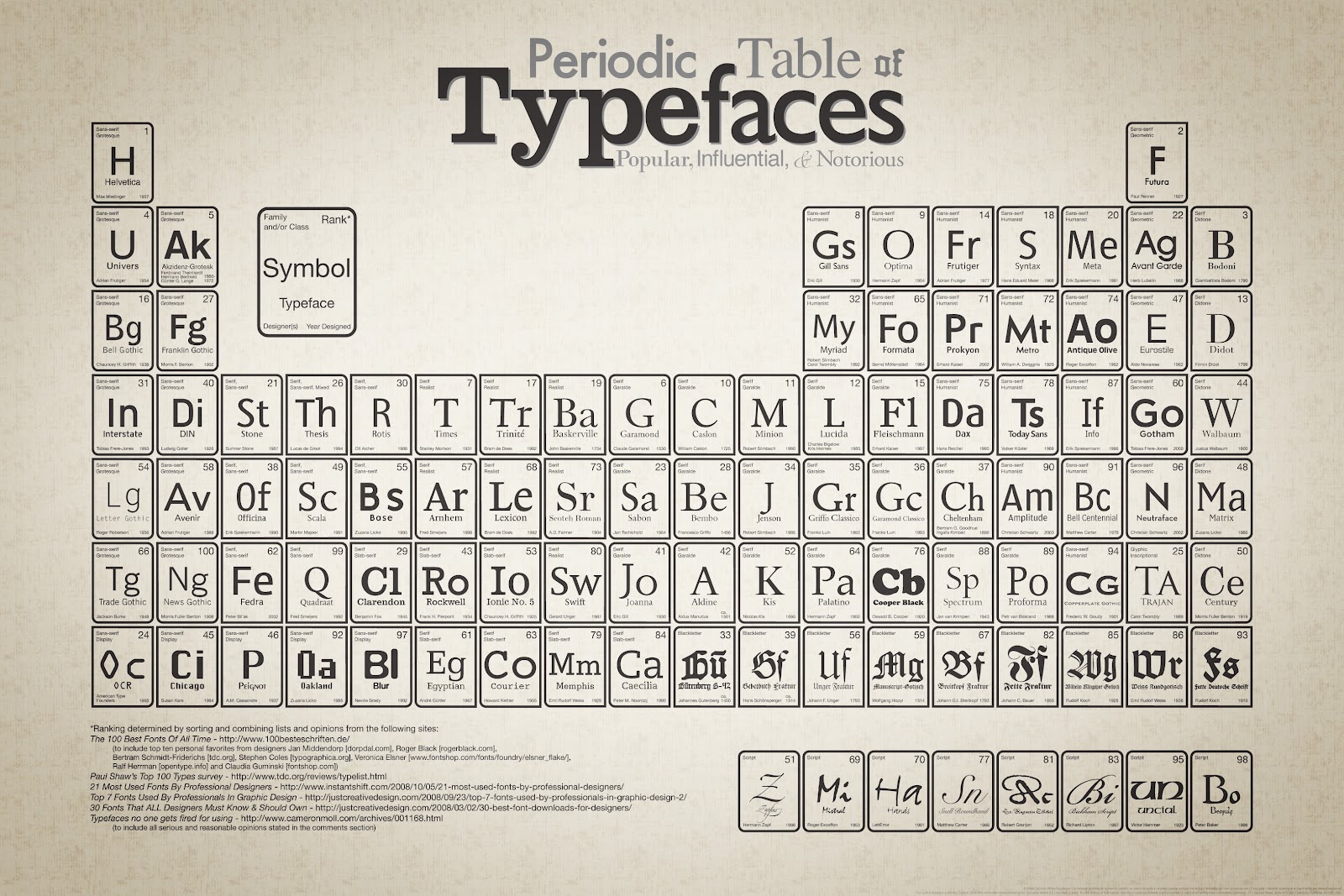
Periodic Tables: One more (for the writer and editor in me)

I know, I know – I posted a boatload of periodic tables in my last blog post. But I came across this one in a recent Google search, and I just HAD to post it here. It represents a confluence of my interests in science and writing/editing. Plus, it makes me laugh. And as we future physicians know, laughter is the best medicine, right?

period table typefaces

Thinking Outside the Box, er, Table

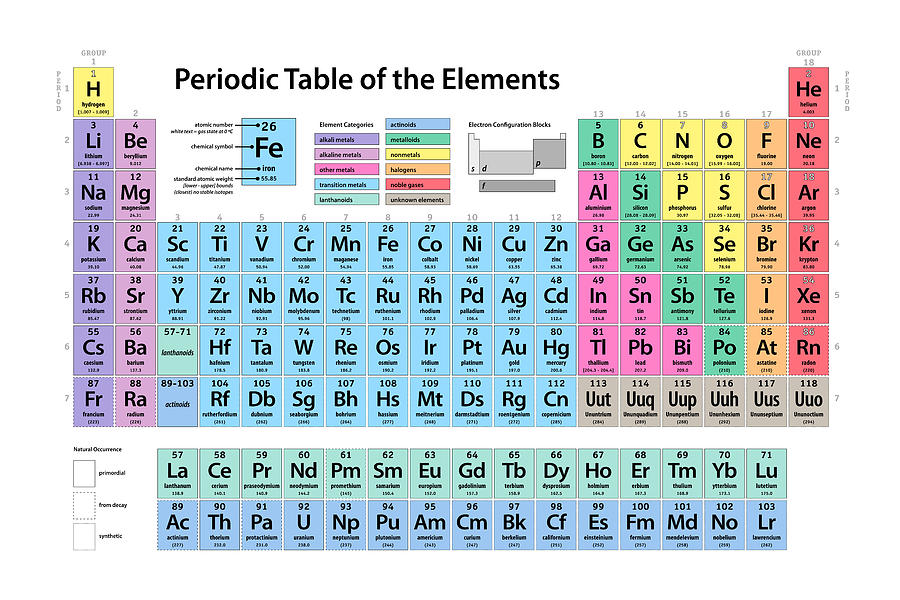
regular periodic tableThere are some things that we just take for granted, it seems. The sky is blue, the grass is green, and the chemistry periodic table of elements looks something like the image at right.

But, as is the case with so many things, there are multiple ways of representing the information on the periodic table. There is a Web site called The Internet Database of Periodic Tables that I recently discovered, thanks to a dear friend who is a chemistry major, which has images of literally hundreds of periodic table representations. It fascinates me that there are so many ways of showing what we take for granted in chemistry class. Some of them are, perhaps, not so accurate anymore based on current information and data. Others are not really very scientific, and are more novelty items. Regardless, how amazing that people have taken the time (and you will see that many of these have REALLY taken time) to develop different ways of thinking about what our world is made of. Here are a few of my favorites. But I really encourage you, if you like any of what you see here, to visit the Web site and peruse the photos. You will laugh, scratch your head, and laugh again, I guarantee it.

Alternate views of the periodic table of elements:
Note: Photos and caption text taken from The Internet Database of Periodic Tables
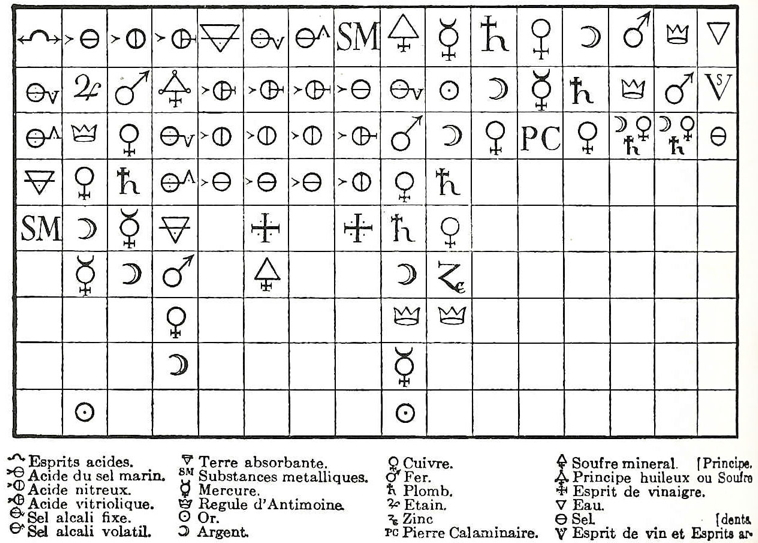
periodic table 1

Étienne François Geoffroy’s 1718 Affinity Table. At the head of the column is a substance with which all the substances below can combine.

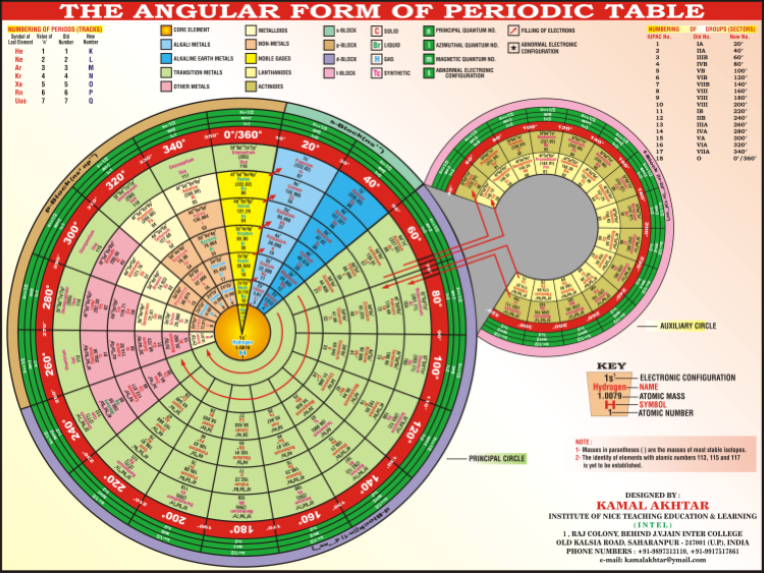
periodic table 2

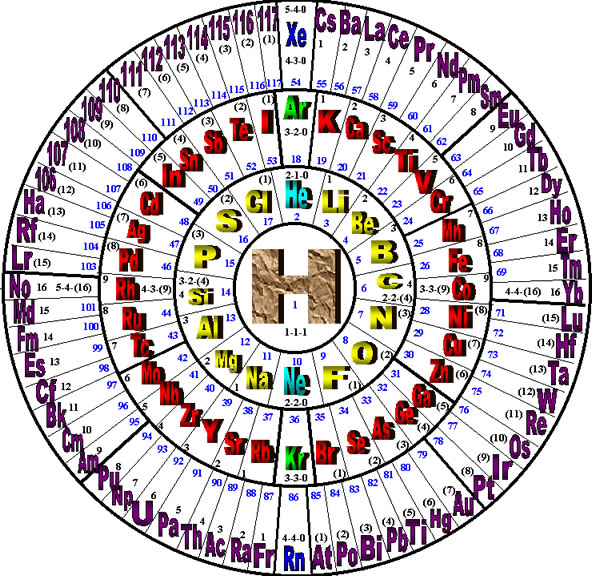
Angular Form of the Periodic Table by Kamal Akhtar: “The complete periodic table is consists of two circles, principal circle and auxiliary circle. The principal circle is consist of seven tracks (periods) and eighteen sectors (groups). The auxiliary circle is consist of only two tracks, inner track and outer track. There is no division of sectors in auxiliary circle.” (2008)

periodic table 3

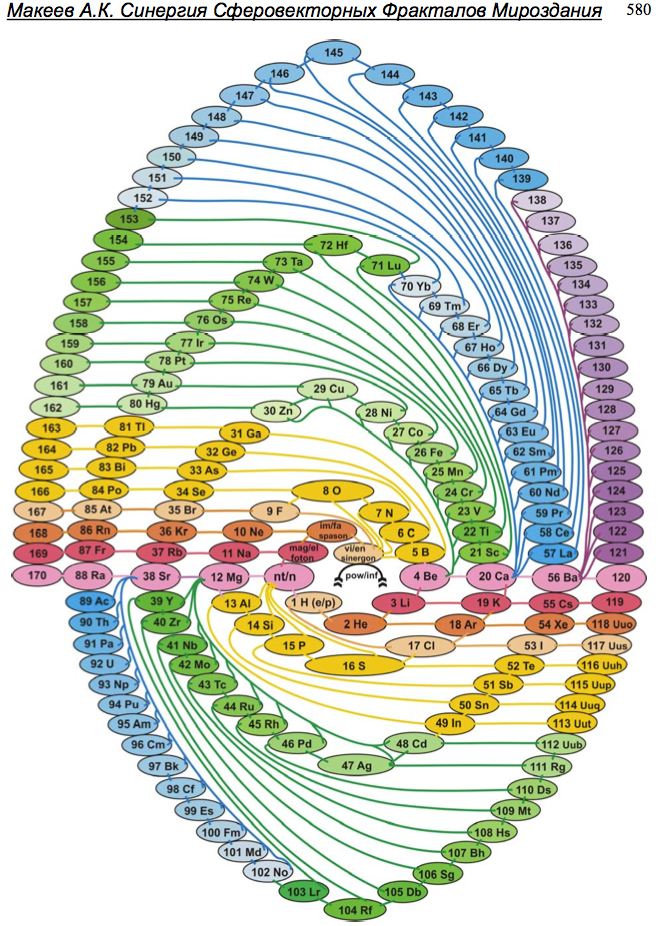
By Alexander Makeyev – integrated interdisciplinary researcher, inventor, poet (2011)

periodic table 4

From Protege Publishing comes the Progressive Periodic Table: “The PPTE allows you to observe and learn the periodicity of the elements in a more aesthetically pleasing form. It removes confusion from the growth pattern between shell pairs, and solves the problem of keeping the lanthanides and actinides in sequence with the rest of the table.”

periodic table 5

Bydgoszcz’s Periodic Table (2008).

periodic table 6

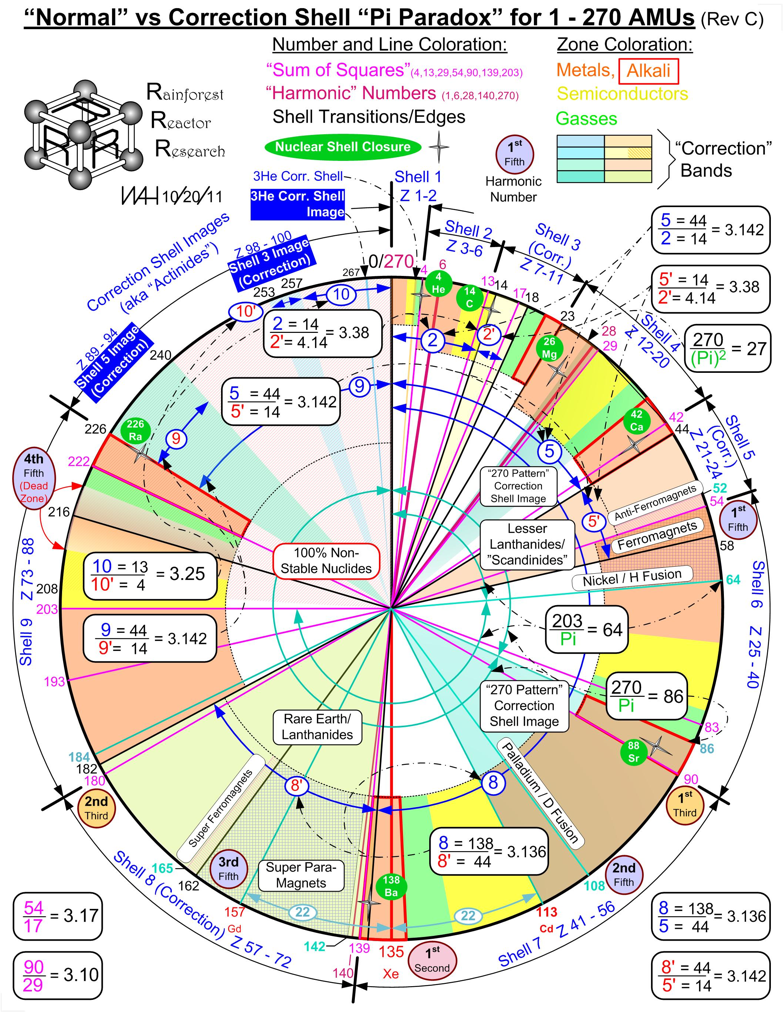
Harrington Projection for The 270 AMU Structure (2010).

periodic table 7

Normal vs Correction Shell “Pi Paradox” for 1-270 AMUs.

periodic table 8

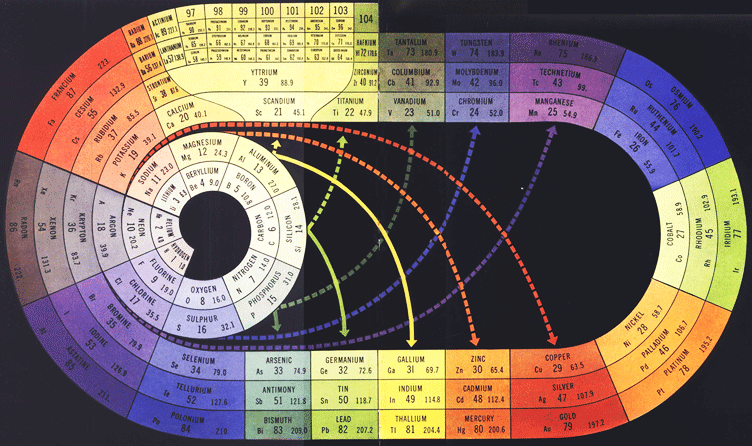
Origionally developed in 1933, the colour version of Clark’s arrangement is from Life Magazine, May 1949. This was the model for Longman’s 1951 mural.

periodic table 9

Rafael Poza’s Elements and the Magnetosphere (2008).

periodic table 10

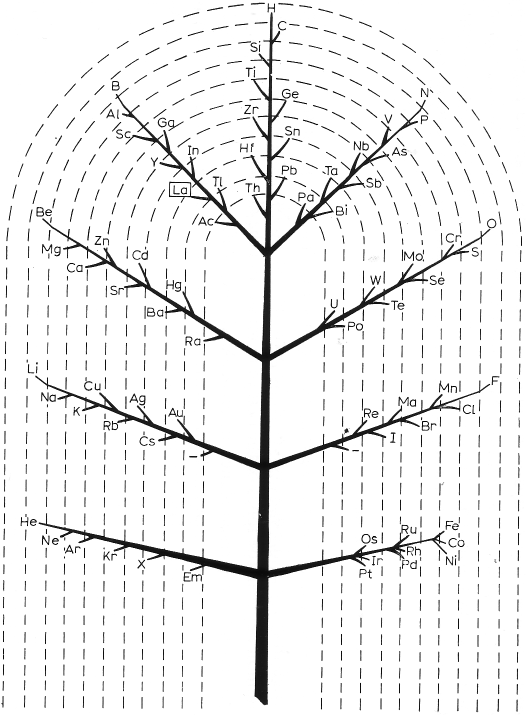
In 1944 Müller produced a formulation based on Darwin’s tree of life.

periodic table 11

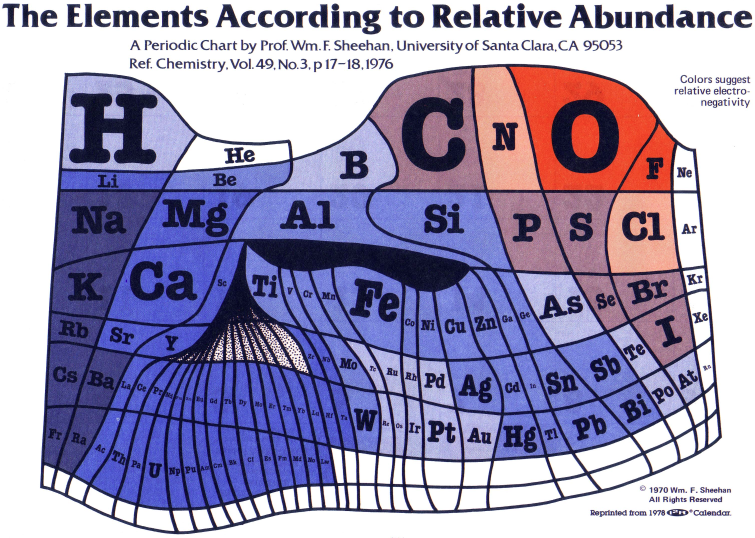
A 1970 periodic table by Prof. Wm. F. Sheehan of the University of Santa Clara that claims to show the elements according to relative abundance at the Earth’s surface.

periodic table 12

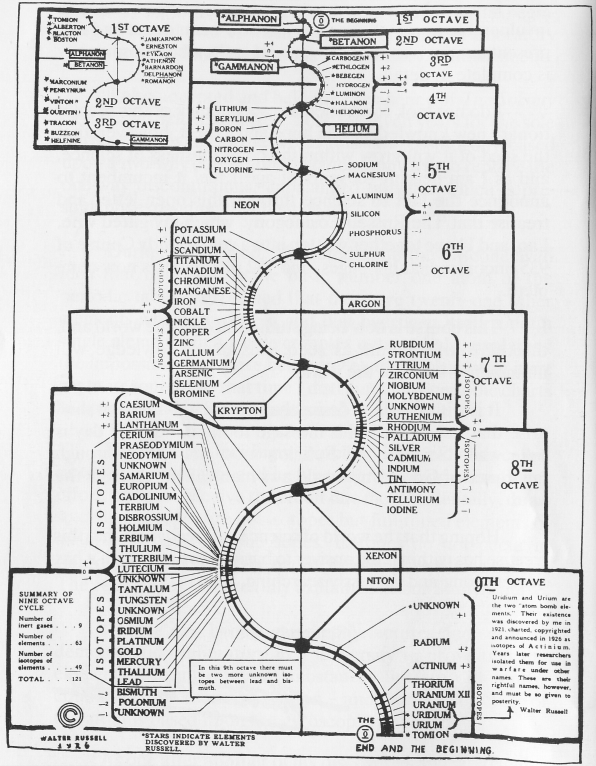
Walter Russell’s Periodic Chart of The Elements 1 (1926).

periodic table 13

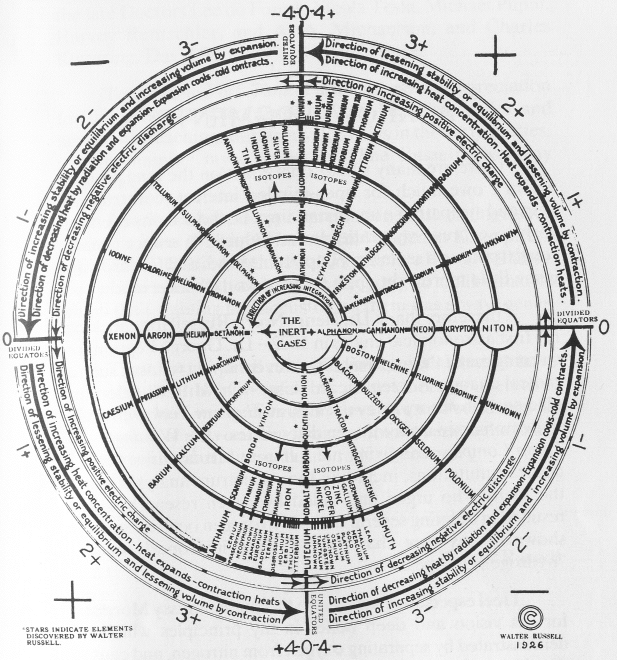
Walter Russell’s Periodic Chart of The Elements 2 (1926).

periodic table 14

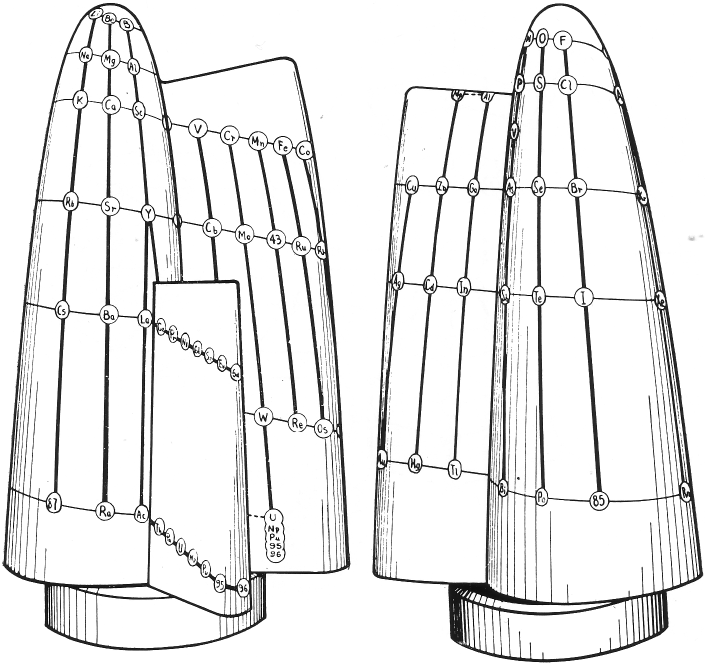
Stedman’s conic system of 1947.

periodic table 15

The Wheel of Motion (WoM) representation of the periodic table of elements shows the periodic nature of the elements, as developed in the Reciprocal System of Physical Theory (RST).