doc w/ Pen

journalist + medical student + artist

Category: Medical School: Year 1

Wet Bar of Soap

wet bar of soapIn medical school, life is not like a box of chocolates. It is like a bar of wet soap. Just when you think you’ve figured out how to reliably tell AVRT from AVNRT on an EKG … pffffft. The slippery bar flies from your hands, hits the floor, and skids across the tile, as far out of reach as possible.

There are moments like that. LOTS of them. They are insanely frustrating.

But there are also moments like this: You read a case example about a middle-age male patient who has 9/10 chest pain. Your “job” is to rule out myocardial infarction. Among other things, you pick up on the fact that his sharp pain is worse when he breathes or lies down — but sitting up and leaning forward helps. You pick up on the fact that he recently had a viral illness. Your first thought is “pericarditis.” And you were right.

Of course, this wasn’t a real person. It was a textbook case, and nothing was at stake. But still … you had the right idea. You were asking good questions and putting the pieces together to rule some diagnoses in and others out, or to change your level of suspicion.

You’re still going to drop that bar of soap. You’re going to drop it time and time again, even after you’ve graduated from medical school and become a real doctor. But those other moments — the moments when you get something right, even something really small? Those moments reveal progress. And that means you’re headed in the correct direction.

My Priorities

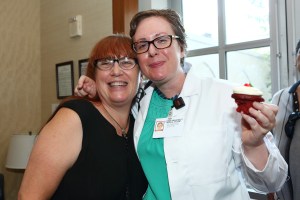
list also available in candied format

Since starting medical school, the word “priority” has taken on a whole new meaning, on so many levels.

I’m a morning person, have been for years. Consequently, some of my best brain time occurs before lunch. Nearly all of our lectures are also before lunch. As someone who has always gone to class, missing lecture wasn’t initially on my radar. But I quickly realized that sitting (passively) in a lecture during my mental peak was not the best use of my day. So I use morning and early afternoon for active studying on my own, unless there are mandatory sessions. Watching the other nonmandatory lectures—which are videotaped and available to us 24-7 online—happens late afternoon or evening. I’ve prioritized my time and my use of mental energy in a way that works best for me.

And then there are my lists. I love making to-do lists. (As an aside, I highly recommend the Evernote app for Mac, iOS, or Android. It allows you to create lists with a digital “checkbox” next to your items. You can “check off” this box with a click of the mouse. Highly satisfying, let me tell you. And no more scribbly papers or post-its haphazardly strewn across your desk. At least, fewer of them.) In days gone by, I would frequently complete all the items on my to-do list. These days, I’m lucky if I finish half. I had to develop a strategy to make sure the essentials got done, and nothing critical fell through the cracks. So I’ve learned to group my items into categories. There is a list of “places to be.” There are morning, afternoon, and evening must-dos. There are miscellaneous items that would be great to work on if I have time. (Those frequently get shuffled to another day.) There are also lighter activities that I know I can do when I have less energy, like place my Amazon Pantry order or write simple e-mails. At the end of the day, I make sure the fires are put out. But I’ve come to terms with the fact that I don’t finish my to-do lists anymore. Unless, of course, I edit the list at the end of the day to cut and paste things I didn’t finish onto another day’s to-do list. Sometimes I do this. And I let myself, because I’ve decided that if looking at a completed list relaxes me, it’s really ok.

Even before I started medical school, I knew it was impossible to learn every detail on every syllabus of every course. At some point, especially as an exam draws near, I have to decide: what to study, and what to let go. Because if I don’t make that choice, I’ll fall down a never-ending rabbit hole. Medical school is not just about learning—it’s about learning what to learn.

But no matter how much there is to learn, no matter how many lectures are left to watch or muscles to study or to-do list items still unchecked, I remain a priority. My well-being, that is. I take frequent walks, cook lots of vegetables, and sleep as regularly as is possible while living on a corner that’s constantly noisy, either from traffic or construction. I also spend time with other people who remind me that I am a human being, not a medical student machine.

I do my best. That’s my priority.

After Week 3: Observations and Thoughts

I used to hate grocery shopping. It took an emergency—like running out of half & half for my coffee—to get me to half-heartedly shove a cart around the store. And doing the dishes? Forget it! I’d let them pile a mile high. In the last month, I’ve realized that medical school changes everything. (Well, almost everything.) Grocery shopping is now a welcome break from studying, a reason to stretch my legs and enjoy some fresh (or maybe not-so-fresh) New York City air. It’s the same with dishes. Not to mention that living in a single room, there is just simply less space to spread out your mess. And for me visible mess = visceral stress. So I keep my little living space very neat and tidy. Anyone who’s ever lived with me would be shocked.

Here are some more observations I’ve made about my life as a first-year medical student on the Upper East Side of Manhattan. These are thoughts about me, medical school, and city life, as well as the intersection of these and other life threads. In no particular order, here we go …

You get used to the horns. Sort of. NYC traffic is unlike anything I’ve ever seen, and this is coming from a girl who (in Chicago) would be called a “city driver.” Non-city drivers might add less-than-nice epithets to that description. But in Chicago, you use your horn judiciously. In NYC on the other hand, horns are to traffic what commas are to sentences—periodic and normal punctuation. I think some drivers must honk out of habit, not even when anything is wrong. The first couple of weeks I was here, my heart would jump at each honk. They’re loud when you’re a pedestrian! Now they’ve begun to blend in, just part of the backdrop of city life. (A side note: earplugs are a HUGE help when sleeping here because these noises continue all night long. And living next to the hospital we get not only cars honking but ambulances whining at 2 a.m.)

New York City is insanely expensive. Everybody knows that. But I now believe that people have no idea what that really means until they try to live here. For example, I went grocery shopping today (yay! break! fun!). Yes, I am now one of those city people who walks around with a push-cart. It’s actually kind of fun, it makes me feel like I belong here. I spent $91.85 for this week’s groceries. For ONE person. That’s crazy. Everything costs more here. Sometimes it’s a nickel or a dime, sometimes $1 or $2. But it quickly adds up. The most outrageous item I saw today was a 24-oz jar of marinara sauce that cost upwards $10. For that much, I’ll just go to an Italian restaurant, thank you very much.

I am … happy. Some of you know that I am not fond of the word “happy.” I think it’s overused in our society, and has lost its meaning. So when I say “I am happy,” that really means something. “Happy” to me means a sense of contentment, belonging, satisfaction, and joy. Is medical school hard? Of course. But would I rather be doing anything else? Hell no. This is where I’m meant to be. Being here, I feel “happier” than I have in years. Which is wonderful, because the last few years have brought with them a lot of sadness and loss for me.  “Happy” is a nice change.

My background in journalism helps even more than I expected. In a part of our curriculum called “Patient Care & Physicianship,” we’re learning the intricacies of the medical interview. The subject matter is different, obviously, than interviewing a politician or an artist. But when you break it down, the medical interview is really an organized series of who-what-where-when-why-how questions combined with intense observation and genuine empathy. The first time I tried it was awkward. I tried too hard, thought too much. The second time, I sat down, relaxed, stopped thinking, and let the conversation flow. Occasionally I glanced back at the list of required follow-up items. But I found that by just talking, I got much of that information naturally. I let my journalism instincts kick in. It was like … riding a bicycle.

I love a good story. This might seem obvious from my journalism background—in fact the concept that everyone has a story is what drew me to my first career. I wasn’t expecting this reaction to be so strong though. But already, I find myself drawn to people’s stories, and more specifically to patients‘ stories. I want to know not just what hurts, why, and how can I fix it, but other more human things … what is your family life like? do you have kids, or take care of your elderly parents? what do you do for a living? and so on. It’s not about being nosy. Part of it is understanding that these sorts of things have a bearing on a patient’s physical and mental health. Part of it is getting to know the patient as a person, and not a set of signs and symptoms.

Faculty here at Weill Cornell are amazing. It seems that everyone is willing to meet with you to discuss career options, let you shadow, offer advice, etc. Not only are they willing, but they enjoy the opportunity to do so. They value their roles as educators and mentors—something that is invaluable to me as a medical student. I feel incredibly supported. I know that for any question or concern I have, I merely have to ask around and someone will be able to help me find an answer.

I am tired all the time. Talking to other former and current medical students, this is just part of the reality. I’m getting used to it. (And learning to sleep in a little on the weekends.)

Not a single one of my major fears about coming here have come true. For example, I wasted a lot of energy being fearful about what the living situation would be like (especially the grocery/cooking situation) and whether I would connect with my fellow students. In reality, things have turned out better than I could have hoped for.

In summary: medical school is tough. It’s exhausting. But it’s also incredibly rewarding, both in learning new concepts and in working with patients. I fully believe that being here at Weill Cornell, and living on the Upper East Side of Manhattan, I’m in exactly the right place, with exactly the right people (both faculty and students). As my anatomy professor, Dr. Mtui, would say: “Life is good.”

Medical School: Expectations and Flexibility

It’s day 3 of medical school. Some things have been as I expected, like the fact that there is far more reading assigned than is humanly possible to finish—and certainly more than a person can ingest and understand. I was even prepared for meeting my cadaver yesterday in anatomy, and did not shy away (though the smell was more potent than I thought it would be).

 Oddly enough, these would become Cornell's colors in about 2 months

Examples of the types of annotations you can do in iAnnotate, an app for the iPad.

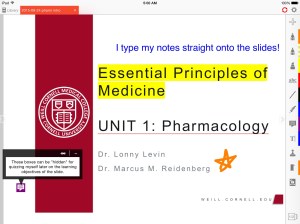
But life is all about flexibility. And one thing I’ve had to adjust is my note taking style. In a previous post, I said I would try using the Cornell note taking method. On the first day of class, I was prepared to do just that—with a clipboard and college-rule paper. During orientation though, each student in my class was given an iPad. I brought mine to class, expecting to use it to follow along with the slide presentations (which we have access to ahead of time) and then to take notes on paper. It was difficult to go from screen to paper though, and keep track of which notes went with which slides. So to my surprise, I’ve been annotating directly on the slides. It’s easy to type, highlight, underline, and draw with the stylus or your finger. In the app we use (iAnnotate, which I have actually been using for the last several years on my own iPad) you also have the ability to make little notes that you can “hide.” When a lecturer includes a list of learning objectives in the slide show, part of my review includes creating hidden notes with the key information on those learning objectives. My plan is to quiz myself later by trying to recall the information, then revealing the notes if I have difficulty.

We have our first quiz on Monday, so we’ll see …

The White Coat Ceremony: My Rite of Passage

Taking anthropology courses in college, I found myself jealous of cultures with rites of passage. Birth, coming of age, and death – along with many landmarks in between – are celebrated with ceremonies that usher the participants into a new era of their lives. Besides weddings, I didn’t see anything like that in my culture. And as a college student desperately seeking her identity, I longed for something that would help me better understand my place in the world. Now 33, I have a much better idea of who I am than when I was 18. And at 33, I realize that these ceremonies are not just for the participants. They are also for the community members who have both helped the participants reach this point, and who will be working with them in the future. It is about both identification and celebration.

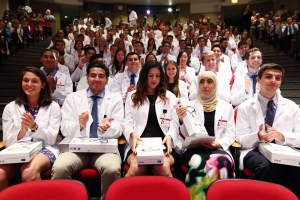
With last Tuesday’s White Coat Ceremony, I finally got my rite of passage. Esteemed faculty members helped my classmates and me don our short white jackets, which both identify us as medical students and symbolize the noble aspirations of our newfound profession. In this ceremony, the surreal became real. I am no longer a pre-medical student, I am a medical student, with all the joys and responsibilities that role entails.

Here is a selection of pictures taken at Weill Cornell’s White Coat Ceremony. Thanks to Weill Cornell for providing a photographer to take these, and for posting them for us to see and share. The whole photo album is available here. Photos © Monika Graff/WCMC.


My New Home

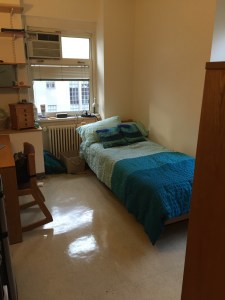
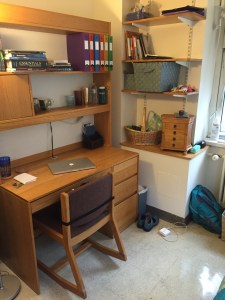
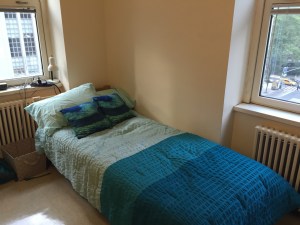
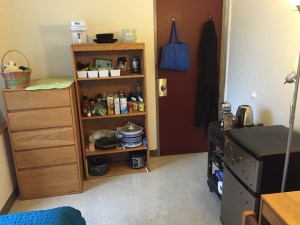
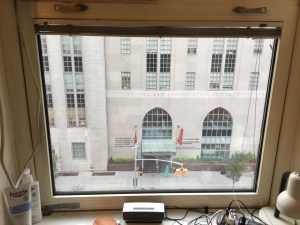
Having owned a two-story house with a full basement, living a dorm room, which I will be this year, is … an adjustment. But all things considered, my room is pretty nice. It’s much bigger than I expected. The closet is larger than the one at my last apartment. And with a corner room (and therefore two windows), there’s excellent daylight. I’m supposed to share a bathroom with one other person, but thus far no one has moved in next door. There’s a shared kitchen on the floor for cooking. I’ll live in this building my first year, then move into an actual apartment for second through fourth years. I’m certainly not going to complain about my living situation too much either way, because since it’s student housing it’s actually affordable — a rarity on the Upper East Side of Manhattan.

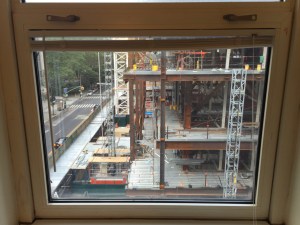
Here are some photos of my room and my views.

Day 1: Orientation and My First Patient!

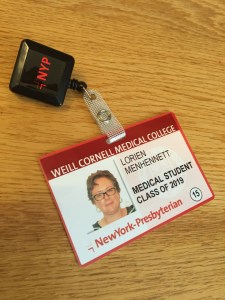
It’s real now. I’m officially an MS-1 (first-year medical student) at Weill Cornell Medical College. And I have the ID badge to prove it.
Yesterday marked day 1 of orientation, which continues the rest of this week with various lectures, receptions, and our white coat ceremony.

Yesterday also marked day 1 of seeing patients. Yes, that’s right! I saw a patient. My job yesterday was just to observe. But before long, I will be working as a “junior clinician” as part of Weill Cornell’s Continuity of Care program. I have a specific patient (whom I met yesterday), and will be responsible for things like attending all of her appointments, making clinic follow-up appointments, providing emotional support via phone (she gets my cell phone number), documenting all our telephone calls in the electronic medical record, and serving as a liaison to the clinic physicians if she has medical questions (I obviously can’t give any medical advice!). As I learn to do things like take a history or perform a physical exam, I will practice those skills with her. The idea is that the patient (who has some complex issues) has an advocate, someone familiar with her situation and medical history helping make sure she gets all the support she needs, and ensuring that all the necessary issues are addressed. In return, I learn about managing chronic medical conditions and interacting with a patient — skills that can’t entirely be taught in the classroom.

When I got to the clinic yesterday for the appointment, the clinic coordinator told me I was “brave” for doing this on my first day of orientation. Perhaps she’s right. But the way I look at it, that’s why I’m here — to learn how to be a doctor. No time like the present.

Confronting Fear

Do the thing you fear the most and the death of fear is certain.
– Mark Twain


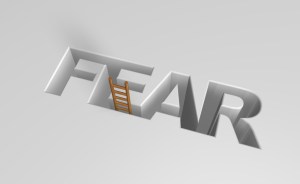
This post is about climbing out of the pit of fear.  Unless you're a stepnophobic.

This post is about climbing out of the pit of fear. Unless you’re a stepnophobic.

A dear friend, who is on her own pre-medical journey, just shared this quotation with me. It’s a good reminder as I head off into the unknown of my first year in medical school.

Embracing Change

Chicago skyline

For nearly a quarter century, the Chicago area has been my home. When I think “city,” in my mind I see a skyline like the one in the picture above. Navy Pier, Sears Tower (I’ll never be able to call it “Willis Tower”), Michigan Avenue, Art Institute, Field Museum, Millennium Park, Prudential Building, Northwestern University, University of Illinois at Chicago. And that just scratches the surface of the places I’ve worked and played over the years.

But as they say, the only constant in life is change. So I’m going to have to get used to calling another city home: New York City. Thus, this will be my skyline for at least the next four years:

New York City skyline

Clearly, there are key differences. New York City proper has more people than reside in the Chicago city limits (about 8.5 million compared to 2.7 million). There are different bodies of water, different landmarks, a different train system, different types of pizza. These differences will require adjustment on my part, of course, and there will be some uneasiness at first. I’m sure there will be days when I long for Chicago — Lake Michigan, the John Hancock Building, the El, and deep dish from Lou Malnati’s (with butter crust, of course). But I fully believe that before long, I will look lovingly at the East River and the Empire State Building. I’ll board the subway without trepidation. I may even be able to stomach New York-style pizza.

Change is scary, and it’s hard. I’m not going to pretend otherwise. But change is also good. It brings about new growth, opportunities, relationships, and interests.

The way I see it, I’m not leaving Chicago behind. I’m merely adding New York City to my repertoire.

Study Habits for Medical School, New and Old

This is medical school.

This is medical school.

Trying to absorb the vast quantity of information presented during medical school has been compared to drinking from a firehose. There’s simply no way to swallow it all. This means that I’ll have to prioritize information, and to maximize my time with excellent study skills. I’ve always been a good student. So I’ll be carrying over some old study habits that worked well in college and my post-bac. But I’ll also try some new methods that sound promising. It’s all based on knowing my personal learning style. Here’s my lineup:

During organic chemistry, writing out complex reactions on my dry erase board helped me understand the concepts better.

During organic chemistry, writing out complex reactions on my dry erase board helped me understand the concepts better.

Dry erase board. I used this extensively during my post-bac for everything from organic chemistry (drawing out structures and color-coded synthesis reactions) to genetics (creating a flowchart of the transcription process from start to finish). For me, the kinesthetic component of learning is key – I need to DO something with the information, not just read it or hear it (although audio and visual learning is important for me too). Seeing things written extra large, and with multiple colors, helps me remember them even better.


Scapple.
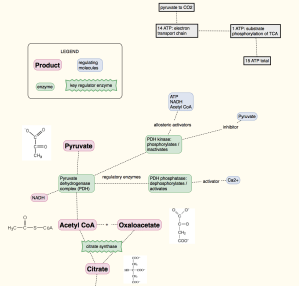
This is a new experiment. Scapple is a Mac app that allows you to make connections between ideas and concepts. I tried it out while reviewing the Krebs cycle a couple weeks ago, and really liked it (the screen shot below is part of what I created to represent the links between the different molecules, enzymes, and other players in the cycle).

The Scapple app allows you to make connections between different ideas.

Cornell note taking is a much more active process than regular note taking.

Cornell note taking is a much more active process than regular note taking.

Cornell note taking method. Another experiment, this note taking method incorporates reviewing, questioning, and summarizing into the process. It’s much more active than just scribbling down what the professor is saying. That kind of active participation helps me learn and remember, which is why I’m giving this a try.

Study groups. I’ve had mixed results with these in the past, but I’ve heard that studying in groups is really recommended in medical school. So I want to try it.

I’ve made it this far, so clearly have my share of good study habits. But with the game being stepped up in medical school, I think it’s important to experiment too. There’s always room for improvement.